Frequently Asked Questions
Product Information & Red Teaming Capabilities
What is Cymulate Exposure Validation and how does it support red teams?
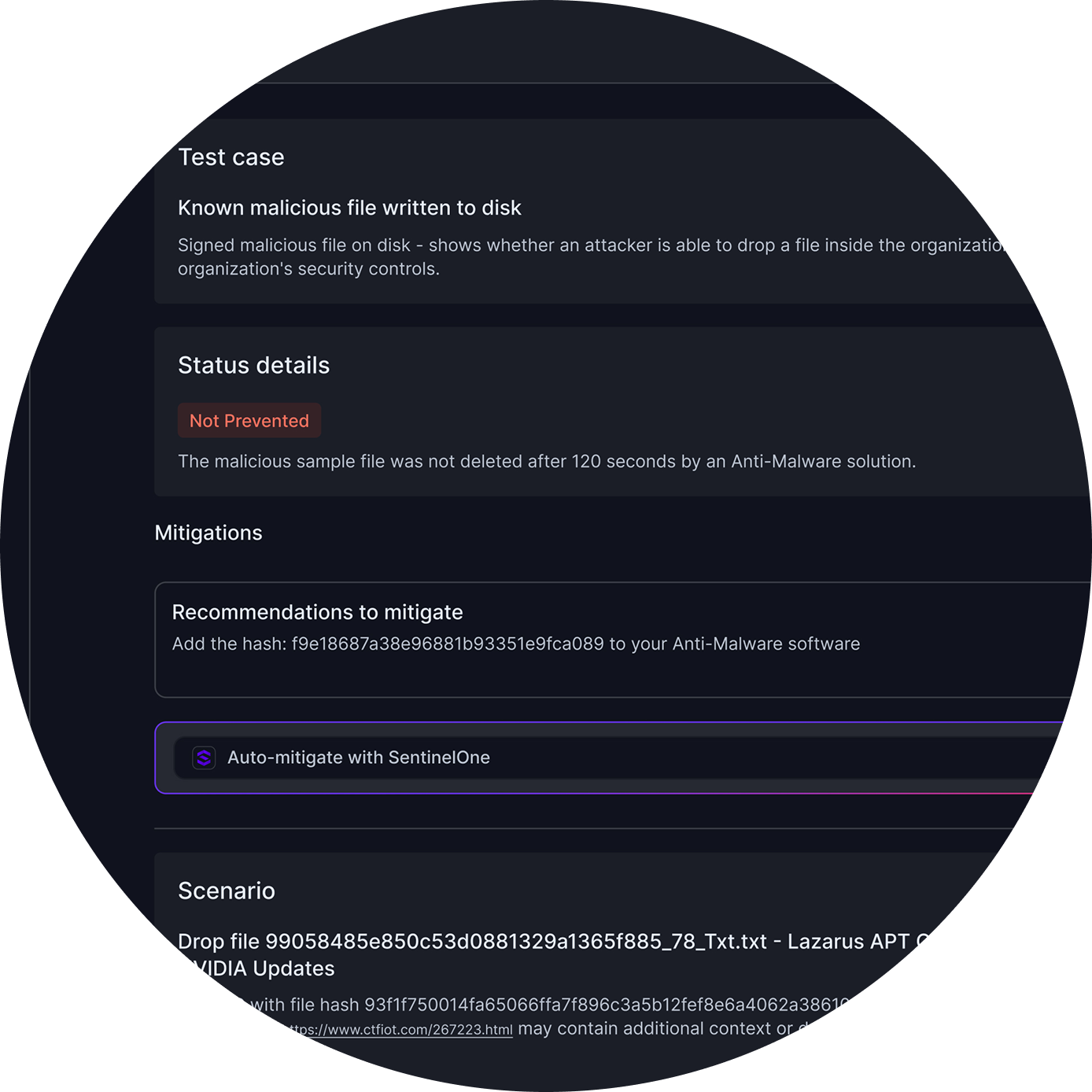
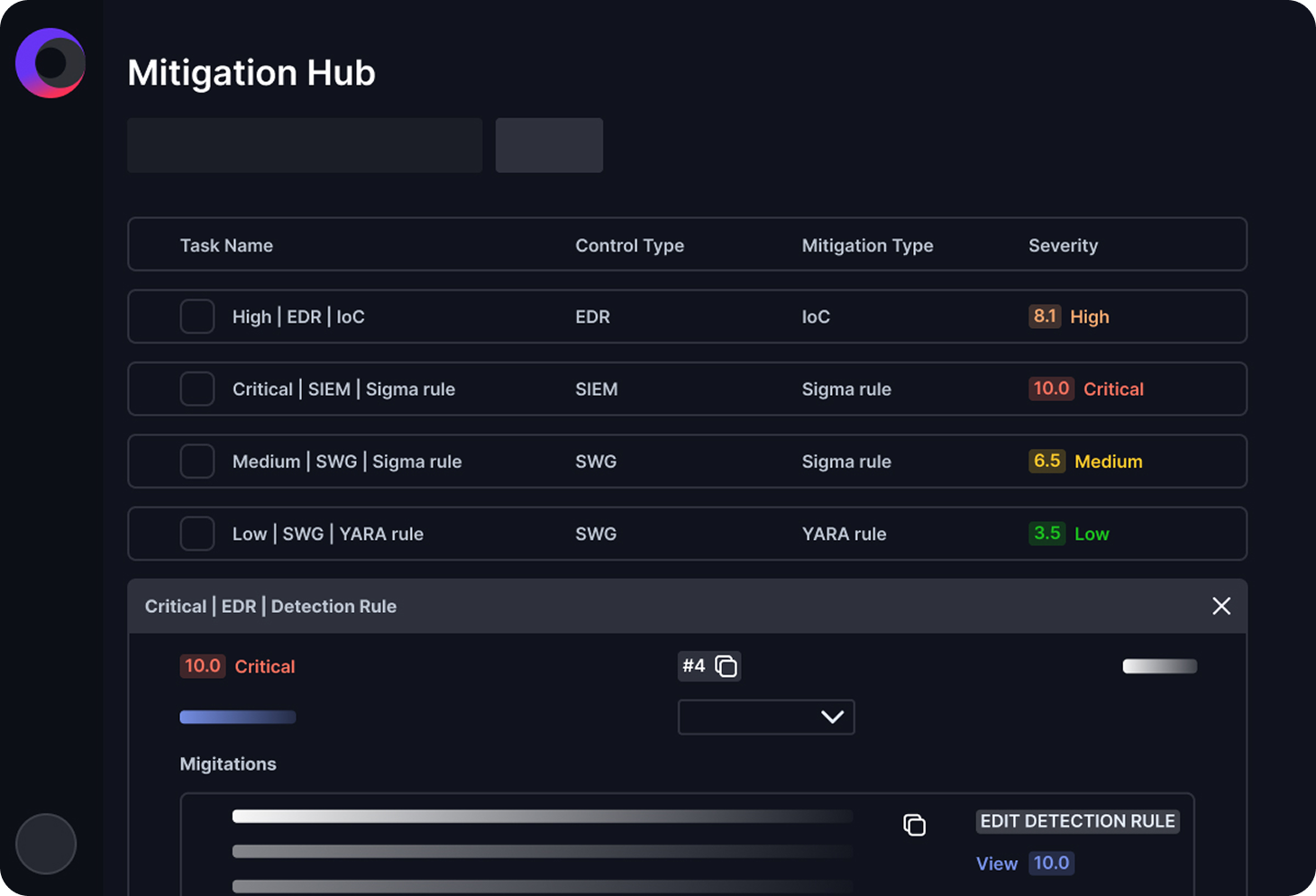
Cymulate Exposure Validation automates and scales red teaming with threat-informed security assessments. It enables red teams to fast-track exercises, identify critical security gaps, and deliver actionable results. The platform includes custom attack chains, attack path discovery, and MITRE ATT&CK coverage backed by a library of over 100,000 attack actions. Findings encourage collaboration between red and purple teams by including MITRE ATT&CK mappings, remediation guidance, recommended IoCs, and custom detection rules for SIEM, EDR, and XDR controls. Learn more in the Red Teaming Solution Brief.
How does Cymulate help scale offensive testing for red teams?
Cymulate Exposure Validation executes simulated assessments at scale from a library of 100,000+ assessments mapped across the full MITRE ATT&CK framework. The attack scenario library is updated daily based on new threat intelligence, allowing red teamers to focus on building custom attacks and spend less time investigating new threats. Read more.
Can I build custom attack chains with Cymulate?
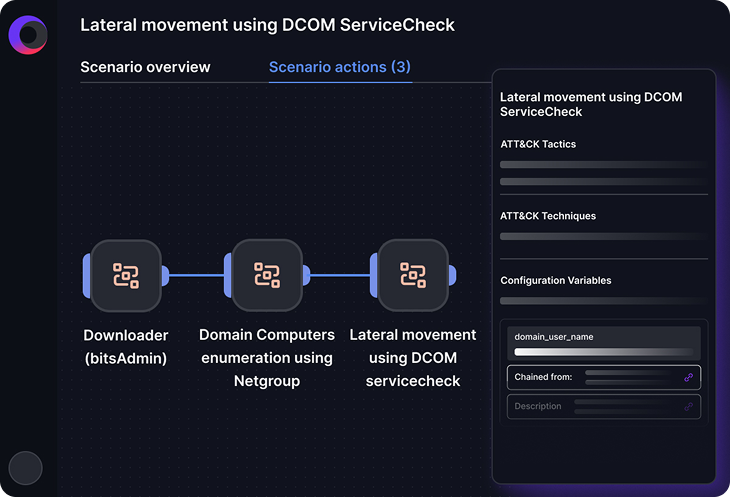
Yes. The Attack Scenario Workbench lets you create custom chains with simple no-code workflows and allows you to upload your own threat scenarios. This enables advanced, tailored offensive testing for your organization. See details.
Are Cymulate's assessments production-safe?
Yes. Cymulate assessments focus on security control behavior to lower the risk of blue screens or production disruption, ensuring that testing does not negatively impact production environments.
How do I measure coverage against MITRE ATT&CK with Cymulate?
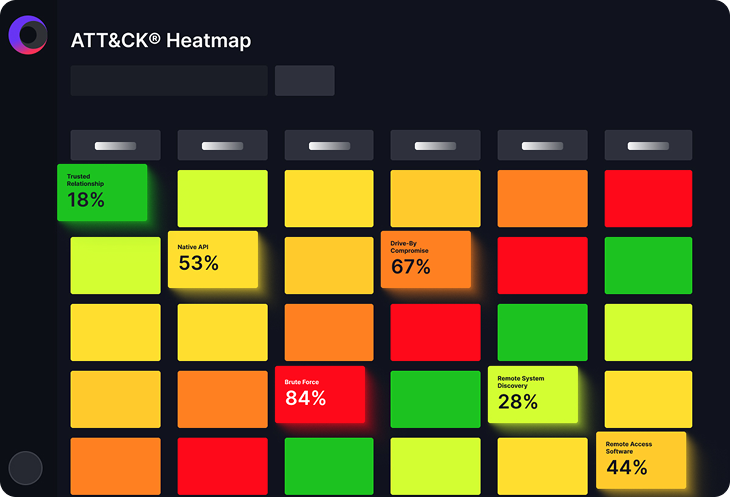
You can use the MITRE ATT&CK heatmap to visualize emulation coverage and quickly see techniques or sub-techniques that need immediate attention. This helps prioritize remediation and resource allocation. Learn more.
Can Cymulate discover attack paths and lateral movement?
Yes. Cymulate Attack Path Discovery simulates an attacker who has compromised a single workstation and is moving laterally in search of additional assets. The process uncovers lateral movement gaps, privilege escalation paths, and exposed data or credentials that attackers can exploit. Read more.
What are the key features of Cymulate for red teams?
Key features include:
- Attack Scenario Workbench for custom attack chains
- AI-powered template creator for dynamic attack planning
- Attack path discovery for lateral movement and blast radius analysis
- MITRE ATT&CK heatmap for coverage visualization
- Phishing simulation for employee resilience measurement
- Actionable findings with precise remediation guidance
For more, see the Red Teaming Solution Brief.
Features & Capabilities
What are the core capabilities and benefits of Cymulate's Exposure Validation platform?
Cymulate's Exposure Validation platform offers:
- Continuous threat validation and on-demand testing
- Attack path discovery and exposure validation
- Threat resilience optimization with tailored detection rules
- Cloud security validation
- Vulnerability management with prioritization
- Automated remediation
- MITRE ATT&CK heatmap visualization
Benefits include improved threat prevention (30% improvement), reduction in critical exposures (52%), enhanced operational efficiency (60% increase), quantifiable risk reduction, proven compliance, and faster recovery post-attack. Learn more.
Does Cymulate integrate with other security tools?
Yes. Cymulate integrates with a wide range of SIEM, SOAR, EDR, vulnerability management, cloud security, IAM, and ticketing systems. Examples include Microsoft Sentinel, Splunk, Google Chronicle, Palo Alto Cortex XSOAR, CrowdStrike Falcon, Tenable, Wiz, Microsoft Active Directory, Jira, and ServiceNow. For a full list, visit Cymulate's Partnerships and Integrations page.
Does Cymulate offer an API?
Yes, Cymulate provides an API with documentation and a rate limit of 10 requests per second per IP address. For details, see the Cymulate API Documentation.
Performance & Business Impact
What measurable business impact can customers expect from Cymulate?
Customers can expect:
- 30% improvement in threat prevention
- 52% reduction in critical exposures
- 60% increase in operational efficiency
- Quantifiable risk reduction metrics for executives
- Faster recovery post-attack (addresses average 6+ days to restore operations)
These metrics help align security efforts with business goals and reduce breach-related costs. See more.
How does Cymulate improve red team efficiency and vulnerability management?
Cymulate increases red team efficiency by up to 60% (as reported by a finance company), reduces vulnerabilities by 70% in subsequent pen tests (IT organization), and enables teams to assess emerging threats 3x faster (financial services). See customer stories.
Use Cases & Target Audience
Who can benefit from Cymulate's red teaming solutions?
Cymulate is designed for:
- Red teams and offensive security professionals
- Blue teams and SOC analysts
- CISOs, CIOs, and cybersecurity executives
- Organizations in finance, healthcare, retail, technology, manufacturing, utilities, and more
The platform is suitable for companies seeking to improve their cybersecurity posture, validate threats, and optimize resilience. Learn more.
What industries are represented in Cymulate's case studies?
Industries include critical infrastructure, education, engineering, finance, healthcare, insurance, IT services & consulting, law enforcement, manufacturing, non-profit, retail, technology, transportation, and utilities. See case studies.
Can you share specific customer success stories using Cymulate for red teaming?
Yes. Examples include:
For more, visit Cymulate's customer stories page.
Customer Experience & Ease of Use
How easy is it to implement and use Cymulate for red teaming?
Cymulate is designed for easy implementation and intuitive use. Customers report that setup requires minimal effort and configuration, with actionable insights available after just a few clicks. Testimonials highlight the platform's user-friendly interface and practical guidance. For example, Raphael Ferreira, Cybersecurity Manager, says: "Cymulate is easy to implement and use—all you need to do is click a few buttons, and you receive a lot of practical insights into how you can improve your security posture." See more testimonials.
What feedback have customers given about Cymulate's ease of use?
Customers consistently praise Cymulate for its intuitive design and minimal configuration requirements. Ariel Kashir, CISO, states: "It’s easy to use, intuitive, and the customer support is unparalleled." Security consultants also note the platform's clarity in helping teams understand potential threats. Read more.
Security & Compliance
What security and compliance certifications does Cymulate hold?
Cymulate is certified for SOC2 Type II, ISO 27001:2013, ISO 27701, ISO 27017, and CSA STAR Level 1. These cover security, availability, confidentiality, privacy, and cloud security controls. Cymulate also complies with GDPR and implements advanced security features such as role-based access controls, two-factor authentication, and robust encryption. See details.
How does Cymulate ensure product security and compliance?
Cymulate follows secure development practices, maintains a strong employee security awareness program, and adheres to industry regulations. The platform includes advanced security features and is regularly audited for compliance. Learn more.
Competition & Comparison
How does Cymulate compare to other red teaming and exposure management solutions?
Cymulate differentiates itself by offering a unified Exposure Management Platform with continuous threat validation, automated remediation, and quantifiable metrics. Compared to competitors:
- Pentera: Focuses on penetration testing; Cymulate provides continuous validation and actionable remediation.
- Picus Security: Specializes in control validation; Cymulate offers unified platform and real-time simulations.
- Scythe: Automated red teaming; Cymulate combines full-kill-chain validation with remediation.
- AttackIQ: Finds gaps; Cymulate also provides solutions to fix them and quantifiable metrics.
- NetSPI: Pen testing; Cymulate focuses on continuous validation and prioritization of exploitable vulnerabilities.
For more, see Cymulate vs Competitors.
Why should a customer choose Cymulate over alternatives?
Cymulate offers comprehensive coverage, continuous threat validation, tailored advantages for blue teams, red teams, and executives, automation and efficiency (reducing manual operations by 25%), measurable impact (30% improved threat prevention, 52% reduced exposures, 60% increased efficiency), and industry recognition (Market Leader by Frost & Sullivan, Customers' Choice by Gartner Peer Insights). See comparison.
Support, Training & Implementation
What customer service and support does Cymulate offer?
Cymulate provides first-class customer support, available via email ([email protected]) and chat (chat support page). Customers praise the support team for being exceptional and helpful. Educational resources such as webinars, solution briefs, and e-books are also available. Learn more.
What training and technical support is available to help customers get started?
Cymulate offers easy implementation, intuitive onboarding, and educational resources including webinars, solution briefs, and e-books. The support team is available for troubleshooting, upgrades, and maintenance. Customer testimonials highlight the ease of adoption and practical guidance. See more.
How does Cymulate handle maintenance, upgrades, and troubleshooting?
Cymulate ensures continuous accessibility and functionality, except during scheduled maintenance as outlined in the Service Level Agreement. The support team assists with troubleshooting, upgrades, and maintenance, and educational resources are available for ongoing learning.
Technical Documentation & Resources
What technical documentation and resources are available for Cymulate?
Cymulate provides solution briefs, data sheets, e-books, and guides covering detection engineering, threat resilience, exposure prioritization, automated mitigation, and security validation principles. These resources offer practical guidance for improving cybersecurity strategies. See resources.