
Frequently Asked Questions
Vulnerability Management & CTEM
Why should we evolve from traditional Vulnerability Management to Continuous Threat Exposure Management (CTEM)?
Traditional vulnerability management (VM) focuses on identifying and ranking vulnerabilities but often lacks context and validation. CTEM expands this by continuously identifying, testing, and validating exposures across your environment—enabling you to focus mitigation on what truly poses a risk. It shifts from a patch-all mindset to one rooted in real-world exploitability and business impact. [Source]
What’s missing in traditional vulnerability management that Cymulate helps address?
The critical missing component is threat validation. Cymulate goes beyond static CVEs by automatically testing whether exposures can be exploited in your environment. It validates how your security controls respond to those threats—bridging the gap between detection and real-world risk. [Source]
How does Cymulate calculate true risk?
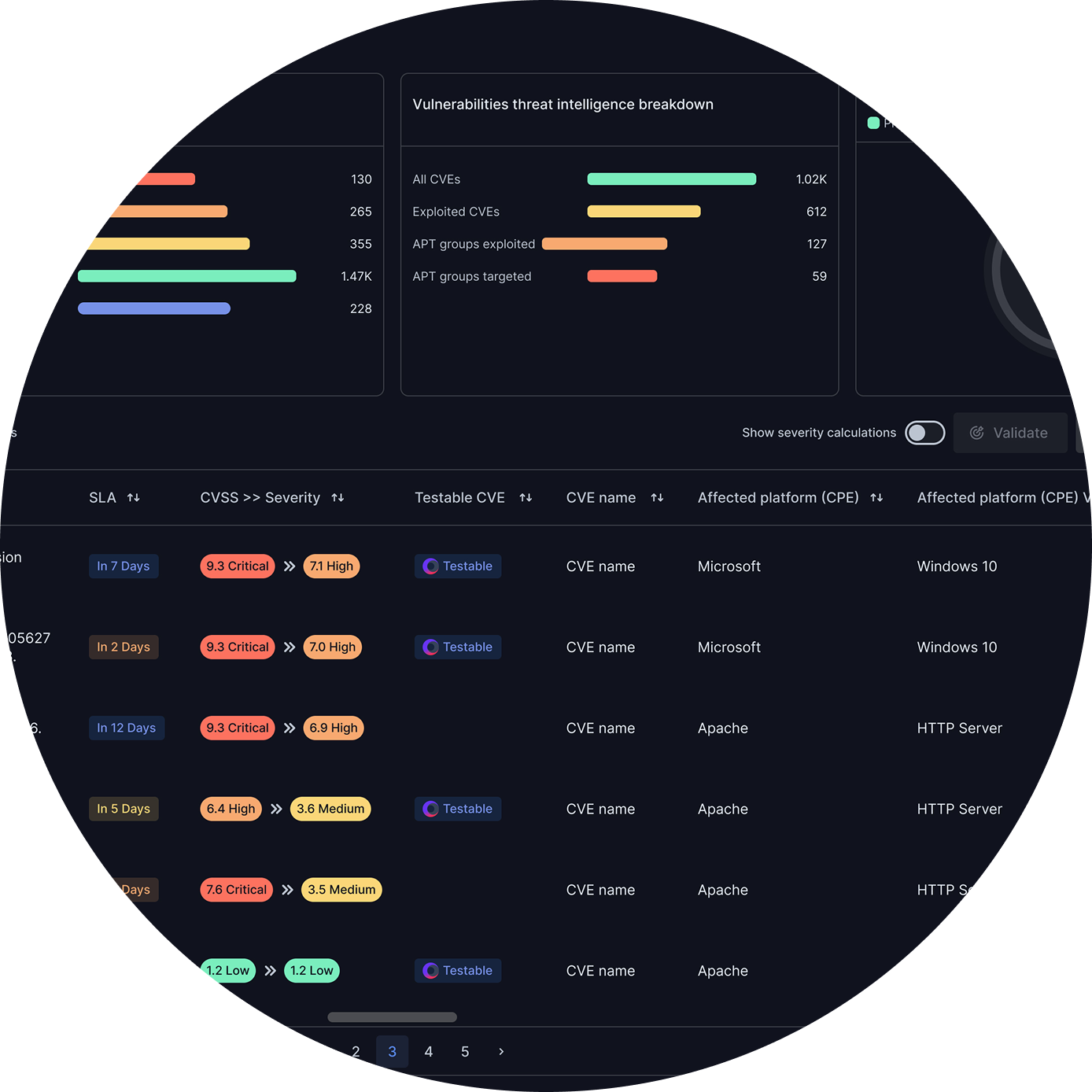
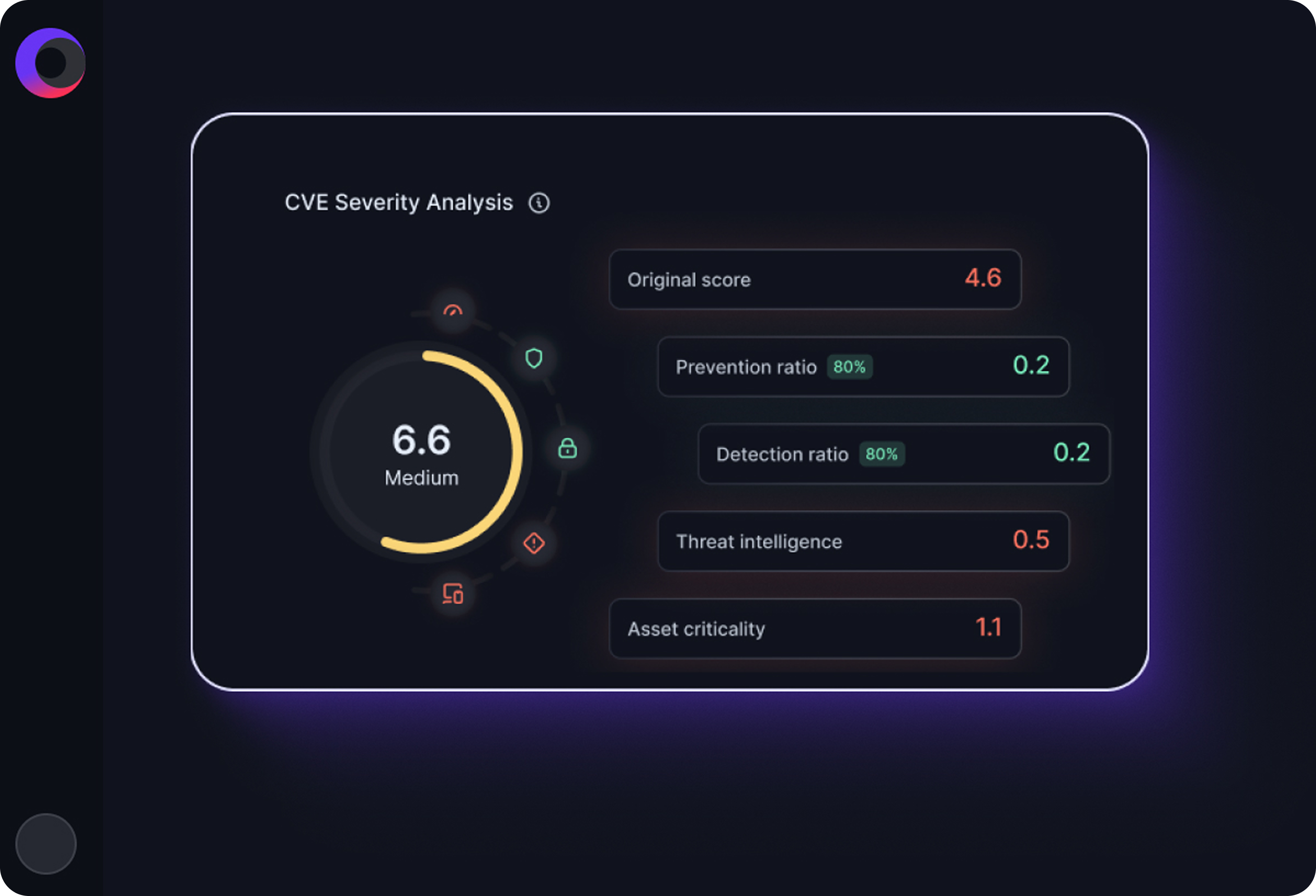
Cymulate contextualizes exposures by aggregating vulnerability data from scanners, asset context (including business criticality), threat intelligence, automated threat validation to prove exploitability, and security control effectiveness. This generates a true exposure risk score—prioritizing based on what’s actually exploitable in your environment to ensure optimal resource allocation. [Source]
Will Cymulate replace my vulnerability scanner or SIEM?
No. Cymulate complements your existing tools by aggregating and enhancing the data they provide. It integrates with vulnerability scanners, SIEMs, EDR/XDR, and other asset discovery tools to deliver a complete exposure management view—centered on actionable, validated risk. [Source]
What are the main challenges vulnerability management teams face today?
Vulnerability management teams are often overwhelmed with patches and exploits. Only 5% of vulnerabilities are patched each month (Bitsite), 60% of breaches involve unpatched vulnerabilities (Gartner), and only 10% of organizations have automated threat exposure management (Gartner). [Source]
Why is traditional vulnerability management considered insufficient for true resilience?
Traditional vulnerability management is considered insufficient because it primarily focuses on scanning and patching. Legacy tools claim to provide visibility, but they cannot answer whether your defenses can withstand real-world threats. True resilience requires moving to a CTEM model, which prioritizes risks based on what is genuinely exploitable—a gap Cymulate addresses with automated exposure validation. [Source]
How can we cut through vulnerability noise and focus on real risks?
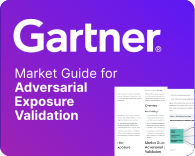
Cymulate's guide, 'Vulnerability Management Requires Exposure Validation', explains how to cut through vulnerability noise by validating, prioritizing, and focusing on real exploitable risks. Read the guide.
What is exposure management?
Exposure management is the continuous process of identifying, assessing, and addressing security exposures across your digital ecosystem. Cymulate drives exposure management by aggregating exposures from vulnerability scanners and discovery tools, correlating them with business context and validated threats, ensuring teams focus on what truly matters. [Source]
What is the 'Vulnerability Management Requires Exposure Validation' guide about?
This 2-page guide addresses the challenges vulnerability managers face, such as being overwhelmed by a flood of CVEs and endless 'critical' flags. It explains why prioritizing based on threat intelligence alone is insufficient and presents new ways to set vulnerability management priorities with Cymulate's Exposure Management Platform. Download the guide.
What are the primary challenges faced by traditional Vulnerability Management (VM) teams?
Traditional VM teams face overwhelming lists of critical patches, resource constraints, ineffective prioritization, and a lack of visibility into which patches are truly the most critical to apply first. [Source]
Why is exposure validation necessary for vulnerability management?
Exposure validation is crucial because it helps cut through the noise by validating, prioritizing, and focusing on real, exploitable risks. Learn more.
How does Cymulate help prioritize vulnerabilities?
Cymulate prioritizes vulnerabilities by validating their exploitability and ranking exposures based on prevention and detection capabilities, business context, and threat intelligence. This ensures teams focus on the most critical vulnerabilities. [Source]
What measurable results have Cymulate customers achieved in vulnerability management?
Cymulate customers have achieved a 52% reduction in critical exposures, 70% fewer vulnerabilities in the next pen test (IT organization), and a 60% increase in team efficiency (healthcare company). [Source]
How does Cymulate integrate with vulnerability management tools?
Cymulate integrates with vulnerability scanners and asset discovery tools to enrich automated threat validation with complete context, delivering a clear view of true risk. [Source]
How does Cymulate help streamline security workflows?
Cymulate eliminates silos by integrating processes and combining vulnerability management data with threat validation findings, enabling more efficient and effective workflows. [Source]
How does Cymulate help measure and improve threat resilience?
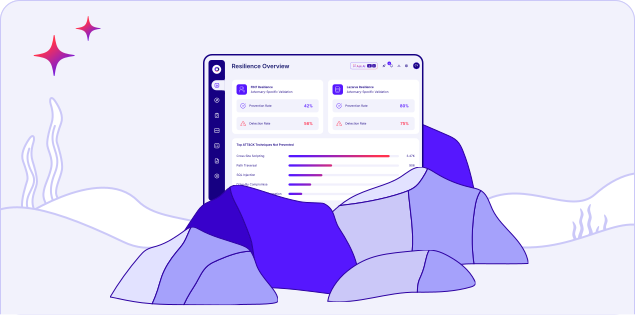
Cymulate provides dynamic reporting, dashboards for baselines, and visualizations to measure cyber program and threat resilience, helping organizations track and improve their security posture over time. [Source]
What do customers say about Cymulate for vulnerability management?
Customers praise Cymulate for helping prioritize exploitable vulnerabilities, providing intelligence beyond basic scans, boosting team efficiency, and enabling clear communication of risk reduction to executives. See testimonials from Kevin Roberts (Information Security Analyst), Shaun Curtis (Head of Cybersecurity), and Haran Mamankaran (Lead Cyber Defense Engineer) on the Vulnerability Management page.
How does Cymulate help small security teams?
Cymulate helps small security teams prioritize workload, focus on high-risk issues, and illustrate the value of cybersecurity efforts to executives by quantifying risk reduction. [Source]
How does Cymulate support actionable remediation?
Cymulate creates remediation plans that consider business context, mitigating controls, and the full context of exploitability, enabling organizations to take targeted action. [Source]
How does Cymulate help focus on exploitable vulnerabilities?
Cymulate prioritizes based on proof and evidence of how attackers exploit exposures in your environment, ensuring remediation efforts are focused on what matters most. [Source]
How does Cymulate aggregate exposure data?
Cymulate aggregates data from vulnerability scans and asset discovery to enrich automated threat validation with complete context, delivering a clear view of true risk. [Source]
How does Cymulate automate exposure validation?
Cymulate tests and proves threat resilience for attacks and exploits that target vulnerabilities and exposures, automating the validation process. [Source]
How does Cymulate prioritize with context?
Cymulate stack-ranks validated exposures based on evidence of mitigating controls, threat intelligence, and business context, ensuring prioritization is meaningful and actionable. [Source]
How does Cymulate mobilize remediation and mitigation?
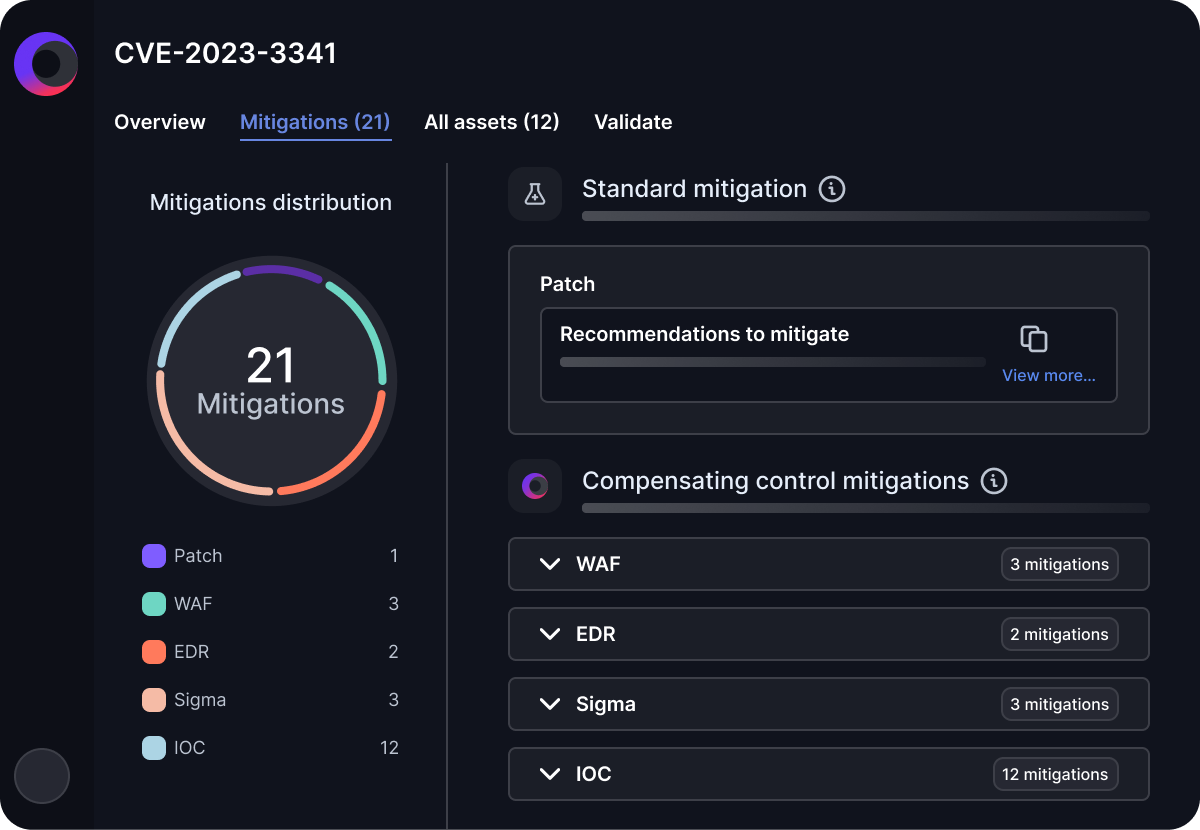
Cymulate creates actionable plans backed by the proof and evidence provided through threat validation and can push control updates for immediate threat prevention. [Source]
Features & Capabilities
What are the key capabilities of Cymulate's platform for vulnerability management?
Cymulate offers continuous threat validation, unified platform capabilities (BAS, CART, Exposure Analytics), attack path discovery, automated mitigation, AI-powered optimization, complete kill chain coverage, ease of use, and an extensive threat library with over 100,000 attack actions updated daily. [Source]
What benefits does Cymulate provide for vulnerability management teams?
Cymulate enables improved security posture (up to 52% reduction in critical exposures), operational efficiency (60% increase in team efficiency), faster threat validation (40X faster than manual methods), cost savings, enhanced threat resilience, and better decision-making with actionable insights. [Source]
Does Cymulate support integration with other security tools?
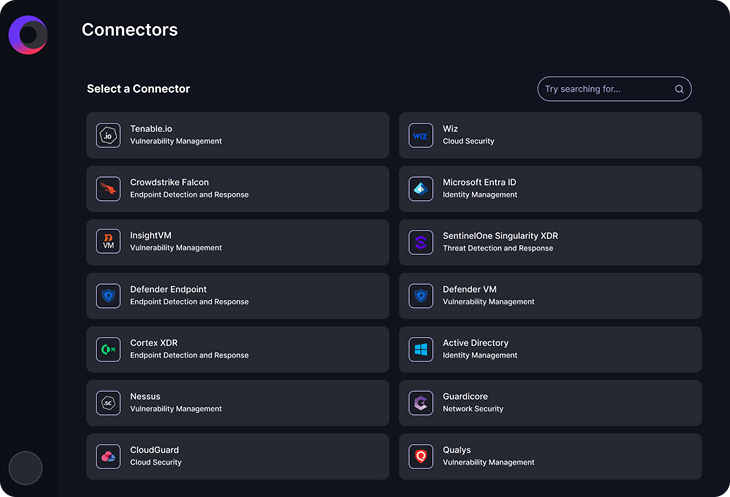
Yes, Cymulate integrates with a wide range of security technologies, including Akamai Guardicore, AWS GuardDuty, BlackBerry Cylance OPTICS, Carbon Black EDR, Check Point CloudGuard, Cisco Secure Endpoint, CrowdStrike Falcon, Wiz, SentinelOne, and more. See the full list.
How easy is it to implement Cymulate for vulnerability management?
Cymulate is designed for quick, agentless deployment with no need for additional hardware or complex configurations. Customers can start running simulations almost immediately, with comprehensive support and educational resources available. [Source]
What support resources are available for Cymulate customers?
Cymulate offers email and chat support, a knowledge base with technical articles and videos, webinars, e-books, and an AI chatbot for querying the knowledge base and creating AI templates. [Source]
What security and compliance certifications does Cymulate hold?
Cymulate holds SOC2 Type II, ISO 27001:2013, ISO 27701, ISO 27017, and CSA STAR Level 1 certifications, demonstrating adherence to industry-leading security and compliance standards. [Source]
How does Cymulate ensure data security and privacy?
Cymulate ensures data security through encryption in transit (TLS 1.2+) and at rest (AES-256), secure AWS-hosted data centers, a tested disaster recovery plan, and compliance with GDPR. [Source]
What is Cymulate's pricing model?
Cymulate operates on a subscription-based pricing model tailored to each organization's requirements. Pricing depends on the chosen package, number of assets, and scenarios selected. For a detailed quote, schedule a demo with the Cymulate team. [Source]
Who can benefit from Cymulate's vulnerability management solution?
Cymulate is designed for CISOs, security leaders, SecOps teams, red teams, and vulnerability management teams in organizations of all sizes and industries, including finance, healthcare, retail, media, transportation, and manufacturing. [Source]
How does Cymulate compare to other vulnerability management solutions?
Cymulate stands out by offering a unified platform that integrates BAS, CART, and Exposure Analytics, continuous threat validation, AI-powered optimization, and a comprehensive threat library. It is praised for ease of use, measurable outcomes, and continuous innovation. [Source]
What case studies demonstrate Cymulate's impact on vulnerability management?
Case studies include Hertz Israel reducing cyber risk by 81% in four months, a sustainable energy company scaling penetration testing, and a credit union adopting proactive security. See all case studies.
How does Cymulate address pain points for different personas?
Cymulate tailors solutions for CISOs (communication barriers, risk prioritization), SecOps (resource constraints, operational inefficiencies), red teams (threat simulation), and vulnerability management teams (validation and prioritization). [Source]
What is Cymulate's overarching vision and mission?
Cymulate's vision is to transform cybersecurity practices by enabling organizations to proactively validate defenses, identify vulnerabilities, and optimize their security posture, fostering collaboration and measurable improvements in threat resilience. [Source]