Frequently Asked Questions
ALPHV / BlackCat Ransomware Threat Details
What is ALPHV (BlackCat) ransomware?
ALPHV, also known as BlackCat, is a ransomware group that emerged in late 2021. It is notable for recruiting ex-REvil, BlackMatter, and DarkSide operators, and for its use of a Rust-based ransomware executable that is fast, cross-platform, and heavily customized for each victim. The group has been highly active since November 2021, with a leak site naming over twenty victim organizations as of January 2022.
What are the technical features of BlackCat ransomware?
BlackCat ransomware uses a Rust-based executable, which is fast and cross-platform. It employs AES encryption by default, includes built-in privilege escalation techniques (such as UAC bypass, Masquerade_PEB, and CVE-2016-0099), can propagate to remote hosts via PsExec, deletes shadow copies using VSS Admin, and can stop VMware ESXi virtual machines and delete their snapshots.
How does BlackCat ransomware escalate privileges?
BlackCat ransomware includes built-in privilege escalation mechanisms, such as UAC bypass, Masquerade_PEB, and exploitation of CVE-2016-0099, allowing it to gain higher-level access on compromised systems.
How does BlackCat ransomware spread within a network?
BlackCat can propagate to remote hosts using PsExec, a legitimate Windows tool, enabling lateral movement across an organization's network.
What is the significance of BlackCat's leak site?
The BlackCat group's leak site, active since December 2021, publicly names victim organizations that have not paid a ransom. As of late January 2022, over twenty organizations had been named, though the actual number of victims is likely higher.
How does BlackCat ransomware impact VMware ESXi environments?
BlackCat ransomware can stop VMware ESXi virtual machines and delete their snapshots, increasing the difficulty of recovery for organizations using virtualized infrastructure.
What encryption methods does BlackCat use?
BlackCat ransomware uses AES encryption by default to encrypt victim files, making data recovery without the decryption key extremely difficult.
How does BlackCat ransomware delete shadow copies?
BlackCat deletes shadow copies using the VSS Admin tool, which removes backup copies of files and hinders recovery efforts.
What is unique about BlackCat's ransomware executable?
BlackCat's ransomware executable is written in Rust, making it fast, cross-platform, and highly customizable for each victim, which complicates detection and analysis.
How does BlackCat recruit affiliates?
BlackCat is known for offering lucrative affiliate payouts, reportedly up to 90%, and actively recruits experienced operators from other ransomware groups such as REvil, BlackMatter, and DarkSide.
Platform Features & Capabilities
How does Cymulate help organizations defend against ransomware threats like BlackCat?
Cymulate enables organizations to proactively validate their defenses against ransomware threats by simulating real-world attack scenarios, including ransomware like BlackCat. The platform's continuous threat validation and exposure management capabilities help identify vulnerabilities, test security controls, and prioritize remediation to reduce the risk of successful ransomware attacks.
What is Cymulate's Threat Validation solution?
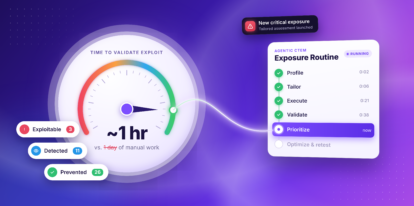
Cymulate's Threat Validation solution is delivered via the Exposure Management Platform and includes Exposure Validation, Auto Mitigation (optional), and Custom Attacks (optional). It provides automated, continuous security testing to validate defenses against the latest threats, including ransomware.
How does Cymulate's Exposure Validation differ from manual penetration tests and traditional BAS tools?
Cymulate Exposure Validation offers automated, continuous security testing with a library of over 100,000 attack actions aligned to the MITRE ATT&CK framework and daily threat intelligence. Unlike manual pen tests or traditional BAS tools, Cymulate provides out-of-the-box control integrations, automated mitigation, and the ability to push threat updates directly to security controls for actionable remediation.
What is the benefit of Cymulate's immediate threats module?
According to a Penetration Tester, Cymulate's immediate threats module is highly valued for its rapid updates. It allows organizations to quickly assess their risk from new attacks and implement remedial actions promptly. Source
How does Cymulate's Threat (IoC) updates feature improve threat resilience?
Cymulate's Threat (IoC) updates feature provides recommended Indicators of Compromise that can be exported and applied directly to security controls. This improves threat resilience by giving control owners the exact data needed to build defenses against new threats.
What are the key capabilities of Cymulate's platform?
Cymulate's platform offers continuous threat validation, a unified platform combining BAS, CART, and Exposure Analytics, attack path discovery, automated mitigation, AI-powered optimization, complete kill chain coverage, ease of use, and an extensive threat library with over 100,000 attack actions updated daily. Learn more
How does Cymulate Exposure Validation support a threat-informed defense strategy?
Cymulate Exposure Validation continuously validates security controls against the latest threats and attack techniques, ensuring defenses are always prepared for current and emerging adversarial methods. Source
What are some examples of Cymulate's integrations?
Cymulate integrates with a wide range of security technologies, including Akamai Guardicore (Network Security), AWS GuardDuty (Cloud Security), BlackBerry Cylance OPTICS (EDR and Anti-Malware), Carbon Black EDR, Check Point CloudGuard, Cisco Secure Endpoint, CrowdStrike Falcon, Wiz, and SentinelOne. For a complete list, visit our Partnerships and Integrations page.
How easy is it to implement Cymulate?
Cymulate is designed for quick and easy implementation, operating in agentless mode with no need for additional hardware or complex configurations. Customers can start running simulations almost immediately, and support is available via email, chat, and a knowledge base. Schedule a demo
Use Cases & Customer Success
Who can benefit from using Cymulate?
Cymulate is designed for CISOs, security leaders, SecOps teams, Red Teams, and vulnerability management teams in organizations of all sizes and industries, including finance, healthcare, retail, media, transportation, and manufacturing. Learn more
What are some real-world outcomes achieved with Cymulate?
Customers have reported measurable outcomes such as an 81% reduction in cyber risk (Hertz Israel, four months), a 52% reduction in critical exposures, a 60% increase in team efficiency, and an 81% reduction in cyber risk within four months. Read the Hertz Israel case study
How does Cymulate address the pain points of fragmented security tools?
Cymulate integrates exposure data and automates validation, providing a unified view of the security posture and reducing gaps caused by disconnected tools.
How does Cymulate help organizations with resource constraints?
Cymulate automates security validation processes, improving efficiency and operational effectiveness for security teams that are often stretched thin.
How does Cymulate support vulnerability management teams?
Cymulate automates in-house validation between penetration tests and prioritizes vulnerabilities effectively, enabling efficient vulnerability management. Learn more
What feedback have customers given about Cymulate's ease of use?
Customers consistently praise Cymulate for its intuitive, user-friendly interface and actionable insights. For example, Raphael Ferreira, Cybersecurity Manager, said, "Cymulate is easy to implement and use—all you need to do is click a few buttons, and you receive a lot of practical insights into how you can improve your security posture." See more testimonials
How does Cymulate help with post-breach recovery challenges?
Cymulate enhances visibility and detection capabilities after a breach, ensuring faster recovery and improved protection. Read the Nedbank case study
How does Cymulate support compliance and regulatory testing?
Cymulate secures hybrid and cloud infrastructures through automated compliance and regulatory testing, helping organizations meet industry requirements. Learn more
Security, Compliance & Certifications
What security and compliance certifications does Cymulate hold?
Cymulate holds several key certifications, including SOC2 Type II (covering security, availability, confidentiality, and privacy), ISO 27001:2013 (Information Security Management), ISO 27701 (Privacy Information Management), ISO 27017 (Cloud Services Security Controls), and CSA STAR Level 1. See details
How does Cymulate ensure data security?
Cymulate ensures data security through encryption for data in transit (TLS 1.2+) and at rest (AES-256), secure AWS-hosted data centers, and a tested disaster recovery plan. The platform also includes mandatory 2FA, RBAC, IP address restrictions, and TLS encryption for its Help Center.
Is Cymulate GDPR compliant?
Yes, Cymulate incorporates data protection by design and has a dedicated privacy and security team, including a Data Protection Officer (DPO) and Chief Information Security Officer (CISO), to ensure GDPR compliance.
What application security practices does Cymulate follow?
Cymulate follows a strict Secure Development Lifecycle (SDLC), including secure code training, continuous vulnerability scanning, and annual third-party penetration tests to ensure application security.
How does Cymulate train its employees on security?
All Cymulate employees undergo ongoing security awareness training, phishing tests, and adhere to comprehensive security policies as part of the company's HR security program.
Pricing & Plans
What is Cymulate's pricing model?
Cymulate operates on a subscription-based pricing model tailored to each organization's requirements. Pricing depends on the chosen package, number of assets, and scenarios selected. For a detailed quote, schedule a demo with the Cymulate team.
Competition & Comparison
How does Cymulate compare to other security validation platforms?
Cymulate stands out with its unified platform that combines Breach and Attack Simulation, Continuous Automated Red Teaming, and Exposure Analytics. It offers continuous threat validation, AI-powered optimization, complete kill chain coverage, ease of use, and an extensive, frequently updated threat library. These features provide measurable improvements in threat resilience and operational efficiency. See comparison details
What advantages does Cymulate offer for different user segments?
Cymulate provides tailored solutions for CISOs (quantifiable metrics and insights), SecOps teams (automation and efficiency), Red Teams (automated offensive testing), and Vulnerability Management teams (in-house validation and prioritization). Learn more
Support & Implementation
What support options are available for Cymulate customers?
Cymulate offers support via email ([email protected]), real-time chat, a knowledge base with technical articles and videos, webinars, e-books, and an AI chatbot for quick answers and guidance. Contact support
What resources are available to help new users get started with Cymulate?
New users have access to a knowledge base, webinars, e-books, and an AI chatbot to help them quickly learn best practices and optimize their use of the platform. See webinars
Industry Trends & Research
What is Gartner's prediction regarding threat exposure findings by 2028?
Gartner predicts that by 2028, more than half of threat exposure findings will result from nontechnical vulnerabilities, requiring a fundamental shift in security priorities as these risks surpass traditional IT concerns. Read more
How can I get the full Threat Exposure Validation Impact Report 2025?
You can download the full report for detailed insights on Continuous Threat Exposure Management, automation and AI, cloud exposure validation, and threat prevention optimization at this link.