
Frequently Asked Questions

Security Testing Methods & Comparisons

What are the main security testing methods organizations use today?

The main security testing methods include vulnerability scanning, penetration testing, red/blue teaming, and breach and attack simulation (BAS). Each method offers different levels of depth, automation, and frequency for validating an organization's security posture. (Source: Cymulate Blog)

How does vulnerability scanning work and what are its limitations?

Vulnerability scanning uses automated tools to check for known vulnerabilities in networks and host systems. It's fast, cost-effective, and can scan thousands of vulnerabilities, but it often produces a high rate of false positives (30-60%) and only provides a snapshot in time, lacking full insight into issues. It may also stress production environments, potentially causing downtime. (Source: Cymulate Blog)

What is penetration testing and when is it typically used?

Penetration testing is performed by expert testers who attempt to exploit vulnerabilities to assess how far they can penetrate an organization's security infrastructure. It's valuable for identifying high-risk weaknesses and is often required for compliance, typically conducted quarterly or semi-annually. However, results depend on tester skill, are limited in scope, and reports can take weeks to deliver. (Source: Cymulate Blog)

How do red and blue teaming exercises differ from other testing methods?

Red and blue teaming exercises simulate real-world attacks to test both the organization's defenses (blue team) and offensive capabilities (red team). They uncover unknown vulnerabilities and measure readiness to detect, contain, and mitigate attacks. These exercises are resource-intensive and cannot be conducted regularly. (Source: Cymulate Blog)

What is Breach and Attack Simulation (BAS) and how does Cymulate implement it?

Breach and Attack Simulation (BAS) is an automated approach to continuously test, measure, and optimize the effectiveness of security controls. Cymulate's SaaS-based BAS platform allows organizations to run thousands of attack simulations with just a few clicks, providing continuous, fast, and actionable insights into security gaps. (Source: Cymulate Blog)

How does Cymulate's approach to security validation differ from traditional methods?

Cymulate's approach is fully automated, customizable, and continuous. Unlike traditional methods that are periodic and manual, Cymulate enables organizations to test their defenses any time, all the time, across the full attack kill chain, with integrations to SIEM and vulnerability scanners for deeper context and prioritization. (Source: Cymulate Blog)

What are the main advantages of using Cymulate over manual penetration testing?

Cymulate offers continuous, automated testing with immediate results, while manual penetration testing is periodic, resource-intensive, and dependent on tester skill. Cymulate provides actionable insights in real time, enabling organizations to address vulnerabilities faster and more efficiently. (Source: Cymulate Blog)

How does Cymulate help organizations prioritize remediation efforts?

Cymulate integrates with SIEM and vulnerability scanners to correlate attack simulations with real events and vulnerabilities, providing context on how vulnerabilities are exploited and helping organizations prioritize mitigation based on actual risk. (Source: Cymulate Blog)

Can Cymulate be used by red teams for offensive testing?

Yes, red teams use Cymulate to uncover a wide set of vulnerabilities and launch customized attacks, leveraging the platform's extensive library of simulated threats and automation capabilities. (Source: Cymulate Blog)

How does Cymulate support blue teams in validating detection capabilities?

Cymulate integrates with SIEM vendors to correlate simulated attacks with events and alerts, enabling blue teams to validate that their SIEM systems are properly configured and effective at detecting threats. (Source: Cymulate Blog)

What is the kill chain and how does Cymulate test across it?

The kill chain refers to the sequence of stages in a cyberattack. Cymulate challenges security controls across the full kill chain with thousands of simulated threats, both common and novel, to identify gaps at every stage of an attack. (Source: Cymulate Blog)

How easy is it to use Cymulate for security testing?

Cymulate is designed to be simple and user-friendly, allowing users to initiate thousands of attack simulations with just a few clicks. The platform is fully automated and customizable, making advanced security testing accessible to all skill levels. (Source: Cymulate Blog)

What types of threats can Cymulate simulate?

Cymulate can simulate thousands of attack scenarios, including both common and novel threats, across the entire cyber kill chain. This comprehensive coverage helps organizations identify and address a wide range of vulnerabilities. (Source: Cymulate Blog)

How does Cymulate integrate with other security tools?

Cymulate integrates with SIEM vendors and vulnerability scanners, providing context to vulnerabilities and correlating simulated attacks with real events and alerts. This integration enhances prioritization and remediation efforts. (Source: Cymulate Blog)

What is the main benefit of continuous security validation?

Continuous security validation enables organizations to stay ahead of emerging threats by regularly testing and optimizing their defenses, rather than relying on periodic, point-in-time assessments. This proactive approach helps reduce risk and improve resilience. (Source: Cymulate Blog)

How does Cymulate help organizations address unknown vulnerabilities?

Cymulate's red team simulations use attacker techniques to uncover unknown vulnerabilities in unknown locations, providing organizations with insights into gaps that traditional methods may miss. (Source: Cymulate Blog)

What makes Cymulate's platform innovative compared to other BAS solutions?

Cymulate's platform is SaaS-based, fully automated, customizable, and integrates with existing security tools. It enables continuous, comprehensive testing with actionable insights, making advanced security validation accessible and efficient. (Source: Cymulate Blog)

How does Cymulate empower organizations to improve their security posture?

Cymulate empowers organizations by providing continuous assessment and validation of their security posture, enabling them to identify and remediate vulnerabilities proactively and stay ahead of cyber threats. (Source: Cymulate Blog)

Features & Capabilities

What features does Cymulate offer for security validation?

Cymulate offers continuous threat validation, unified BAS, CART, and exposure analytics, attack path discovery, automated mitigation, AI-powered optimization, complete kill chain coverage, ease of use, and an extensive threat library with over 100,000 attack actions updated daily. (Source: Cymulate Platform)

Does Cymulate integrate with other security technologies?

Yes, Cymulate integrates with a wide range of security technologies, including Akamai Guardicore, AWS GuardDuty, BlackBerry Cylance OPTICS, Carbon Black EDR, Check Point CloudGuard, Cisco Secure Endpoint, CrowdStrike Falcon, Wiz, SentinelOne, and more. For a full list, visit the Partnerships and Integrations page. (Source: Cymulate Knowledge Base)

How does Cymulate help with exposure prioritization?

Cymulate validates exploitability and ranks exposures based on prevention and detection capabilities, business context, and threat intelligence, helping organizations focus on the most critical vulnerabilities. (Source: Cymulate Knowledge Base)

What is the Cymulate threat library and how is it maintained?

The Cymulate threat library contains over 100,000 attack actions aligned to MITRE ATT&CK, with daily updates to ensure coverage of the latest threats and techniques. (Source: Cymulate Knowledge Base)

How does Cymulate support operational efficiency for security teams?

Cymulate automates security validation processes, leading to a 60% increase in team efficiency and saving up to 60 hours per month in testing new threats. (Source: Cymulate Knowledge Base)

What certifications and compliance standards does Cymulate meet?

Cymulate holds SOC2 Type II, ISO 27001:2013, ISO 27701, ISO 27017, and CSA STAR Level 1 certifications, demonstrating adherence to industry-leading security and compliance standards. (Source: Security at Cymulate)

How does Cymulate ensure data security and privacy?

Cymulate uses encryption for data in transit (TLS 1.2+) and at rest (AES-256), hosts data in secure AWS data centers, and follows a strict Secure Development Lifecycle (SDLC) with regular vulnerability scanning and penetration testing. The platform is GDPR-compliant and includes mandatory 2FA, RBAC, and IP restrictions. (Source: Cymulate Knowledge Base)

How easy is it to implement Cymulate in an organization?

Cymulate is agentless, requiring no additional hardware or complex configuration. Customers can start running simulations almost immediately, with comprehensive support and educational resources available. (Source: Cymulate Knowledge Base)

What feedback have customers given about Cymulate's ease of use?

Customers consistently praise Cymulate for its intuitive, user-friendly interface and actionable insights. Testimonials highlight its ease of implementation, accessible support, and immediate value in identifying and mitigating security gaps. (Source: Cymulate Knowledge Base)

Use Cases & Benefits

Who can benefit from using Cymulate?

Cymulate is designed for CISOs, security leaders, SecOps teams, red teams, and vulnerability management teams in organizations of all sizes and industries, including finance, healthcare, retail, and more. (Source: Cymulate Knowledge Base)

What problems does Cymulate solve for security teams?

Cymulate addresses fragmented security tools, resource constraints, unclear risk prioritization, cloud complexity, communication barriers, inadequate threat simulation, operational inefficiencies, and post-breach recovery challenges. (Source: Cymulate Knowledge Base)

How does Cymulate help organizations improve threat resilience?

Cymulate provides continuous threat validation, exposure prioritization, and automated mitigation, enabling organizations to reduce critical exposures by up to 52% and achieve an 81% reduction in cyber risk within four months. (Source: Cymulate Knowledge Base)

Are there case studies showing Cymulate's impact?

Yes, for example, Hertz Israel reduced cyber risk by 81% in four months, and a sustainable energy company scaled penetration testing cost-effectively with Cymulate. More case studies are available on the Cymulate Customers page. (Source: Cymulate Knowledge Base)

How does Cymulate support compliance and regulatory requirements?

Cymulate automates compliance and regulatory testing, helping organizations in regulated industries demonstrate security control effectiveness and meet audit requirements. (Source: Cymulate Knowledge Base)

How does Cymulate help with post-breach recovery?

Cymulate enhances visibility and detection capabilities after a breach, enabling faster recovery and improved protection by replacing manual processes with automated validation. (Source: Cymulate Knowledge Base)

How does Cymulate address the needs of different security personas?

Cymulate tailors solutions for CISOs (metrics and risk prioritization), SecOps (automation and efficiency), red teams (offensive testing), and vulnerability management teams (validation and prioritization). (Source: Cymulate Knowledge Base)

What are the measurable outcomes of using Cymulate?

Organizations using Cymulate have reported a 52% reduction in critical exposures, a 60% increase in team efficiency, and an 81% reduction in cyber risk within four months. (Source: Cymulate Knowledge Base)

How does Cymulate help organizations communicate risk to stakeholders?

Cymulate provides quantifiable metrics and actionable insights, enabling CISOs and security leaders to justify investments and communicate risk effectively to stakeholders. (Source: Cymulate Knowledge Base)

Pricing & Plans

What is Cymulate's pricing model?

Cymulate uses a subscription-based pricing model tailored to each organization's needs. Pricing depends on the chosen package, number of assets, and scenarios selected. For a detailed quote, organizations can schedule a demo with Cymulate. (Source: Cymulate Knowledge Base)

Competition & Comparison

How does Cymulate compare to other security validation platforms?

Cymulate stands out with its unified platform combining BAS, CART, and exposure analytics, continuous automated testing, AI-powered optimization, complete kill chain coverage, ease of use, and proven customer outcomes. It is recognized as a market leader by Frost & Sullivan and a Customers' Choice in Gartner Peer Insights 2025. (Source: Cymulate Knowledge Base)

Resources & Support

Where can I find Cymulate's blog, newsroom, and resource hub?

You can access the latest threats, research, company news, and product information through the Cymulate Blog, Newsroom, and Resource Hub. (Source: Cymulate Knowledge Base)

How can I get support or a demo for Cymulate?

Organizations can schedule a personalized demo or reach out to Cymulate's support team via email or chat for assistance. (Source: Cymulate Knowledge Base)

New: 2026 Gartner® Market Guide for Adversarial Exposure Validation
Learn More
Cymulate named a Customers' Choice in 2025 Gartner® Peer Insights™
Learn More
New Research: Azure Arc Privilege Escalation & Identity Takeover
Learn More
An Inside Look at the Technology Behind Cymulate
Learn More

Comparison of Security Testing Methods

By: Cymulate

Last Updated: January 20, 2026

cymulate blog

“No thanks," says the 5th CISO of the day.“We have a service that does that."

Welcome to my life.

I’m an Inside Sales Representative, at Cymulate, and I speak to dozens of InfoSec Execs a week, and the first thing I hear is that some form of testing is being done, whether it’s vulnerability scanning or pen testing, with no more services required. My challenge is to convince them that it’s worth their while to learn about a new and better approach to security testing.

Everyone is testing these days, which is great. A new age threat requires an agile InfoSec team, and now that companies are spending more than ever on cyber security, InfoSec managers want to know BEFORE an attack if it’s all working the way they expect. Very rarely will I reach out, to find out that no sort of validation is being done.

Here are the three ways most folks are currently testing their security posture:

Vulnerability Scanning

Vulnerability Scanning is a widely used tool for IT auditing, using an application that checks for known vulnerabilities or weaknesses that have previously been used by Cyber Criminals. Thousands of different security vulnerabilities are scanned. It’s fast, easy, and can be cost-effective to schedule and checks for thousands of vulnerabilities in networks and host systems. Its largest downside is that it produces a high rate of false positives (between 30 to 60 percent) and just takes a snapshot, without giving full insight into any issues it may find. It could also stress the production environment which may cause downtime.

Penetration Testing

Penetration testing is performed by expert testers that go deeper than a vulnerability scan. They try and evaluate how far they can penetrate the security infrastructure of an organization. It’s great for selecting high-risk weaknesses and for using the reports to help mitigate the issues. Unfortunately, pen testing is only as good as the skill of the individual tester. Since pen-testing is scoped, it does not provide 360° insight, and worst of all, it can take weeks for the report to be ready. That’s like trying to plan next weeks’ vacation based on last month’s weather report. Many companies are required to do some form of pen testing, some do on a quarterly or semi-annual basis, some more often as companies realize that more frequent testing gives them better insight into their cyber risk.
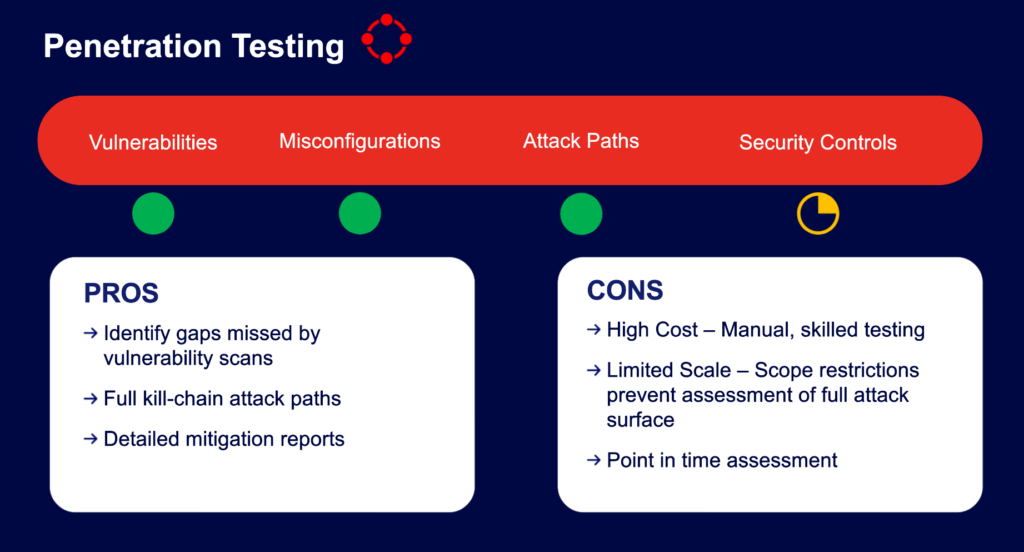
What is Penetration Testing

Red and Blue Teaming

The method that’s gaining popularity is red/blue teaming, which tests the organizations' security posture and its capabilities to detect and respond to a targeted attack. With the ability to detect unknown issues in unknown locations, the red team uses the same methods used by many hackers, helping simulate a real-world attack. Multi-step attacks are used to simulate various types of adversaries, and for identifying gaps in the information security controls. It also measures the organization's readiness to detect, contain and mitigate the attack in addition to evidence gathering, internal and external communications, and reporting. Since an effective red/blue team exercise is resource-intensive it cannot be conducted regularly.
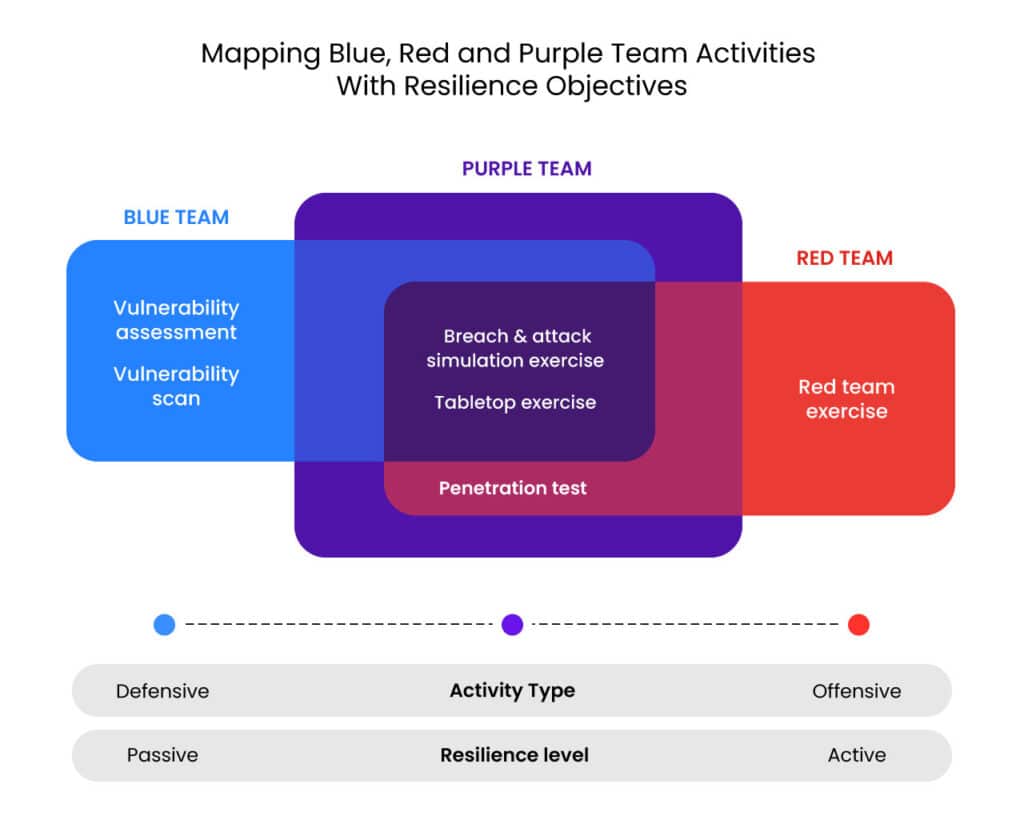
Breach and Attack Simulation (BAS), the Cymulate Approach.

New technologies are not the easiest to grasp, and breach and attack simulation is no exception. Usually, when discussing BAS, InfoSec folks tell me it’s too good to be true, and for good reason. It’s a completely new way of looking at security validation and that takes an open mind. CISOs are also constantly barraged by salespeople with all sorts of great solutions, making it a challenge to get their attention.

Cymulate is a SaaS-based breach and attack simulation platform that makes it simple to test, measure and optimize the effectiveness of your security controls any time, all the time. With just a few clicks, Cymulate challenges your security controls by initiating thousands of attack simulations, showing you exactly where you’re exposed and how to fix it—making security testing continuous, fast and part of every-day activities

.
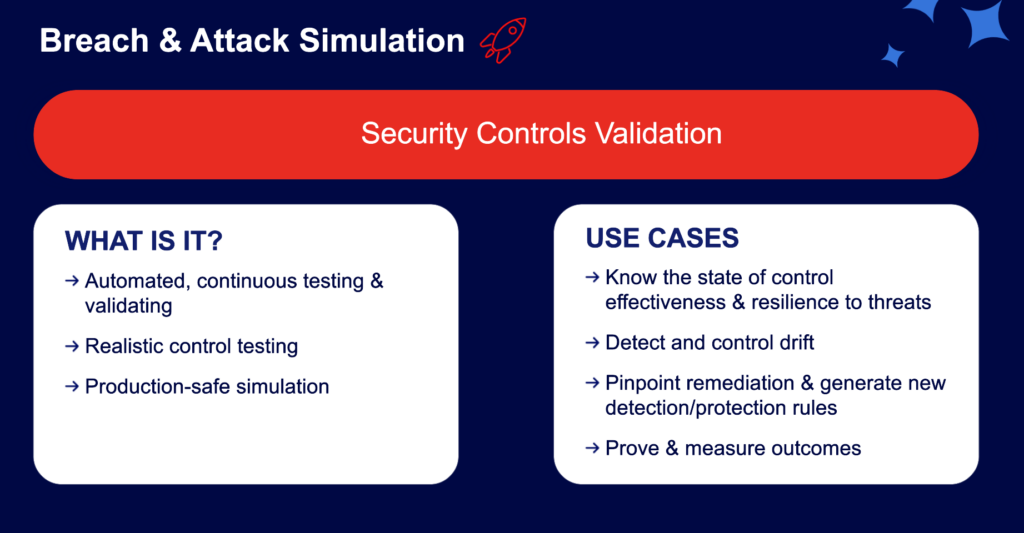
Breach and attack simulation for security controls validation

Fully automated and customizable, Cymulate challenges your security controls against the full attack kill chain with thousands of simulated threats, both common and novel. But it doesn’t stop there. Red teams use Cymulate in order to uncover a wide set of vulnerabilities and launch customized attacks. Through integration with SIEM vendors, Cymulate correlates attacks to events and alerts enabling security (blue) teams to validate that their SIEM systems are set up properly. And integrations with vulnerability scanners provides context to the vulnerabilities, showing how they are exploited in real attack techniques used by threat actors, providing a realistic vector to prioritizing the mitigation efforts.

At the end of the day, telling InfoSec teams about what we do is fun and rewarding, because it allows them to fix problems they did not know they had the ability to fix.

Cymulate Exposure Validation makes advanced security testing fast and easy. When it comes to building custom attack chains, it's all right in front of you in one place.
Mike Humbert, Cybersecurity Engineer
DARLING INGREDIENTS INC.
Learn More
Book a Demo