

Cyber Kill Chain
The Cyber Kill Chain shows the step-by-step execution of a cyberattack, from initiation to data exfiltration. This framework is invaluable for analyzing and mitigating threats, including ransomware, data breaches, and advanced persistent threats (APTs).
Originally developed by Lockheed Martin, the Cyber Kill Chain helps identify, engage, and neutralize targets effectively. Over time, it has evolved to address emerging threats such as social engineering, insider risks, and sophisticated ransomware attacks. By thwarting an attacker at any stage, defenders can prevent significant damage and gather valuable insights to strengthen their defenses.
What is the Cyber Kill Chain?
The Cyber Kill Chain framework provides a structured approach for blue teams to analyze incidents and communicate effectively among security professionals. It outlines the phases an attacker follows during a cyberattack, offering a systematic way to identify and mitigate advanced threats.
It can be used to distinguish between minor incidents and critical crises. Its adaptability to evolving threats, such as those stemming from cloud computing and IoT technologies, underscores its relevance in modern cybersecurity. That flexibility underlines the model's resilience and applicability. Although attack methods have continued to evolve and diversify, the Cyber Kill Chain remains relevant for analyzing the different stages of a cyberattack and developing robust defense mechanisms against evolving threats.
The Origins: Lockheed Martin's Cyber Kill Chain
Developed in 2011 by Lockheed Martin, the Cyber Kill Chain is part of an intelligence-based defense strategy designed to help security teams understand and disrupt the phases of cyber intrusions. Borrowing terminology from military strategy, the "kill chain" describes the sequence of events leading to the engagement and neutralization of a target.By breaking down an attack into stages, defenders can plan targeted tactics to detect, disrupt, and defend against threats
The framework has been continuously modified to cope with the increasing complexity and variety of current threats. Over time, the model has been adjusted to account for the advanced tactics, techniques, and procedures (TTPs) employed in contemporary cyberattacks, which often surpass the scenarios initially envisioned.
A significant evolution is the addition of more stages or redefinition of stages to reflect current threat landscapes. For example, the payload of the latest adaptation includes phases addressing the attacker's persistence in a network, lateral movement (to other machines), and privilege escalation to reach a vital resource target.
These enhancements also generalize the framework to the post-exploitation phase, including data exfiltration or malicious sabotage of critical infrastructure, thereby providing a solution to the whole lifecycle of current cyberattacks.
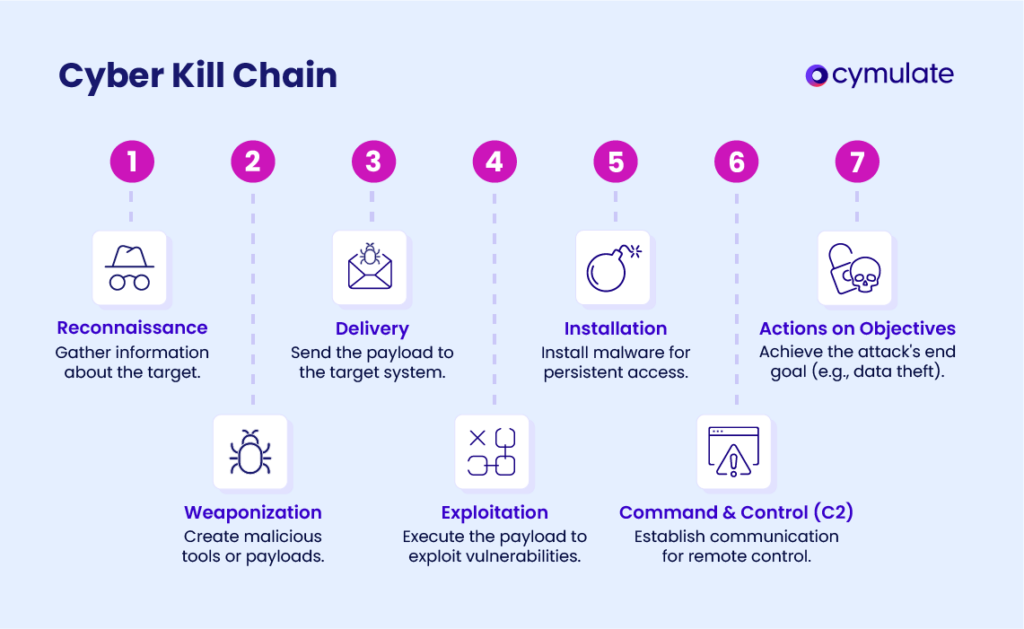
The 7 Steps of the Cyber Kill Chain
- Reconnaissance: Attackers prepare for the target by trying to find out about the systems, the users and what manner of vulnerabilities they may have. For instance, they may scan the Internet for public Internet IP ranges with open ports or browse social media to look for clues on employee roles within the organization. Defensive action includes adversary emulation testing to determine the effectiveness of security tools in identifying and mitigating adversarial scanning activities, and anomaly monitoring and detection of suspicious access patterns.
- Weaponization: Attackers develop malicious tools or payloads to target known vulnerabilities. For example, they could create an email phishing attack that contains a Word document that executes a macro exploit. Establishing sandbox environments to test and quarantine weaponized files can stop an attack before attackers can completely compromise the system.
- Delivery: Attackers deliver the payload via a vector to the target using means such as electronic mail, USB, and compromised websites. Relevant examples include sending an email with a website link that contains malware. Consequently, the organization may want to validate its web security tools against the threat by performing extensive penetration tests.
- Exploitation: Attackers use the payload to exploit a vulnerability that leads to gaining initial access. They could also use it to exploit an unpatched server vulnerability for remote code execution. This risk can be reduced by closely validating an organization's patch management process and ensuring that vulnerability scanners find issues that could be exploited.
- Installation: Attackers install malware or backdoors to maintain their position inside the system. For instance, they may drop a keylogger or a remote access Trojan onto the target machine. Proactive measures, such as using endpoint detection tools while carrying out simulated attacks, support early detection and blocking of such malicious installations.
- Command and Control (C2): The attacker creates connections with victim machines to execute commands or export information. For instance, malware can call back to an attacker's server to receive command directives. Defenders can simulate this traffic to test network defenses' ability to detect and block unauthorized communications.
- Actions on Objectives: This is where attackers fulfill their final goals, such as stealing data, destroying it, or conducting espionage. The attackers might export customer data or encrypt all the systems in anticipation of a ransom demand. Good monitoring systems, tuned to detect anomalies in data transmission or file access, help with early responses that limit the impact.
Cyber Kill Chain vs. MITRE ATT&CK
The Cyber Kill Chain and MITRE ATT&CK frameworks share one common goal: to analyze adversary behavior and tactics for the enhancement of cyber defense. Both provide real-world insights to help an organization enhance its capability for threat detection, prevention, and response. However, they have some significant differences in terms of their focus and application.
- The Cyber Kill Chain shows very clearly the life cycle of an attack in terms of consecutive stages: reconnaissance, delivery, and exploitation.
- On the other hand, the MITRE ATT&CK framework is far more developed and connects the dots among concrete tactics and techniques employed by adversaries in real-life attacks, especially APTs.
An organization can choose any of these two frameworks depending on their needs or it may decide to use them together for better results. Where the Cyber Kill Chain is best applied in explaining the end-to-end flow of an attack and in strategically organizing security programs, MITRE ATT&CK serves well for operational activities such as threat hunting, adversary emulation, and refinement of detection capabilities. More importantly, together, they let organizations knit both strategic plans and tactical execution to stand fully prepared against the evolving threat landscape.
The Role of Adversary Emulation
Adversary emulation is the key factor at all levels of validating security controls in the Cyber Kill Chain. It replicates the TTPs utilized in real life by the attackers, which allows an organization to test its defenses in a controlled, secure manner. It is helpful in finding weaknesses in detection, prevention, and response capabilities at every phase, starting from the beginning with reconnaissance up to the execution of objectives. Penetration testing provides insight to inform proactive steps that security teams must take to bolster the defense posture and set the configurations of their security tools to address emerging threats better.
Validate Complete Attack Paths with Cymulate
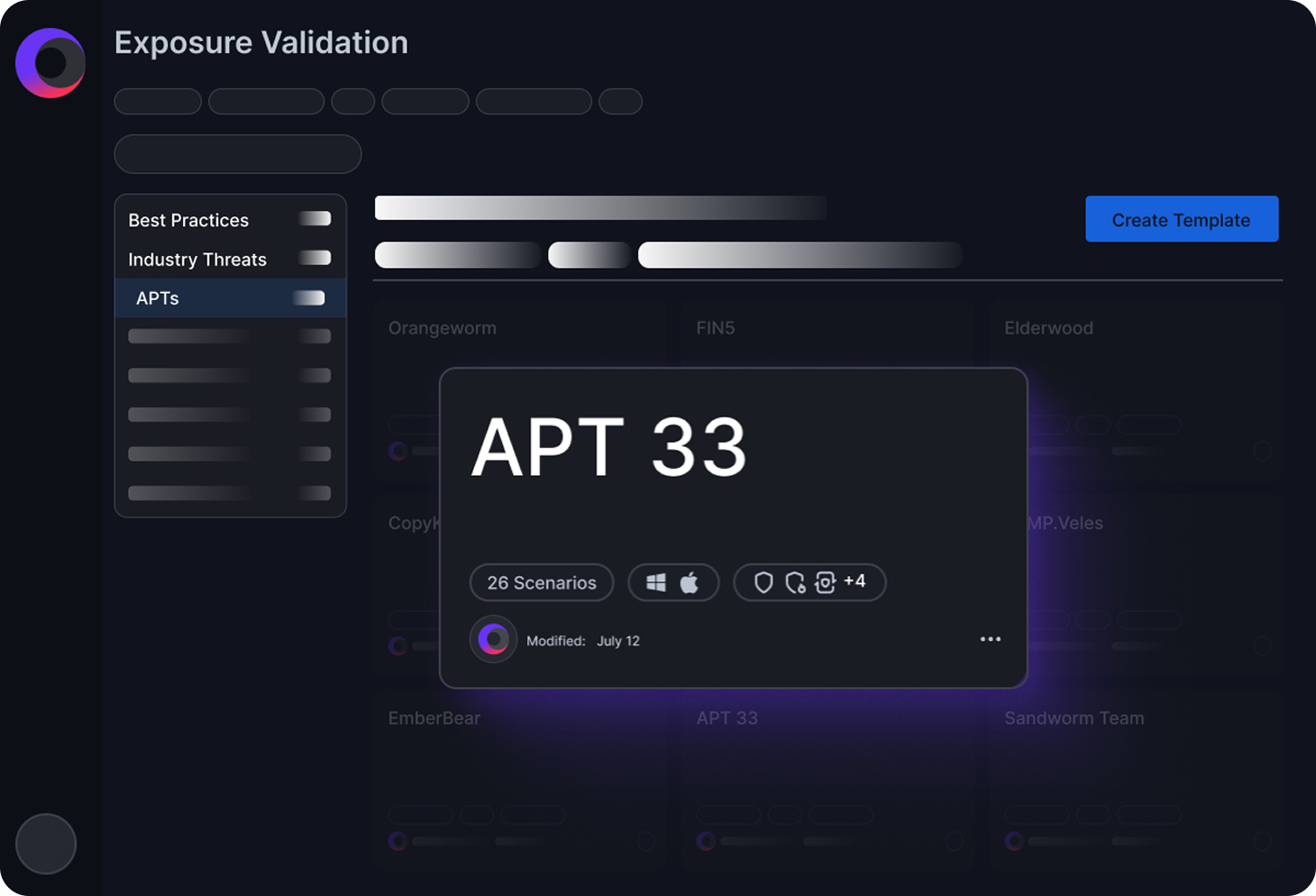
Modern attacks rarely rely on a single technique. Attackers combine phishing, malware, credential theft, lateral movement and privilege escalation to achieve their objectives. The Cymulate Exposure Validation Platform helps organizations continuously validate their defenses against these end-to-end attack scenarios by safely simulating real-world attacker behavior across the entire attack chain.
Full Kill Chain Scenarios enable security teams to validate detection and response capabilities, identify exploitable security gaps and prioritize remediation before attackers can exploit them.
How Full Kill Chain Scenarios work
Rather than testing individual attack techniques in isolation, Cymulate simulates complete attack paths that reflect how modern adversaries operate. These production-safe assessments validate the effectiveness of security controls throughout every stage of an attack while providing actionable guidance to strengthen cyber resilience.
Validate initial access
The assessment begins by simulating the techniques attackers use to gain an initial foothold.
Examples include:
- Phishing emails and malicious attachments.
- Drive-by downloads and malicious links.
- Initial malware execution.
- Other production-safe initial access techniques.
This validates whether email security, endpoint protection and user awareness controls successfully detect and prevent compromise.
Validate attacker progression
Once initial access is established, Cymulate safely simulates how attackers attempt to expand their access within an environment.
Security teams can validate defenses against techniques such as:
- Privilege escalation.
- Credential access.
- Lateral movement.
- Defense evasion.
- Ransomware and malware execution.
These simulations reveal whether security controls detect attacker activity before critical assets are compromised.
Prioritize remediation
Every assessment concludes with actionable insights that help organizations continuously strengthen their security posture.
Cymulate provides:
- Validation of security control effectiveness.
- Identification of exploitable security gaps.
- Prioritized remediation guidance.
- Recommendations to improve detection and response capabilities.
- Continuous validation to confirm remediation efforts are successful.
Strengthen cyber resilience with continuous attack validation
By simulating complete attack paths rather than isolated techniques, the Cymulate Exposure Validation Platform helps organizations:
- Validate security controls against real attacker behavior.
- Identify exploitable gaps before attackers do.
- Prioritize remediation based on validated exposure.
- Continuously improve cyber resilience through ongoing exposure validation.
Enhancing Cybersecurity with the Kill Chain Framework
The Cyber Kill Chain is an important framework for understanding and mitigating cyberattacks. By leveraging adversary emulation, integrating platforms like Cymulate, and combining complementary frameworks such as MITRE ATT&CK, organizations can build robust, adaptive defenses against the constantly evolving cyber threat landscape.
Featured Resources
View More Resources
Hey, Blue Teams: Stop Waiting for Pen Tests to Find Gaps
Manual pen testing falls short - continuous validation enables real-time visibility, automated testing, and stronger security posture.
CISA Alert – Is Your Organization Exposed?
Cybersecurity is no longer a luxury, it’s a necessity with new threats emerging every day. Every day the Cybersecurity and