
Frequently Asked Questions

Product Information & Security Validation

What is Continuous Threat Exposure Management (CTEM) and how does it differ from penetration testing?

Continuous Threat Exposure Management (CTEM) is a proactive security program that continuously identifies, validates, prioritizes, and remediates cyber exposure across an organization's infrastructure. Unlike penetration testing, which is a human-driven, point-in-time assessment focused on achieving a specific adversarial goal, CTEM aims to map all possible exposures and prevent attackers from achieving their objectives. CTEM is continuous and non-disruptive, while penetration testing is periodic and requires strict Rules of Engagement to avoid business disruption. Source

How does Cymulate implement CTEM in its platform?

Cymulate's Exposure Management and Security Validation platform implements CTEM by validating the efficacy of security controls and uncovering security gaps through hundreds or thousands of simulation operations. The platform tests each layer of security in-depth, mapping strengths and weaknesses without pursuing a targeted goal. It is designed to be non-disruptive and non-destructive, allowing frequent testing without risk to systems or data. Source

What are the main objectives of penetration testing compared to CTEM?

Penetration testing is focused on achieving a specific goal, such as compromising a system or extracting files, using human-driven tactics and adapting to circumstances. CTEM, on the other hand, aims to identify and prevent as many attack attempts as possible by mapping exposures and validating security controls across the organization. Source

How does Cymulate's platform validate security controls?

Cymulate's platform runs extensive simulation operations to test the strengths and weaknesses of security controls, such as endpoint defenses or email gateways. It validates controls by mapping exposures and providing actionable insights, rather than pursuing a single adversarial goal. Source

Is Cymulate's testing disruptive or risky for business operations?

No, Cymulate's platform is designed to be non-disruptive and non-destructive, eliminating the need for strict Rules of Engagement and minimizing risk to systems, users, or data. This allows for frequent and comprehensive testing without impacting business continuity. Source

Why should organizations use both CTEM and penetration testing?

Both CTEM and penetration testing provide unique value. CTEM offers continuous visibility and validation of security controls, while penetration testing provides targeted, human-driven assessments of specific attack paths. Using both methodologies ensures comprehensive coverage and cross-verification of security gaps. Source

How often should penetration testing and CTEM be performed?

Penetration testing is typically performed once or twice per year due to its point-in-time nature and resource requirements. CTEM, enabled by Cymulate, is designed for continuous operation, providing ongoing assessment and validation of security controls across all environments. Source

What are BAS and ASM, and how do they complement CTEM and pen testing?

Breach and Attack Simulation (BAS) and Attack Surface Management (ASM) tools map out the strengths and gaps of each layer of security controls. BAS and ASM, when used alongside CTEM and pen testing, provide a comprehensive view of security posture and help identify avenues of entry for attackers. Source

How does Cymulate's platform help organizations prepare for future threats?

Cymulate's CTEM approach identifies gaps in security controls, even those not currently exploitable. This proactive mapping ensures organizations can address weaknesses before they become active threats, maintaining resilience against evolving attack techniques. Source

What is the role of Rules of Engagement (ROE) in penetration testing?

Rules of Engagement (ROE) are critical in penetration testing to ensure business operations are not disrupted and vital data is protected. ROE define what is fair game and what is off-limits, guiding testers to avoid causing harm during assessments. Source

How does Cymulate provide ongoing visibility into security gaps?

Cymulate's Exposure Management and Security Validation platform continuously assesses and validates security controls, offering ongoing visibility into strengths and weaknesses across the organization. This enables timely action on new vulnerabilities and ensures comprehensive documentation for compliance and audits. Source

Can Cymulate project potential attack paths using assessment data?

Cymulate is developing capabilities to project potential attack paths using datasets from assessments across different environments and security control sets. This will enhance proactive defense planning and threat modeling. Source

What is the gold standard for security validation according to Cymulate?

The gold standard for security validation is to implement both CTEM and periodic penetration testing. This dual approach ensures comprehensive coverage, continuous assessment, and targeted validation of security controls. Source

How does Cymulate empower organizations to fortify their defenses?

Cymulate empowers organizations by providing continuous assessment and validation of their security posture, advanced threat simulation, and actionable insights. The platform is committed to innovation and equips organizations to stay ahead of cyber threats. Source

What resources are available to learn more about CTEM and security validation?

Cymulate offers a variety of resources, including blog posts, e-books, and solution briefs on CTEM, security validation, and exposure management. Visit the Resource Hub for more information.

How does Cymulate's Exposure Validation make advanced security testing fast and easy?

Cymulate Exposure Validation provides a user-friendly interface for building custom attack chains and running advanced security tests. The platform consolidates testing tools and processes, making it accessible and efficient for security teams. Source

What is the benefit of mapping security gaps with BAS and ASM?

Mapping security gaps with Breach and Attack Simulation (BAS) and Attack Surface Management (ASM) helps organizations understand the strengths and weaknesses of each layer of security controls. This comprehensive mapping enables targeted remediation and strengthens overall security posture. Source

Features & Capabilities

What features does Cymulate offer for security validation?

Cymulate offers continuous threat validation, unified platform integration (BAS, CART, Exposure Analytics), attack path discovery, automated mitigation, AI-powered optimization, complete kill chain coverage, ease of use, and an extensive threat library with over 100,000 attack actions updated daily. Source

Does Cymulate support integrations with other security technologies?

Yes, Cymulate integrates with a wide range of security technologies, including Akamai Guardicore, AWS GuardDuty, BlackBerry Cylance OPTICS, Carbon Black EDR, Check Point CloudGuard, Cisco Secure Endpoint, CrowdStrike Falcon, Wiz, SentinelOne, and more. For a complete list, visit our Partnerships and Integrations page.

How does Cymulate automate mitigation of threats?

Cymulate integrates with security controls to push updates for immediate prevention of threats, automating mitigation and reducing manual intervention. Source

What is Cymulate's threat library and how is it updated?

Cymulate provides an advanced library of over 100,000 attack actions aligned to MITRE ATT&CK, updated daily with new threats and techniques to ensure customers stay ahead of emerging risks. Source

How easy is Cymulate to implement and use?

Cymulate is designed for agentless operation, requiring no additional hardware or complex configuration. Customers can start running simulations almost immediately after deployment, with minimal resources required. The platform is praised for its intuitive interface and actionable insights. Source

What feedback have customers given about Cymulate's ease of use?

Customers consistently praise Cymulate for its ease of use, intuitive dashboard, and immediate value. Testimonials highlight the platform's user-friendly interface, accessible support, and effectiveness in providing actionable insights. Source

Pricing & Plans

What is Cymulate's pricing model?

Cymulate operates on a subscription-based pricing model tailored to each organization's requirements. Pricing is determined by the chosen package, number of assets, and scenarios selected for testing and validation. For a detailed quote, schedule a demo with Cymulate's team. Source

Competition & Comparison

How does Cymulate differ from other security validation platforms?

Cymulate stands out with its unified platform integrating BAS, CART, and Exposure Analytics, continuous threat validation, AI-powered optimization, complete kill chain coverage, ease of use, and proven customer outcomes such as a 52% reduction in critical exposures and 81% reduction in cyber risk. Source

What advantages does Cymulate offer for different user segments?

Cymulate provides tailored solutions for CISOs, SecOps teams, Red Teams, and Vulnerability Management teams. CISOs benefit from quantifiable metrics, SecOps teams gain operational efficiency, Red Teams access automated offensive testing, and Vulnerability Management teams improve prioritization and validation. Source

Use Cases & Benefits

Who can benefit from Cymulate's platform?

Cymulate's platform is designed for CISOs, Security Leaders, SecOps teams, Red Teams, Vulnerability Management teams, and organizations of all sizes across industries such as finance, healthcare, retail, media, transportation, and manufacturing. Source

What are the key benefits of using Cymulate?

Key benefits include improved security posture (up to 52% reduction in critical exposures), operational efficiency (60% increase in team efficiency), faster threat validation (40X faster than manual methods), cost savings, enhanced threat resilience (81% reduction in cyber risk), and better decision-making with actionable insights. Source

Are there case studies demonstrating Cymulate's effectiveness?

Yes, Hertz Israel reduced cyber risk by 81% in four months, a sustainable energy company scaled penetration testing cost-effectively, and Nemours Children's Health improved detection in hybrid environments. Explore more case studies at our Case Studies page.

Technical Requirements & Support

What are Cymulate's security and compliance certifications?

Cymulate holds SOC2 Type II, ISO 27001:2013, ISO 27701, ISO 27017, and CSA STAR Level 1 certifications, demonstrating adherence to industry-leading security and compliance standards. Source

How does Cymulate ensure data security?

Cymulate ensures data security through encryption for data in transit (TLS 1.2+) and at rest (AES-256), secure AWS-hosted data centers, and a tested disaster recovery plan. Source

Is Cymulate GDPR compliant?

Yes, Cymulate incorporates data protection by design and has a dedicated privacy and security team, including a Data Protection Officer (DPO) and Chief Information Security Officer (CISO), ensuring GDPR compliance. Source

What support options are available for Cymulate customers?

Cymulate offers email support, real-time chat support, a knowledge base with technical articles and videos, webinars, e-books, and an AI chatbot for querying the knowledge base and creating AI templates. Source

Resources & Insights

Where can I find Cymulate's blog and newsroom?

You can stay updated with the latest threats, research, and company news by visiting our blog and our newsroom.

Where can I find resources like whitepapers, product info, and thought leadership articles?

All resources, including insights, thought leadership, and product information, are available in our Resource Hub.

Do you have a blog post about preventing lateral movement attacks?

Yes, Cymulate has a blog post titled 'Stopping Attackers in Their Tracks' discussing common lateral movement attacks and prevention strategies. Read it on our blog.

How can I find out about events and webinars Cymulate is hosting or attending?

Information about live events and webinars is available on our Events & Webinars page.

New: 2026 Gartner® Market Guide for Adversarial Exposure Validation
Learn More
Cymulate named a Customers' Choice in 2025 Gartner® Peer Insights™
Learn More
New Research: Azure Arc Privilege Escalation & Identity Takeover
Learn More
An Inside Look at the Technology Behind Cymulate
Learn More

Continuous Threat Exposure Management (CTEM) vs. Penetration Testing

By: Cymulate

Last Updated: January 5, 2026

Understanding how Continuous Threat Exposure Management (CTEM) compares to penetration testing is essential for building a well-rounded security strategy. While both approaches aim to identify weaknesses in an organization’s defenses, they differ in objectives, execution, and outcomes.

The following breakdown outlines the distinctions between the two and explains how they can work together to strengthen security posture.

Defining Penetration Testing

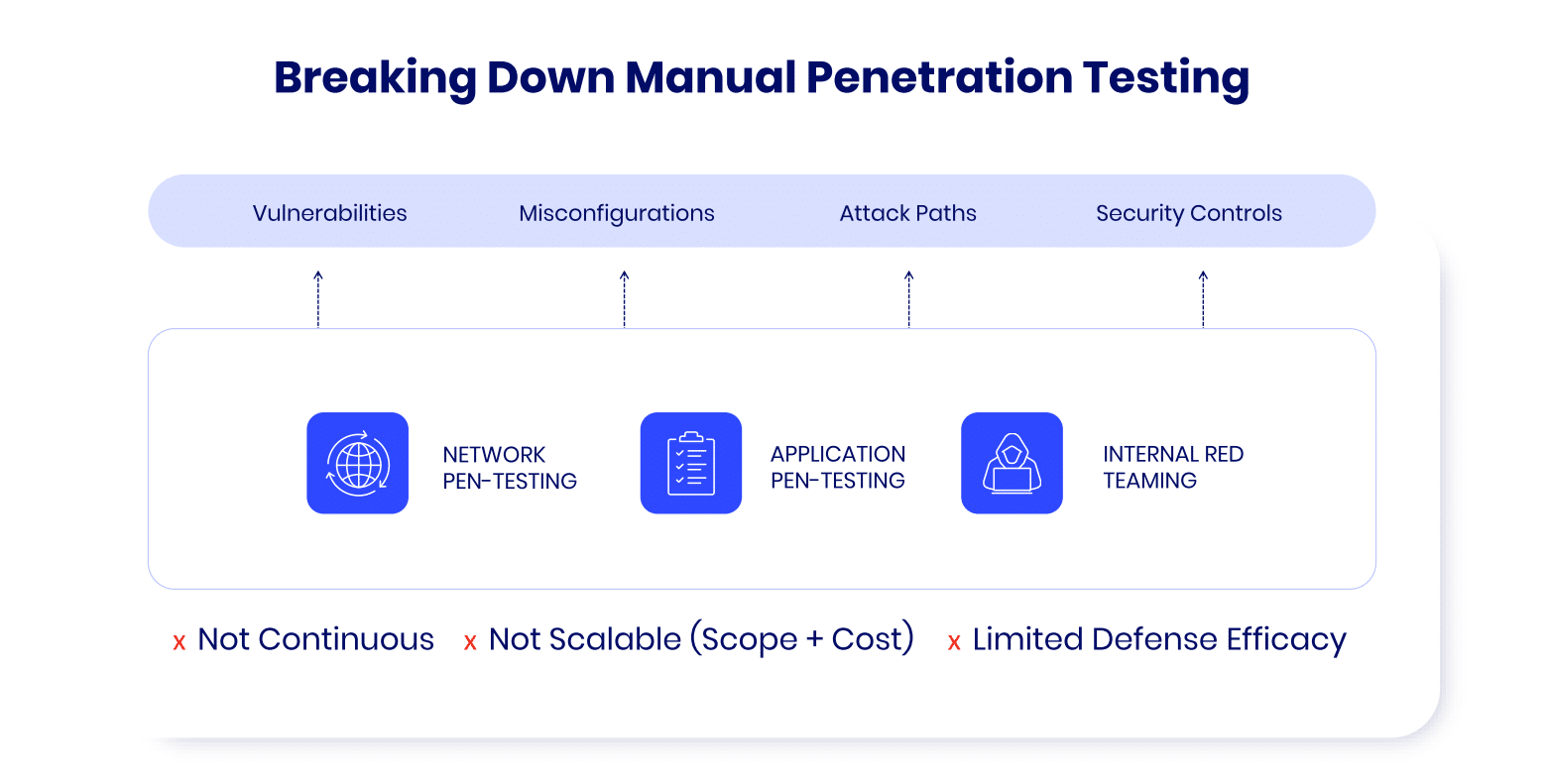
Penetration testing is a human-driven offensive test that attempts to achieve a specific goal, such as capturing a specific system or removing a particular file or set of files. It is human-driven because the tester may encounter circumstances that require non-linear thinking, where the direct path is not the right path. An experienced pen-tester can shift and pivot at each step along the way – sometimes mid-step – and adapt techniques to reach the stated goal. This leads to a curious pattern: once a pen-tester overcomes a security control, they’re not performing all the other potential attacks they could have used – they’ve already overcome the control, and then move on.

The other hallmark of a pen test is that Rules of Engagement (ROE) are absolutely necessary to ensure that business operations are not disrupted, and no vital data is put at risk. Since a pen-tester may take paths that carry significant risks in pursuing their goal, knowing what is fair game – and what is off-limits – is critical to ensuring the test doesn’t do more harm than good.
Defining Continuous Threat Exposure Management (CTEM)

A CTEM approach consists of mapping an infrastructure's exposure, correlating the uncovered exposure to the exposed assets' values or the extent of the potential damage to business continuity and such. Whereas a pen tester is focused on achieving a specific goal, a CTEM approach is focused on identifying and preventing as many as possible of pen testers or attackers attempts to achieve an adversarial goal.

CTEM wheel

How Cymulate Implements CTEM

The Cymulate Exposure Management and Security Validation platform can implement a CTEM approach by validating the efficacy of security controls and uncovering security gaps. Instead of attempting to reach a specific goal, the Cymulate platform runs hundreds or thousands of simulation operations to map out the strengths and weaknesses of a set of security controls – such as endpoint defensive solutions or email gateway defenses, etc. Each layer of security is tested in-depth, and while the ability to look across layers of controls most definitely exists, the goal is a validation of the controls, not the pursuit of a targeted goal.

The platform is also designed from the ground up to be non-disruptive and non-destructive, removing the need for ROE without incurring risk to the systems, users, or data of the organization. This way, more systems can be tested, and tested more often, since this doesn’t increase risk or put the business in jeopardy of being offline, and requires minimal resources.
CTEM and Pen Testing: Why You Need Both

One of the most common mistakes made by organizations is to think that one methodology removes the need for the other.

Both CTEM and pen testing have value in a robust cybersecurity operation, and neither should be passed over in favor of the other. The reason is simple, the two methodologies are designed to do different things, and both are critical for knowing how to defend the organization against attacks.

Imagine you are a burglar attempting to steal something from a house. A thief would attempt to force the door open and, if that worked, would move on to try getting past the burglar alarm. If the door did not work, they would attempt entry via a window, and so on. The point here is that the first weakness in home security that works is the one they use as their goal is to steal whatever they are after.

A security contractor, conversely, would attempt to map out all the strengths and weaknesses of the house as a whole. Checking each door, window, storm cellar, a secret tunnel, porch entry, crawlspace, etc. The goal is not to steal but to define all the ways that someone could be successful in the attempt to get into the house to see where gaps exist in the house security.

Both types of operations can tell you a great deal about the overall security of the house. Both can also be used to cross-verify each other – the contractor may say a door is strong, but the thief might know how to pick that particular type of lock easily. Alone, you would have trouble getting the entire picture, but together you know that the house is protected.

Mapping Security Gaps with BAS and ASM

In the same way, using pen-testing and implementing a CREM approach together can allow you to know the complete state of your cybersecurity. Tools such as BAS and ASM map out the strengths and gaps of each layer of security controls while pen-testing along allowed paths (the ROE) allows you to truly battle-test where those gaps may line up to give an attacker an avenue of entry to a specific goal.

There is another reason to use both methodologies – preparation for future events. Implementing a CTEM approach can show you where gaps exist in any given set of security controls, even if those gaps cannot be actively used by an attacker at the current time. For example, a weakness in endpoint security may be compensated for by a strong defense at the network layer and, as such, may never be used by a pen-tester. That situation can change, however. If a new vulnerability is discovered in the networking security controls, that weakness that was unusable by a pen-tester today can suddenly become a huge problem tomorrow; and more to the point, a huge problem during the next pen-test if it isn’t addressed before that point.

Frequency and Timing: One-Time vs. Continuous Testing

While both methodologies are critical for overall cybersecurity, their schedules are vastly different. Pen-testing is a point-in-time operation, usually done once or twice per year. The reasons for this are the need to map out the ROE, along with the highly specialized training and experience a pen-tester must have – after all, with a limited number of experienced professionals, there are only so many tests they can do in a given amount of time. CTEM is designed to be used continually. When a CTEM implementation platform is configured well, you could have simulations of different layers of security across different environments, which result in there being a simulation occurring at any given time of any day of any month – ensuring true continuous assessment of the organization as a whole.

Because of differences in when these methodologies are performed, using just pen testing once a year leaves you with no visibility as to the effectiveness of your security controls the other 11 months of the year. Using both methodologies increases your visibility dramatically, allowing you to take action should any new vulnerabilities or concerns arise.

Integrated Testing for Comprehensive Security

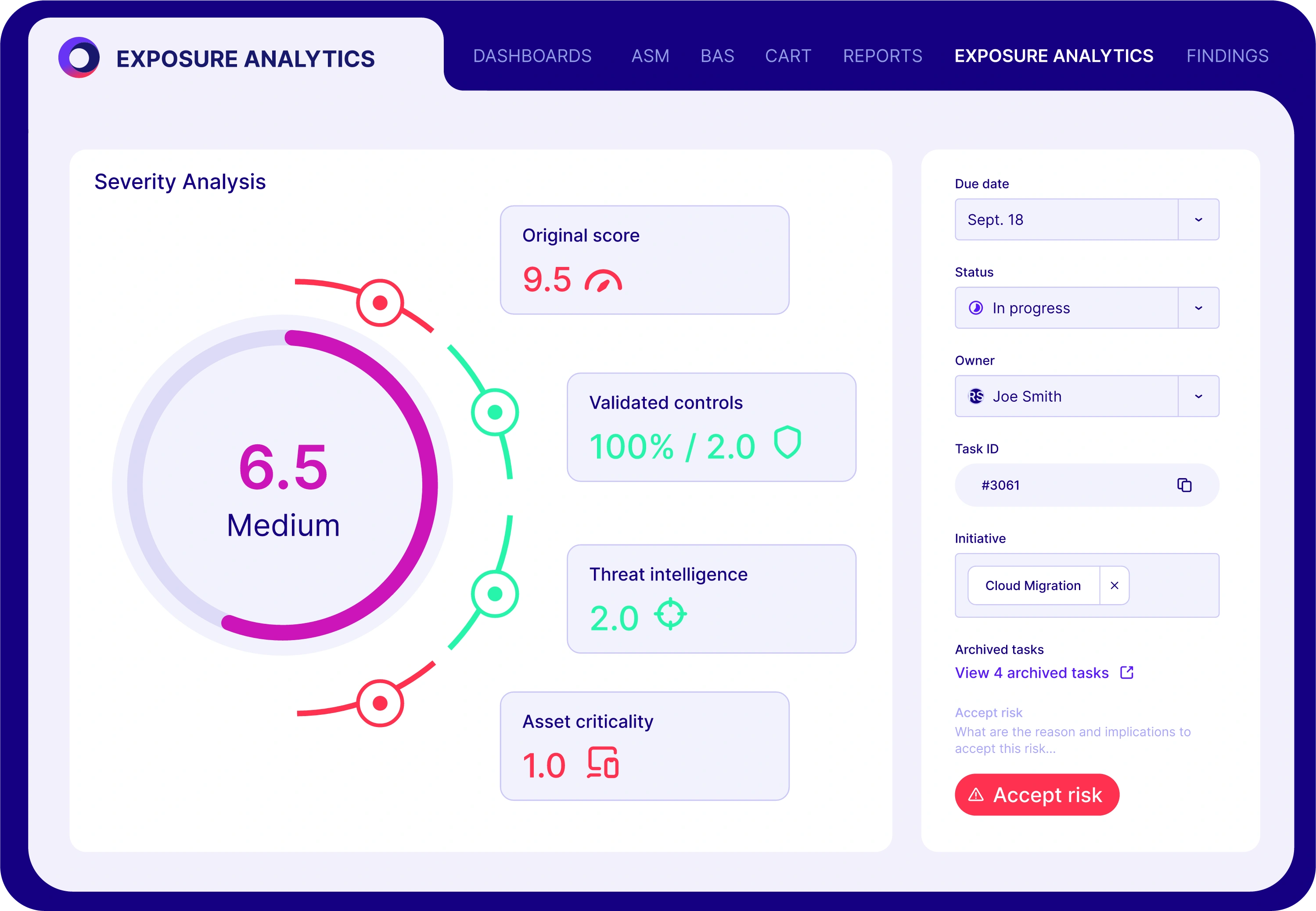
The Cymulate Exposure Management and Security Validation platform gives you ongoing visibility into the strengths and gaps of the security controls throughout your organization. Pen testing provides directed confirmation that the controls work together properly – even when an attacker can change direction and strategy in the middle of the attack. Together, you can manage any gaps, ensure that an attacker would be derailed, and have the documentation to prove it should the need arise.

Cymulate is continuously developing its Exposure Management and Security Validation platform – for example, in the near future, it will be possible to project potential attack paths using the dataset created by assessments across different environments and security control sets. That being said, until AI advances to the point where an automated system can safely perform potentially destructive operations while still holding to a set of Rules of Engagement, the need for implementing both a CTEM approach and running pen-tests will ensure that using both methodologies is going to be the gold standard for some time to come.

Cymulate Exposure Validation makes advanced security testing fast and easy. When it comes to building custom attack chains, it's all right in front of you in one place.
Mike Humbert, Cybersecurity Engineer
DARLING INGREDIENTS INC.
Learn More
Book a Demo