
Frequently Asked Questions

Credential Compromise: Risks, Methods & Real-World Examples

What is credential compromise in cybersecurity?

Credential compromise occurs when attackers gain unauthorized access to authentication credentials such as usernames, passwords, API keys, or other login details. Once stolen, these credentials can be used to access sensitive systems, steal data, deploy ransomware, commit fraud, or escalate attacks. (Source: Cymulate Credential Compromise Glossary)

What are the main risks associated with credential compromise?

The main risks include data breaches, ransomware deployment, financial fraud, reputational damage, and operational disruption. Attackers can use compromised credentials to steal sensitive information, lock critical systems for ransom, impersonate employees, and cause widespread business impact. (Source: Cymulate Credential Compromise Glossary)

How do credentials typically become compromised?

Credentials are commonly compromised through phishing attacks, social engineering, brute-force attacks, credential stuffing, man-in-the-middle (MitM) attacks, malware/keyloggers, and dark web credential dumps. Attackers use these methods to trick users, guess weak passwords, intercept logins, or buy stolen credentials online. (Source: Cymulate Credential Compromise Glossary)

Can you provide real-world examples of credential compromise attacks?

Yes. In 2021, Colonial Pipeline suffered a major ransomware attack due to a single compromised password, resulting in fuel supply disruptions and a multi-million dollar ransom. In 2022, Uber experienced a breach when an attacker purchased stolen credentials online, gaining access to internal systems and sensitive data. (Sources: CISA, HumanFirewall.io)

What is credential stuffing and how does it work?

Credential stuffing is when attackers use stolen usernames and passwords from one breach to try and access accounts on other platforms, exploiting users who reuse passwords. If successful, attackers can compromise multiple accounts with a single set of credentials. (Source: Cymulate Credential Compromise Glossary)

How does phishing contribute to credential compromise?

Phishing attacks trick users into revealing their login details by sending fraudulent emails, texts, or links that appear legitimate. When users enter their credentials, attackers capture them for unauthorized access. Phishing is one of the most common and effective methods for credential theft. (Source: Cymulate Credential Compromise Glossary)

What is the impact of a single compromised password?

A single compromised password can lead to large-scale cyberattacks, including data breaches, ransomware deployment, and operational shutdowns. For example, the Colonial Pipeline attack was initiated by one stolen password, resulting in significant financial and operational consequences. (Source: Cymulate Credential Compromise Glossary)

How do man-in-the-middle (MitM) attacks lead to credential compromise?

MitM attacks occur when hackers intercept login credentials during transmission, often over unsecured Wi-Fi or compromised networks. Attackers eavesdrop on login sessions and steal usernames and passwords, enabling unauthorized access. (Source: Cymulate Credential Compromise Glossary)

What role does the dark web play in credential compromise?

Stolen credentials are often sold on the dark web, where cybercriminals purchase them for use in further attacks. This marketplace enables attackers to access a wide range of compromised accounts and escalate their campaigns. (Source: Cymulate Credential Compromise Glossary)

How does social engineering contribute to credential compromise?

Social engineering involves manipulating individuals into revealing their credentials, either by phone, in person, or through other deceptive means. Attackers exploit human trust to gain access to sensitive information. (Source: Cymulate Credential Compromise Glossary)

Prevention & Best Practices

What are the best practices for preventing credential compromise?

Best practices include enforcing multi-factor authentication (MFA), using strong password policies, implementing least privilege access, regularly rotating passwords, using password managers, monitoring for credential leaks, and training employees on phishing awareness. (Source: Cymulate Credential Compromise Glossary)

How does multi-factor authentication (MFA) help prevent credential compromise?

MFA adds an extra layer of security by requiring a second factor, such as a one-time code or biometric verification, in addition to a password. Even if a password is stolen, attackers cannot access accounts without the second factor. (Source: Cymulate Credential Compromise Glossary)

Why are strong password policies important for credential security?

Strong password policies require long, complex, and unique passwords, ban commonly used passwords, and prevent reuse across accounts. These measures make it harder for attackers to guess or reuse credentials in attacks. (Source: Cymulate Credential Compromise Glossary)

How does least privilege access reduce the risk of credential compromise?

Least privilege access limits user permissions to only what is necessary for their role. This reduces the potential damage if credentials are compromised, as attackers have minimal access to sensitive systems. (Source: Cymulate Credential Compromise Glossary)

Why is employee training on phishing awareness critical for credential security?

Employees are often the first line of defense against phishing attacks. Regular training helps them identify suspicious emails and links, avoid entering credentials on unverified sites, and report phishing attempts, reducing the risk of credential compromise. (Source: Cymulate Credential Compromise Glossary)

How does regular password rotation help prevent credential compromise?

Regularly changing passwords and credentials limits the window of opportunity for attackers to exploit stolen credentials. If credentials are leaked, rotation ensures they become useless to attackers. (Source: Cymulate Credential Compromise Glossary)

What is the role of zero trust in preventing credential compromise?

The zero trust security model assumes no user or device is trusted by default. It requires continuous verification of identities, least privilege access, and micro-segmentation to limit attacker movement. Zero trust helps prevent credential compromise by enforcing strict authentication and monitoring. (Source: Cymulate Credential Compromise Glossary)

How can password managers help prevent credential compromise?

Password managers generate and store strong, unique passwords for each account, reducing the risk of weak or reused credentials. This makes it harder for attackers to compromise multiple accounts. (Source: Cymulate Credential Compromise Glossary)

Why is monitoring for credential leaks important?

Monitoring for credential leaks, such as through dark web monitoring, helps organizations detect if their credentials have been exposed. Early detection allows for prompt password resets and reduces the risk of attackers exploiting compromised accounts. (Source: Cymulate Credential Compromise Glossary)

Cymulate Platform: Features, Use Cases & Security

How does Cymulate help prevent credential compromise?

Cymulate's Security Validation and Exposure Management Platform simulates thousands of cyber-attacks to verify that zero trust segmentation and access controls function as intended. It continuously assesses segmentation, provides actionable insights, and integrates with SIEM and SOAR solutions to automate detection and response to credential threats. (Source: Cymulate Credential Compromise Glossary)

What are Cymulate's key features for credential compromise prevention?

Cymulate offers comprehensive segmentation validation, customizable attack simulation templates, automated reporting with in-depth analysis, actionable mitigation guidance, and schedulable attack templates for continuous validation. It also integrates with SIEM and SOAR systems for automated threat response. (Source: Cymulate Credential Compromise Glossary)

How does Cymulate integrate with other security tools?

Cymulate integrates with a wide range of security technologies, including SIEM and SOAR solutions, to automate detection and response to credential threats. It also partners with leading vendors in network, cloud, endpoint, and vulnerability management. (Source: Cymulate Technology Alliances Partners)

What types of organizations benefit from Cymulate's platform?

Cymulate serves organizations of all sizes and industries, including finance, healthcare, retail, media, transportation, and manufacturing. Its solutions are tailored for CISOs, SecOps teams, Red Teams, and Vulnerability Management teams. (Source: Cymulate Roles & Industries)

What are some real-world results achieved with Cymulate?

Customers have reported measurable outcomes such as an 81% reduction in cyber risk (Hertz Israel), a 52% reduction in critical exposures, a 60% increase in team efficiency, and an 81% reduction in cyber risk within four months. (Source: Cymulate Case Studies)

How easy is it to implement Cymulate?

Cymulate is designed for quick and easy implementation, operating in agentless mode with no need for additional hardware or complex configurations. Customers can start running simulations almost immediately after deployment. (Source: Cymulate Customer Feedback)

What feedback have customers given about Cymulate's ease of use?

Customers consistently praise Cymulate for its intuitive, user-friendly interface and actionable insights. Testimonials highlight its ease of implementation, practical dashboards, and accessible support. (Source: Cymulate Customer Quotes)

What security and compliance certifications does Cymulate hold?

Cymulate holds several industry-leading certifications, including SOC2 Type II, ISO 27001:2013, ISO 27701, ISO 27017, and CSA STAR Level 1. These certifications demonstrate Cymulate's commitment to robust security and compliance standards. (Source: Security at Cymulate)

How does Cymulate support zero trust security strategies?

Cymulate continuously validates zero trust segmentation and access controls through automated attack simulations, ensuring that zero trust principles are enforced and effective against credential compromise threats. (Source: Cymulate Credential Compromise Glossary)

What is Cymulate's pricing model?

Cymulate operates on a subscription-based pricing model tailored to each organization's requirements. Pricing depends on the chosen package, number of assets, and scenarios selected. For a detailed quote, organizations can schedule a demo with Cymulate. (Source: Cymulate Pricing Model)

Where can I find a glossary of cybersecurity terms?

Cymulate provides a comprehensive, continuously updated glossary of cybersecurity terms, acronyms, and jargon at https://cymulate.com/cybersecurity-glossary/.

What educational resources does Cymulate offer?

Cymulate offers a Resource Hub, blog, case studies, webinars, e-books, and a glossary to help users stay informed about cybersecurity best practices and platform capabilities. (Source: Cymulate Resources)

How does Cymulate compare to other security validation platforms?

Cymulate stands out with its unified platform combining Breach and Attack Simulation (BAS), Continuous Automated Red Teaming (CART), and Exposure Analytics. It offers continuous threat validation, AI-powered optimization, and a comprehensive attack simulation library, making it suitable for organizations seeking measurable improvements in threat resilience and operational efficiency. (Source: Cymulate vs Competitors)

What integrations does Cymulate support?

Cymulate integrates with leading security technologies such as Akamai Guardicore, AWS GuardDuty, BlackBerry Cylance OPTICS, Carbon Black EDR, Check Point CloudGuard, Cisco Secure Endpoint, CrowdStrike Falcon, Wiz, SentinelOne, and more. For a full list, visit the Cymulate Partnerships and Integrations page.

How does Cymulate help with regulatory compliance?

Cymulate supports compliance with global standards by holding certifications such as SOC2 Type II, ISO 27001, ISO 27701, ISO 27017, and CSA STAR Level 1. Its platform enables automated compliance and regulatory testing for hybrid and cloud environments. (Source: Security at Cymulate)

What is Cymulate's mission and vision?

Cymulate's mission is to transform cybersecurity practices by enabling organizations to proactively validate defenses, identify vulnerabilities, and optimize their security posture. Its vision is to create a collaborative environment for lasting improvements in cybersecurity strategies. (Source: About Us)

Where can I find Cymulate's case studies and customer success stories?

Cymulate's case studies and customer success stories are available at https://cymulate.com/customers/, showcasing measurable outcomes across various industries and use cases.

Cymulate named a Customers' Choice in 2025 Gartner® Peer Insights™
Learn More
New Case Study: Credit Union Boosts Threat Prevention & Detection with Cymulate
Learn More
New Research: Cymulate Research Labs Discovers Token Validation Flaw
Learn More
An Inside Look at the Technology Behind Cymulate
Learn More

Credential Compromise

Credential compromise is one of the biggest cybersecurity threats today. Hackers use stolen usernames and passwords to break into accounts, steal data, and launch further attacks. Once inside, they can access sensitive information, install malware, or even take over entire systems.

Attackers commonly use phishing, data breaches, credential stuffing, and brute force attacks to steal login credentials. A single exposed password can open the door to widespread damage, from financial loss to operational disruption. Strong authentication, regular password updates, and employee awareness are critical for preventing a credential compromise attack.

What is Credential Compromise?

Credential compromise happens when hackers gain unauthorized access to authentication credentials. These include usernames, passwords, API keys, and other login details. Once stolen, attackers can use these credentials to access larger systems, steal data, or escalate their credential validation attacks.
Stolen credentials are often a gateway to a large-scale cyber-attack. Attackers use them to:
Steal sensitive data – customer records, financial details, and intellectual property.

  • Deploy ransomware – locking critical systems until a ransom is paid.
  • Commit fraud – making unauthorized transactions or impersonating employees.
  • Damage reputations – losing customer trust and facing legal consequences.

The impact of compromised credentials goes beyond unauthorized access—real-world breaches have shown how a single stolen password can lead to widespread disruption and financial loss.

In 2021, Colonial Pipeline suffered a massive ransomware attack because of a single compromised password. Hackers used stolen credentials to access the company’s network. Once inside, they deployed ransomware that shut down fuel supplies along the U.S. East Coast for days. The company had to pay a multi-million dollar ransom to regain control. This attack exposed how weak credential security can lead to large-scale consequences.

In 2022, Uber faced a serious security breach when an attacker purchased stolen credentials online. Using these login details, they gained access to internal systems, including company tools and sensitive data.
The breach exposed critical vulnerabilities in Uber’s security controls. It proved that even a single leaked password, if not properly protected, can lead to a major cybersecurity incident.

How Do Credentials Become Compromised?

Hackers use various methods to compromise credentials:

  • Phishing attacks: Attackers trick users into revealing their login details by sending fraudulent emails, texts (smishing), or website links that appear legitimate. When users enter their credentials, hackers steal them. Phishing credentials are one of the most common and effective credential theft methods.
  • Social Engineering: Attackers manipulate their targets to reveal their credentials either by phone, in-person or through other means
  • Brute-force attacks: Hackers use automated tools to guess weak passwords (also known as password spraying). They try millions of combinations until they find the right one. Short or simple passwords are easy targets.
  • Credential stuffing: Despite warnings, many people still reuse passwords across multiple sites. When hackers steal login details from one breach, they will commonly test them on other accounts. If users repeat passwords, attackers can gain easy access to a number of their platforms.
  • Man-in-the-middle (MitM) attacks: Hackers intercept login credentials during transmission. This often happens over unsecured Wi-Fi or compromised networks. Attackers eavesdrop on login sessions and steal usernames and passwords.
  • Malware & keyloggers: Malware infects devices and records keystrokes. Keyloggers silently capture login details and send them to hackers. These threats often come from malicious email attachments or fake software downloads.
  • Dark web credential dumps: Hackers may sell stolen credentials on the dark web. Cybercriminals buy these login details and use them for additional attacks.

The Role of Zero Trust in Preventing Credential Compromise

The zero-trust security model operates under the assumption that no user, device, or system can be trusted by default. It requires continuous verification of identities, devices, communications, and transactions. Adopting a zero-trust mindset is crucial for any organization who wants to prevent credential compromise attacks.
Key zero trust principles are:

  • Never trust, always verify – Every login and request must be authenticated.
  • Least privilege access – Users only get access to what they need.
  • Micro-segmentation – Limits how far attackers can move if they break in.

Zero trust relies on adaptive authentication, which analyzes real-time risk factors before granting access. It looks at:

  • User location and device
  • Login behavior patterns
  • Access history and anomalies
Zero Trust Validation Cybersecurity

If anything appears to be suspicious—like a login from a new country or an unusual IP address—the system asks for extra verification, such as multi-factor authentication (MFA). Continuous monitoring ensures threats don’t slip through. Security tools detect unusual activity, flag compromised credentials and block unauthorized access automatically.

7 Rules for Avoiding Compromised Credentials Attacks

By implementing a combination of strong authentication, proactive monitoring, and security best practices, it’s possible to significantly reduce the risk of credential compromise:

1. Use multi-factor authentication (MFA)

Even if hackers steal a password, they can’t access accounts without the second factor, like a one-time code or biometric verification. However, some attackers attempt MFA bypass techniques, such as phishing, SIM swapping, or exploiting misconfigured authentication systems. This makes it crucial to use strong, phishing-resistant MFA methods like hardware tokens or Fast IDentity Online 2 (FIDO2) authentication.

2. Enforce strong password policies

Weak and reused passwords are easy targets. Organizations should:

  • Require long, complex passwords.
  • Ban commonly used passwords.
  • Prevent credential reuse across accounts.
  • Use automated tools to enforce these rules.

3. Implement least privilege access

Limit the number of people who have access to sensitive systems. Give employees only the access they need to do their jobs. This reduces the damage an attacker can do with stolen credentials through privilege escalation.

4. Regularly rotate passwords and credentials

Frequent password changes help prevent long-term exposure. If credentials are leaked, rotation ensures they become useless to attackers. Set expiration policies for passwords, API keys, and privileged accounts.

5. Use password managers

Password managers store and generate strong, unique passwords for each account. Employees don’t have to remember complex passwords, reducing the risk of weak or reused credentials.

6. Monitor for credential leaks

Use dark web monitoring to detect if company credentials have been exposed. Security validation tools can also check for compromised accounts and force password resets before hackers exploit them.

7. Train employees on phishing awareness

The ever-present phishing threat continues to be a major breach entry point, even with significant investments in email security. Employees are the first line of defense against such attacks, making it crucial to regularly test their alertness and awareness of emerging phishing techniques through efficient pre-emptive measures. Employees should learn to:

  • Identify suspicious emails and links.
  • Avoid entering credentials into unverified sites.
  • Report phishing attempts immediately.

Preventing Credential Compromise with Cymulate

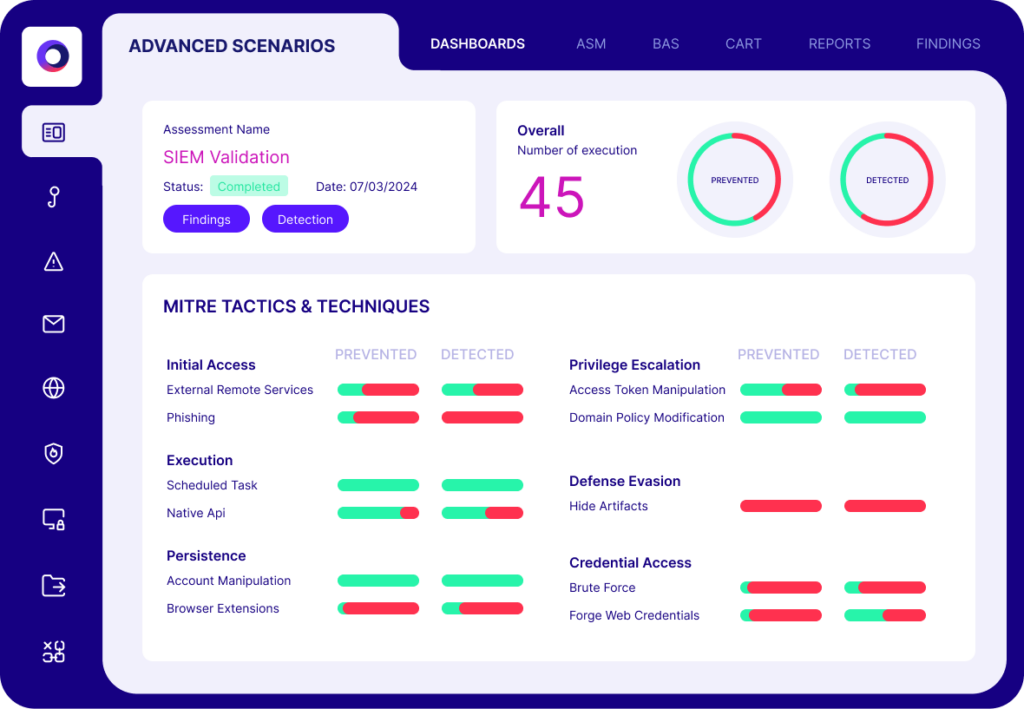
The Cymulate Security Validation and Exposure Management Platform simulates thousands upon thousands of cyber-attacks to verify that zero trust segmentation functions as intended. It continuously assesses segmentation from multiple perspectives and provides actionable insights to strengthen security postures. Key capabilities include:

Comprehensive segmentation validation, covering:

  • User access control
  • Attack path mapping
  • Data protection

Customizable attack simulation templates to match unique security needs

Automated reporting with:

  • In-depth analysis of security gaps
  • Actionable mitigation guidance for faster remediation

Schedulable and repeatable attack templates to support continuous zero trust validation

Integration with SIEM and SOAR solutions

Cymulate integrates seamlessly with security information and event management (SIEM) and security orchestration, automation, and response (SOAR) systems. This integration automates the detection and response to credential threats, ensuring swift action to neutralize potential compromises.

By automating these processes, organizations can maintain a robust security posture with reduced manual intervention. Incorporating Cymulate into your security strategy provides a proactive approach to identifying and mitigating credential-based threats. By leveraging its comprehensive features, organizations can strengthen their defenses and reduce the risk of credential compromise.
cymulate advanced scenarios

Key Takeaways

Credential compromise, by definition, is one of the biggest cybersecurity threats today. Stolen credentials give attackers an easy way into critical systems, leading to data breaches, ransomware attacks, and financial loss. Organizations can’t afford to rely on passwords alone. To stay protected, organizations must:

  • Enforce multi-factor authentication to block unauthorized access.
  • Use strong password policies to prevent weak or reused passwords.
  • Limit access with least privilege principles.
  • Monitor for credential leaks
  • Train employees to spot phishing attacks and social engineering scams
Book a Demo