

How Bitsight + Cymulate Turn Threat Intelligence into Validated Resilience
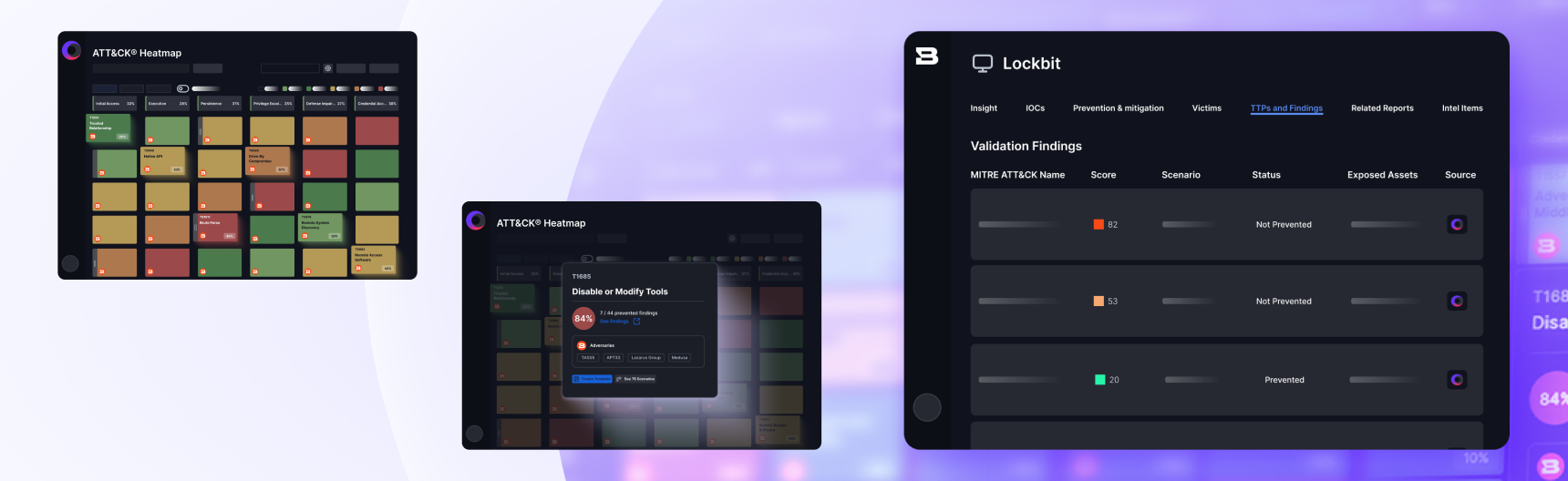
Security teams rely on threat intelligence to understand the adversaries, campaigns and vulnerabilities that matter most. But intelligence alone doesn't prove whether security controls can stop those threats.
The Bitsight and Cymulate integration bridges that gap. By combining Bitsight Threat Intelligence with Cymulate Exposure Validation, organizations can prioritize the threats most relevant to their environment, validate security controls against real-world adversary behavior and continuously improve cyber resilience.
Why Bitsight Threat Intelligence needs continuous validation
Security teams often have threat intelligence, exposure data and validation results, but these workflows are usually disconnected.
Cyber threat intelligence (CTI) teams may identify the adversaries and campaigns most relevant to the organization, but that intelligence does not always translate into action. SOC and detection engineering teams still need to determine whether existing controls can detect or prevent relevant adversary behavior. Security validation teams need to know which scenarios to prioritize. Security leaders need evidence that investments are improving readiness against real threats.
This creates manual work across the security workflow:
- Translating adversary intelligence into validation scenarios
- Mapping TTPs and IoCs to executable tests
- Interpreting prevention and detection results separately from threat context
- Prioritizing remediation based on assumptions instead of validated exposure
- Proving whether security improvements reduced risk against relevant threats
This matters now because adversary activity changes quickly, threat intelligence volume continues to grow and security teams have limited resources. The teams that can connect intelligence to validation can focus on the threats that matter most and prove whether defenses are improving over time.
How the Cymulate + Bitsight integration works
The integration creates a two-way workflow between adversary intelligence and exposure validation.
Bitsight brings context on relevant adversaries, campaigns, TTPs, IoCs, infrastructure, targeting patterns and CVEs. Cymulate Vero AI maps that context to executable validation scenarios and findings, helping teams validate whether security controls can prevent or detect the techniques and indicators associated with relevant ransomware groups, APTs, malware families and campaigns.
The workflow helps teams move from intelligence to action:
1. Bitsight identifies relevant adversaries, TTPs, IoCs and CVEs.
2. Cymulate highlights relevant MITRE techniques through targeted threat intel.
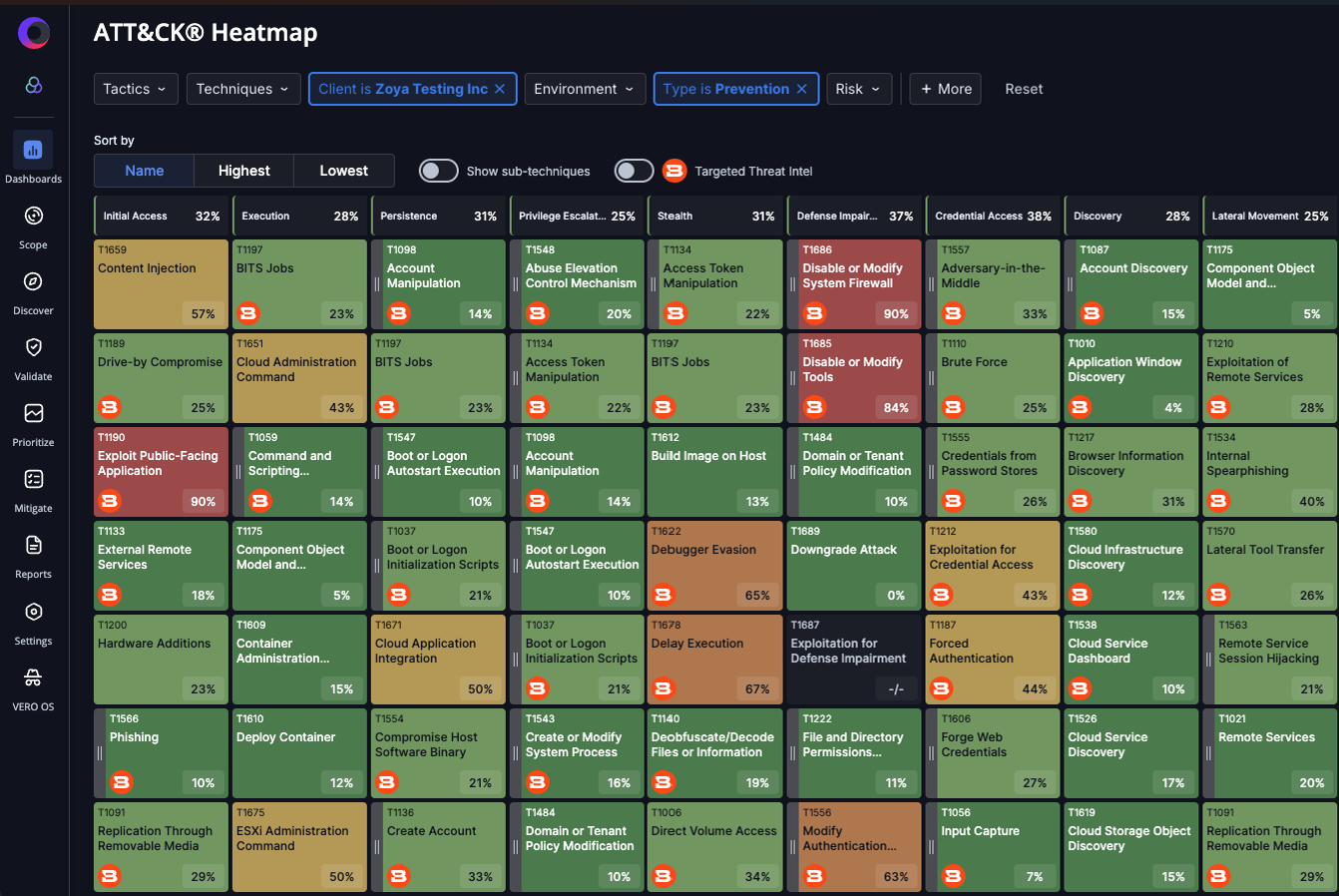
3. Cymulate Vero AI connects those techniques to relevant scenarios and findings.
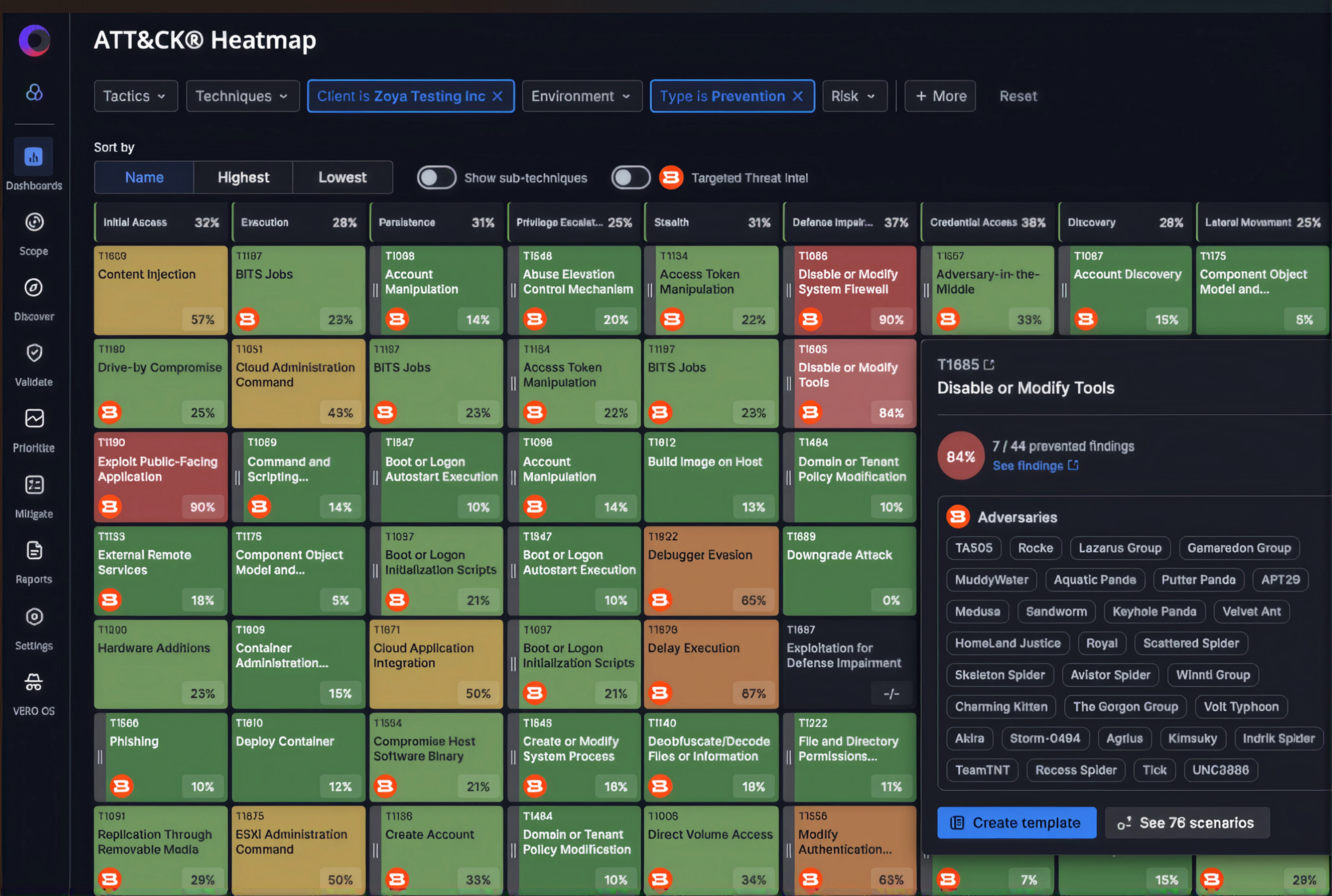
4. Teams validate prevention and detection coverage.
5. Cymulate provides remediation guidance, automated mitigation options and retesting.
6. Validation results can flow back into Bitsight, enriching adversary, TTP and CVE views with evidence of whether relevant techniques and indicators are prevented or detected in the customer environment.
Many threat intelligence integrations stop at importing indicators or enriching dashboards. Cymulate and Bitsight go further by turning adversary intelligence into validation activity and connecting validation results back to the intelligence workflow.
In practice, Bitsight-prioritized techniques appear directly in Cymulate through the MITRE heatmap and targeted threat intel, so teams can move from intelligence into validation, remediation guidance and retesting.
Benefits of the Bitsight and Cymulate integration
With Bitsight and Cymulate, security teams can move from broad threat awareness to evidence-based action.
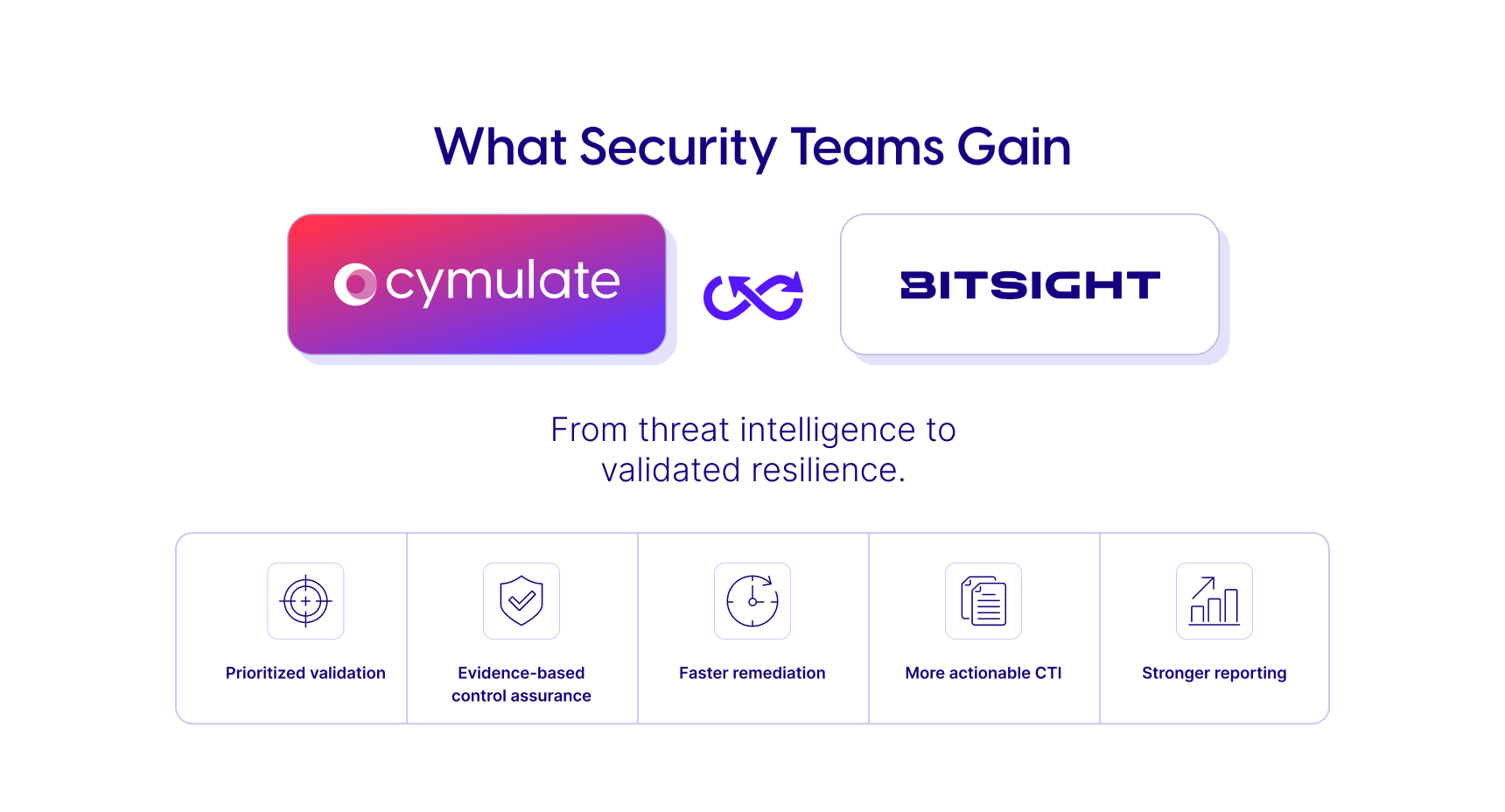
Prioritized validation: Focus testing on the adversaries, techniques, IoCs and CVEs most relevant to the organization.
Evidence-based control assurance: Prove whether security controls prevent or detect real-world adversary behavior.
Faster remediation: Use Cymulate remediation guidance, automated mitigation and retesting to close validated gaps.
More actionable CTI: Connect threat intelligence to validation outcomes instead of leaving it as static context.
Stronger reporting: Show progress with evidence of improved resilience against relevant threats.
The result is a clearer path from threat awareness to measurable improvements in cybersecurity.
Turn threat intelligence into validated security
Threat intelligence tells teams what to care about. Exposure validation proves whether the organization is prepared.
By integrating Bitsight adversary intelligence with Cymulate continuous exposure validation, security teams can understand which threats are relevant, whether controls are working, which gaps require action and whether remediation improved protection.
Instead of moving from intelligence to assumptions, teams can move from intelligence to proof.
That is how organizations turn real-world adversary behavior into stronger defenses.
Already a Cymulate customer?
If you are using Bitsight Threat Intelligence, you can use the Cymulate Platform to prioritize validation based on relevant adversary intelligence and validate whether your controls prevent or detect the threats that matter most to your organization. Contact your account manager for guidance on enabling the integration, supported workflows and best practices for your environment.
Evaluating Cymulate or Bitsight?
Request a demo to see how Cymulate and Bitsight help your team prioritize validation based on relevant adversary intelligence, prove whether controls are working and close the gaps that matter most.

Featured Resources
View More Resources
Bitsight + Cymulate
Prioritize threats, validate security controls and strengthen cyber resilience with Bitsight and Cymulate.

Cymulate Exposure Validation
Prove security readiness with AI-powered exposure validation that continuously tests threats and strengthens defenses.
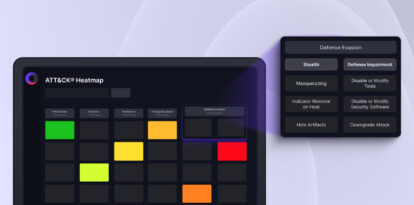
MITRE ATT&CK v19 Unpacked: What Changed and How to Operationalize
See how MITRE ATT&CK is evolving beyond detection with two new tactics focused on resilience and response.