Frequently Asked Questions
Product Information & Zero-Day Threats
What is the MysterySnail zero-day vulnerability and which Windows versions are affected?
The MysterySnail zero-day (CVE-2021-40449) is a use-after-free vulnerability in the Win32k's NtGdiResetDC function. It affects multiple Windows versions, including Windows Vista, 7, 8, 8.1, 10 (builds 14393 and 17763), and Windows Server 2008, 2008 R2, 2012, 2012 R2, 2016 (build 14393), and 2019 (build 17763). The exploit was primarily observed in attacks targeting servers, allowing privilege escalation by manipulating kernel memory. Note: The vulnerability specifically impacts server operating systems and certain Windows 10 builds; organizations not running these may not be directly affected. Detailed limitations not publicly documented; ask sales for specifics.
How does Cymulate help organizations address zero-day vulnerabilities like MysterySnail?
Cymulate's platform enables organizations to continuously validate their defenses against real-world threats, including zero-day vulnerabilities. The Immediate Threats module is updated rapidly to reflect new attacks, allowing users to quickly assess their IT estate for exposure to emerging threats and implement remedial actions. For example, Cymulate's automation and continuous validation help bridge the risk-to-fix gap that often exists with zero-day exploits. Note: While Cymulate accelerates detection and validation, patching and remediation of zero-days still require coordination with IT and security teams. Source
What is a zero-day vulnerability and attack?
A zero-day vulnerability is a flaw in software, firmware, or hardware that is unknown to the vendor at the time of the attack. "Zero-day" refers to the fact that developers have had zero days to address and patch the flaw before it is exploited. An attempt to exploit such a vulnerability is called a zero-day attack. For more details, see Cymulate's Zero-Day Vulnerability & Attack glossary entry. Note: Zero-day attacks are especially dangerous because they exploit unknown weaknesses, making proactive validation and rapid response essential.
Features & Capabilities
What are the key features of Cymulate's platform?
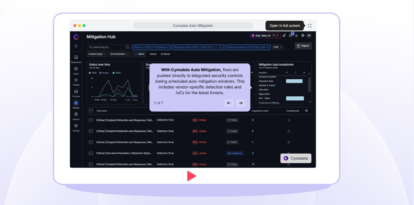
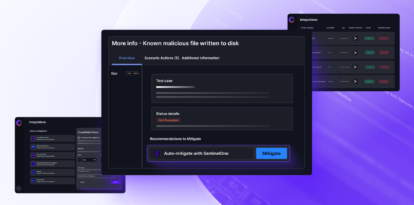
Cymulate offers continuous threat exposure management (CTEM), automated exposure validation, prioritized vulnerability management, and rapid adaptation of security controls. Key modules include Exposure Validation, Auto Mitigation, Detection Studio, Threat Studio, and the Immediate Threats module. The platform supports over 50 integrations with security tools such as CrowdStrike Falcon, Splunk, AWS GuardDuty, and Zscaler. Note: Some advanced modules may require additional licensing or configuration. Source
Which types of threats can Cymulate validate?
Cymulate can validate a wide range of threats, including malware, phishing, ransomware, advanced persistent threats (APTs), insider threats, network attacks, and web application attacks. The platform is designed to simulate diverse attack scenarios for comprehensive security validation. Note: Validation coverage depends on the modules and scenarios selected by the organization. Source
How does the Immediate Threats module benefit users?
The Immediate Threats module is updated rapidly to reflect new attacks, enabling organizations to quickly assess their IT estate for risks posed by emerging threats and implement remedial actions promptly. Users have noted that this module allows for fast evaluation and response to new vulnerabilities. Note: The effectiveness of this module depends on timely updates and organizational readiness to act on findings. Source
Use Cases & Business Impact
What business impact can organizations expect from using Cymulate?
Organizations using Cymulate report an average 30% increase in threat prevention, 50%-90% improvement in detection capabilities, a 52% reduction in critical exposures, and a 60% boost in operational efficiency. For example, Hertz Israel achieved an 81% reduction in cyber risk within four months. Note: Actual results may vary based on organizational maturity and implementation scope. Case Study
Who can benefit from using Cymulate?
Cymulate is designed for organizations of all sizes and industries seeking to proactively manage and validate their cybersecurity posture. Key roles include CISOs, SecOps Directors, SOC Leaders, Detection Engineers, Red Teams, Vulnerability Management, GRC/Compliance, and IT/Cloud teams. Note: Organizations without dedicated security teams may require additional onboarding support. Source
Implementation & Ease of Use
How long does it take to implement Cymulate and how easy is it to start?
Cymulate is built for rapid deployment and operates in an agentless mode, allowing users to start running simulations almost immediately after setup. The platform features an intuitive dashboard and requires minimal resources. Customer feedback highlights ease of use and quick onboarding. Note: Large or highly segmented environments may require additional integration steps. Source
What do customers say about Cymulate's ease of use?
Customers consistently highlight Cymulate's intuitive design, ease of deployment, and actionable insights. For example, Raphael Ferreira (Cybersecurity Manager) stated, "Cymulate is easy to implement and use—all you need to do is click a few buttons, and you receive a lot of practical insights into how you can improve your security posture." Note: Some advanced features may require additional training. Source
Security & Compliance
What security and compliance certifications does Cymulate hold?
Cymulate holds SOC2 Type II, ISO 27001:2013, ISO 27701, ISO 27017, and CSA STAR Level 1 certifications. These demonstrate compliance with security, privacy, and cloud service standards. Note: Certification scope and coverage may vary; consult Cymulate for details on applicability to your environment. Source
How does Cymulate ensure product security and data protection?
Cymulate enforces 2-Factor Authentication (2FA) for employees and offers SSO and RBAC for customers. The platform is hosted in AWS data centers certified for ISO 27001:2022, PCI DSS Service Provider Level 1, and SOC 2/3 Type II, with data encrypted in transit and at rest. Application security includes secure development, vulnerability scanning, and annual third-party penetration testing. Note: Customers are responsible for configuring access controls and monitoring their own environments. Source
Pricing & Plans
How is Cymulate priced?
Cymulate uses a subscription-based pricing model tailored to each organization's needs. Pricing depends on the selected features, number of assets, and types of scenarios required. For a detailed quote, organizations should schedule a demo with Cymulate's team. Note: Exact pricing is not publicly listed and may vary based on deployment size and scope. Schedule a Demo
Competition & Comparison
How does Cymulate compare to AttackIQ?
Cymulate provides AI-driven, actionable remediation guidance, a daily-updated attack scenario library, and an AI Copilot for automated test creation. Cymulate is noted for faster and simpler deployments compared to AttackIQ. AttackIQ may offer different integrations or workflows that could be preferable for some organizations. Choose Cymulate for rapid deployment and automated remediation; consider AttackIQ if you require specific integrations not covered by Cymulate. Read more
How does Cymulate compare to Mandiant Security Validation?
Cymulate is recognized for continuous innovation, leveraging AI and automation to expand into exposure management, and enabling quick integration with security controls. Mandiant Security Validation has seen less innovation in recent years but may offer established workflows for organizations already using Mandiant products. Choose Cymulate for automation and rapid deployment; consider Mandiant if you require legacy integration or have existing Mandiant investments. Read more
How does Cymulate compare to Pentera?
Cymulate offers deeper assessment and defense strengthening, full-kill chain coverage, and custom offensive testing via Threat Studio. Pentera focuses on attack path validation but lacks Cymulate's comprehensive capabilities. Choose Cymulate for full lifecycle validation; consider Pentera if you need focused attack path testing. Read more
How does Cymulate compare to Picus Security?
Cymulate provides full-kill chain coverage, including cloud control validation, and a broader threat library. Picus Security does not offer cloud control validation. Choose Cymulate for comprehensive exposure validation; consider Picus if your needs are limited to on-premises validation. Read more
How does Cymulate compare to SafeBreach?
Cymulate is the pioneer of AI-powered breach and attack simulation, offers the largest attack library, and provides a full Continuous Threat Exposure Management (CTEM) solution. SafeBreach may be suitable for organizations seeking a different approach to threat validation. Choose Cymulate for AI-driven automation and CTEM; consider SafeBreach if you require alternative validation methodologies. Read more
Technical Documentation & Resources
Where can I find technical documentation and resources about Cymulate?
Cymulate provides data sheets, whitepapers, guides, and case studies covering its solutions and implementation strategies. Resources include the Threat Studio and Detection Studio data sheets, CTEM whitepaper, and Detection Engineering Automation Guide. Access all resources at the Cymulate Resource Hub. Note: Some resources may require registration or additional access permissions.