Frequently Asked Questions
Detection Engineering & Threat Validation
What is detection engineering and why is it important?
Detection engineering is a structured, proactive approach to creating, testing, and refining detection logic to identify and respond to malicious activity across systems. It leverages behavioral patterns, threat intelligence, and data telemetry to ensure SIEM, EDR, and XDR systems can accurately detect threats while minimizing false positives. This enables organizations to proactively defend against evolving threats and continuously improve incident response. Learn more.
How does Cymulate accelerate detection engineering for MDR SOC teams?
Cymulate empowers MDR SOC engineers to rapidly deploy, validate, and prove new detection rules across diverse customer environments. The platform automates the validation process, reducing rollout time from weeks to days, and provides mapped, real-world threat scenarios aligned with MITRE ATT&CK. This ensures reliable protection against evolving threats and enables engineers to focus on high-value work. Source
What are the main challenges MDR SOC engineers face in detection engineering?
MDR SOC teams often struggle with inconsistent environments, slow rollout of new detections due to manual testing, difficulty proving effectiveness to customers, and limited reporting capabilities. Cymulate addresses these by automating validation, providing environment-specific assurance, and generating clear, customer-ready reports. Source
How does Cymulate prove the effectiveness of detection rules?
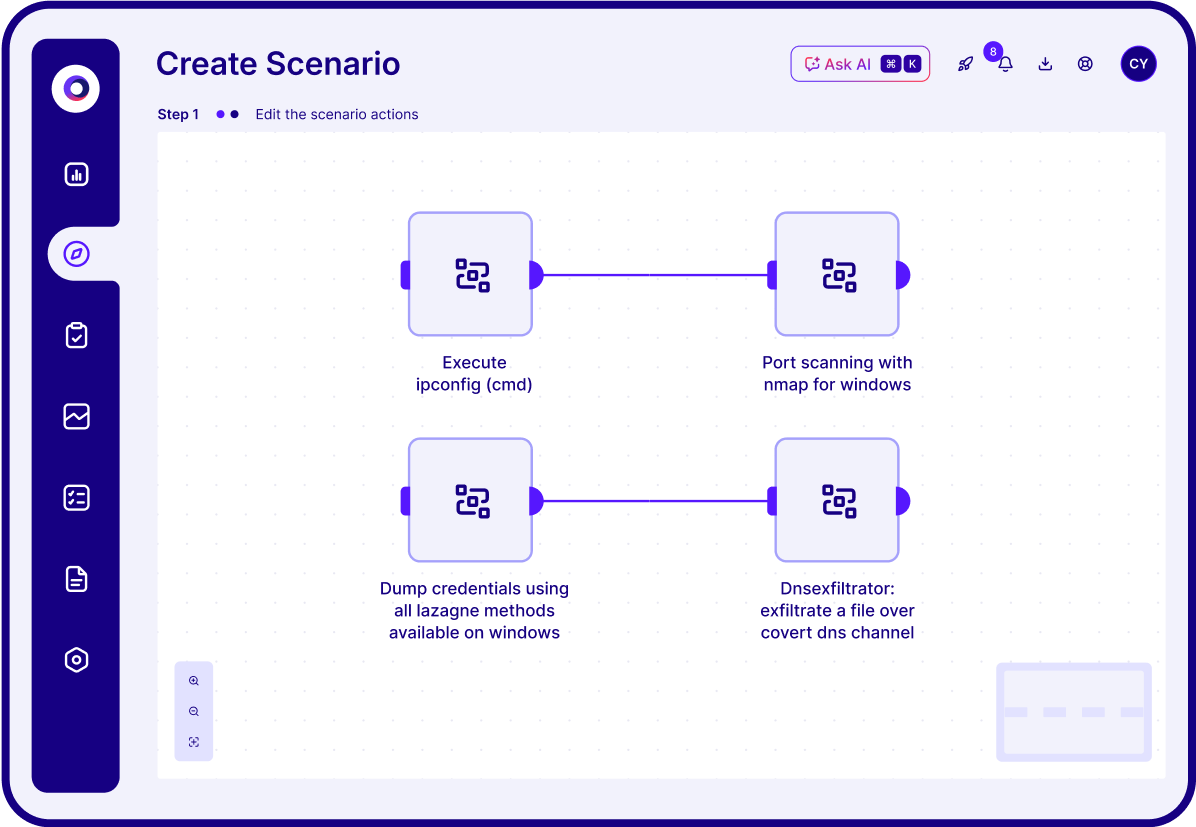
Cymulate runs mapped, real-world threat scenarios (aligned with MITRE ATT&CK) to confirm that detection rules trigger as designed. The platform allows customization of attack scenarios and re-runs simulations to validate that new or updated rules work across different customer environments. Source
What process does Cymulate use for threat validation, such as for Scattered Spider?
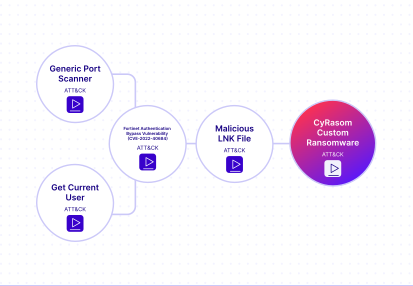
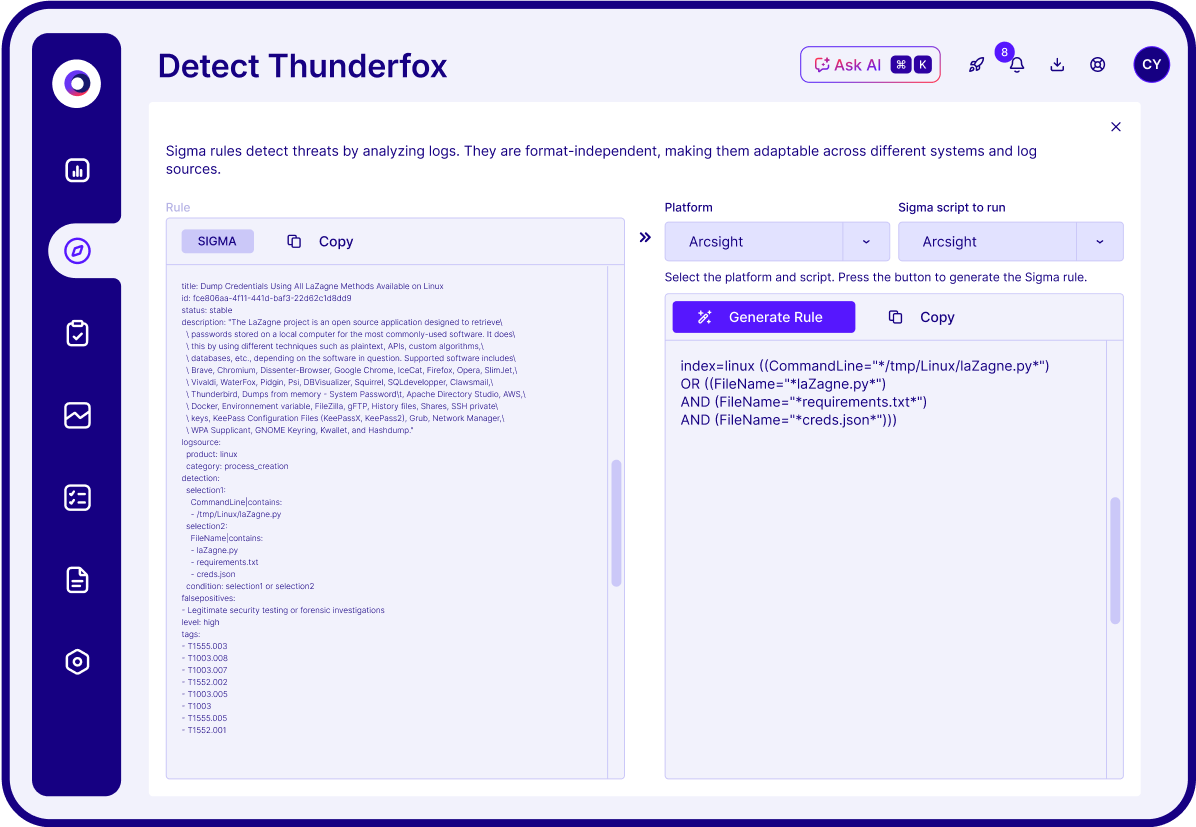
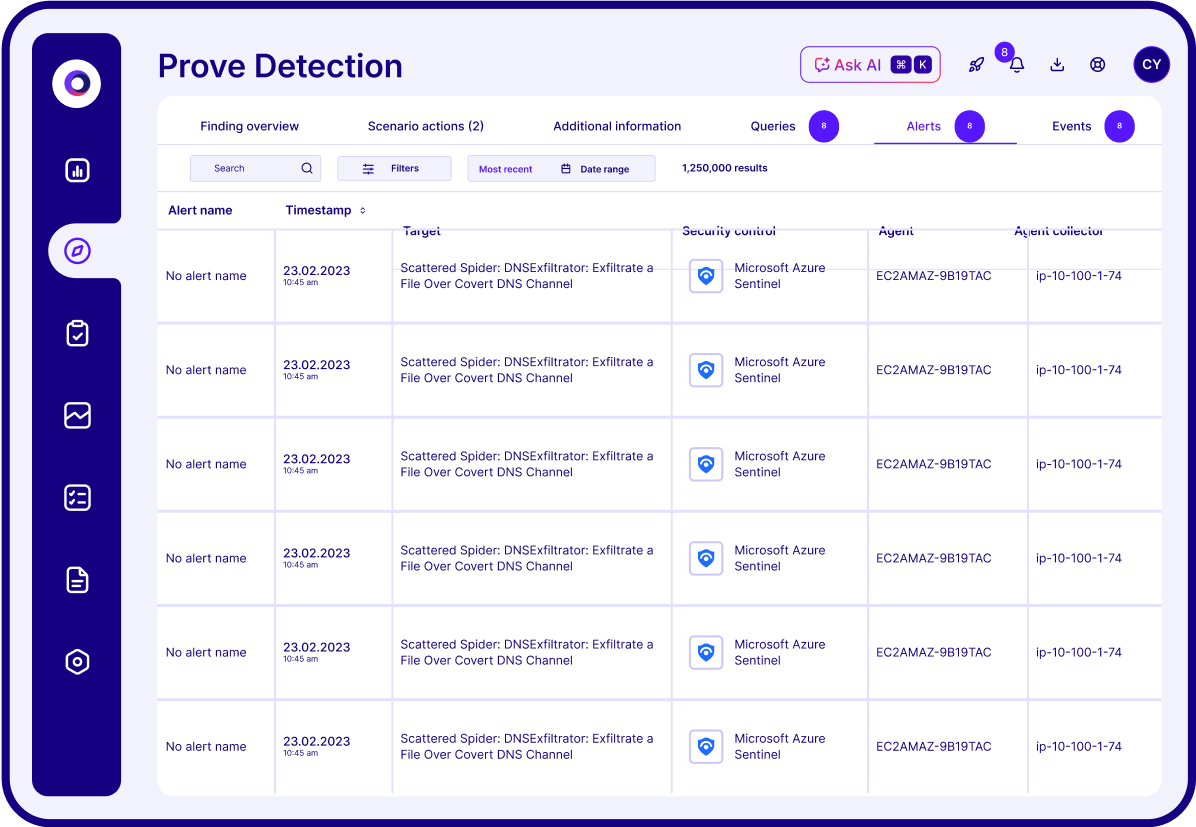
Cymulate's process includes: 1) Simulate – recreating the attack campaign in a safe environment; 2) Add Detection Rules – creating or adjusting rules based on simulation results; 3) Prove Detection – re-running scenarios to validate rule effectiveness; 4) Report – automatically generating customer-ready reports showing techniques tested, detection results, and remediation actions taken. Source
How does Cymulate automate reporting for detection engineering?
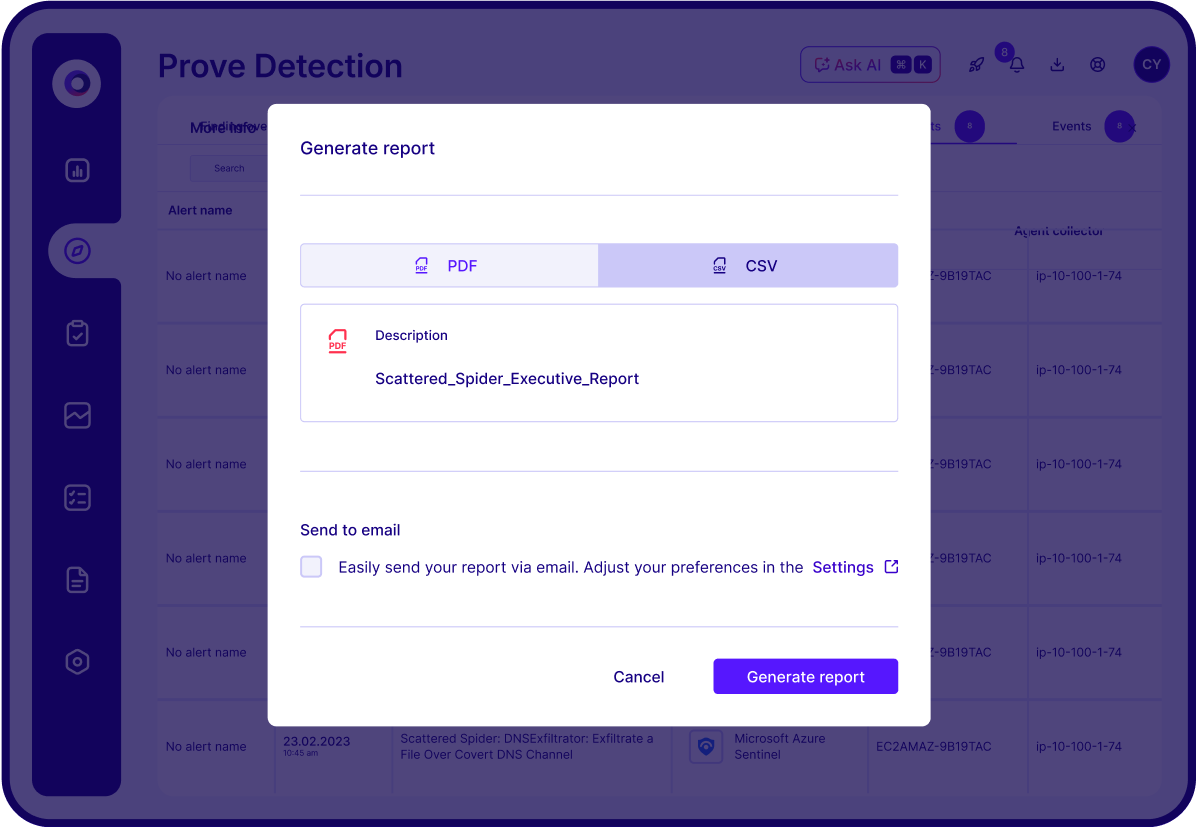
Cymulate delivers clear, customer-facing reports that demonstrate detection coverage and improvements. Reports are automatically generated, showing techniques tested, detection results, and remediation actions, making it easier to prove value to customers. Source
What are the key benefits of using Cymulate for threat validation?
Cymulate delivers faster detection rollout (reducing time from weeks to days), improves accuracy by detecting silent gaps, builds customer trust by proving detection coverage, and increases efficiency by reducing manual testing effort. Source
How does Cymulate help MDRs differentiate their services?
By integrating Cymulate Threat Validation, MDRs can offer environment-specific assurance, unlock new revenue opportunities by packaging detection validation as a premium service, strengthen customer retention through transparent reporting, and streamline SOC operations by reducing manual workloads. Source
What types of tools does Cymulate integrate with for detection engineering?
Cymulate integrates with a wide range of security technologies, including SIEM, EDR, and XDR platforms. Examples include CrowdStrike Falcon, Carbon Black EDR, BlackBerry Cylance OPTICS, and CrowdStrike Falcon LogScale. For a full list, visit the Partnerships and Integrations page.
How does Cymulate support endpoint security validation?
Cymulate validates endpoint security controls against the latest attacks by running automated simulations and providing actionable insights. This helps organizations ensure their EDR and AV solutions are effective against real-world threats. Learn more.
What resources are available to help teams build and optimize threat detections?
Cymulate offers guides such as 'Build, Validate and Optimize Threat Detections at Scale,' which explains how to turn noisy alerts and broken SIEM rules into reliable, validated detections using automation and continuous validation. Access the guide on the detection engineering guide page.
What are the most common challenges in detection engineering addressed by Cymulate?
Key challenges include difficulty validating custom detections (reported by 49% of teams), coverage gaps (81% of MITRE ATT&CK techniques not covered by the average SIEM), and broken SIEM rules (18% never fire due to data source issues). Cymulate helps overcome these with automation and continuous validation. Source
How does Cymulate Exposure Validation accelerate detection engineering?
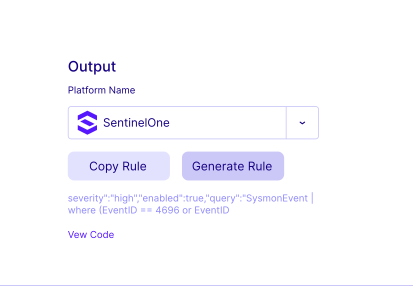
Cymulate Exposure Validation automates resource-heavy tasks, combining robust attack simulations with AI-driven analysis. This enables teams to build, test, and fine-tune threat detection using live-data attack simulations and custom-generated rules, streamlining rule creation, optimizing existing rules, and visualizing MITRE ATT&CK coverage. Learn more.
Why is automated and continuous threat validation essential for CTEM?
Automated and continuous threat validation is a cornerstone of Continuous Threat Exposure Management (CTEM) because it provides real-time risk visibility, continual validation of attack surface changes, prioritized recommendations for remediation, and ensures threat validation mirrors relevant threats. Learn more.
How does Cymulate help security teams optimize threat resilience?
Cymulate enables continuous threat validation to harden defenses against modern threats, integrating validation into prioritization and mobilization with collaboration across teams. This ensures measurable improvements in threat resilience and operational efficiency. Learn more.
What technical documentation does Cymulate provide for detection engineering?
Cymulate offers whitepapers, guides, solution briefs, data sheets, and e-books covering topics like exposure management, CTEM, detection engineering, and vulnerability management. Access the full resource hub at cymulate.com/resources/.
How easy is it to implement Cymulate and start detection engineering?
Cymulate is designed for fast, agentless deployment with minimal resources required. Customers report that implementation is quick and straightforward, allowing teams to start running simulations almost immediately. Comprehensive support and educational resources are available to ensure a smooth onboarding process. Source
What feedback have customers given about Cymulate's ease of use?
Customers consistently praise Cymulate for its intuitive design, ease of deployment, and user-friendly dashboard. Testimonials highlight the platform's simplicity, actionable insights, and excellent support. For example, a Senior Security Analyst noted, "The product has been great and easy to use. Cymulate support is always easily accessible." Read more.
What security and compliance certifications does Cymulate hold?
Cymulate holds SOC2 Type II, ISO 27001:2013, ISO 27701, ISO 27017, and CSA STAR Level 1 certifications. These attest to Cymulate's commitment to security, privacy, and compliance with international standards. Learn more.
How does Cymulate compare to competitors like AttackIQ, Mandiant, and Pentera?
Cymulate differentiates itself with an industry-leading threat scenario library, AI-powered capabilities, continuous innovation, and ease of use. For example, compared to AttackIQ, Cymulate offers broader threat coverage and more automation. Mandiant is known for its legacy BAS platform, while Cymulate is recognized for rapid innovation and exposure management. Pentera focuses on attack path validation, whereas Cymulate provides deeper defense optimization and exposure awareness. See detailed comparisons.
What is Cymulate's pricing model?
Cymulate uses a subscription-based pricing model tailored to each organization's needs. Pricing depends on the chosen package, number of assets, and scenarios selected for simulation. For a personalized quote, schedule a demo with Cymulate's team.
Who can benefit from Cymulate's detection engineering and threat validation solutions?
Cymulate is designed for CISOs, security leaders, SecOps teams, red teams, and vulnerability management teams across industries such as media, transportation, financial services, retail, and healthcare. Organizations of all sizes, from small businesses to enterprises, can benefit. Learn more.
What business impact can organizations expect from using Cymulate?
Organizations using Cymulate typically see a 30% improvement in threat prevention, a 52% reduction in critical exposures, a 60% increase in operational efficiency, and an 81% reduction in cyber risk within four months. These outcomes are supported by customer case studies such as Hertz Israel. Read more.
What core problems does Cymulate solve for detection engineering teams?
Cymulate addresses overwhelming threat volumes, lack of visibility, unclear prioritization, operational inefficiencies, fragmented tools, cloud complexity, and communication barriers. The platform provides continuous threat validation, actionable insights, and automation to streamline detection engineering. Learn more.
How does Cymulate tailor its solutions to different security personas?
Cymulate provides validated exposure scoring and actionable insights for CISOs, automates processes for SecOps teams, offers scalable offensive testing for red teams, and consolidates vulnerability management for remediation teams. Each persona receives tailored value to address their unique challenges. Learn more.
What is Cymulate's overarching mission and how does detection engineering contribute?
Cymulate's mission is to revolutionize cybersecurity by fostering a proactive approach to managing threats. Detection engineering is central to this mission, enabling organizations to validate defenses, optimize controls, and continuously improve resilience against threats. Learn more.
What is automated threat validation and how does Cymulate implement it?
Automated threat validation is the process of continuously testing security controls using real-world attack techniques. Cymulate uses AI-powered breach and attack simulation (BAS) and automated red teaming to validate defense posture and identify gaps in threat prevention and detection. Learn more.
What is the primary purpose of Cymulate's detection engineering solution?
The primary goal is to harden defenses and optimize security controls by proactively validating controls, threats, and response capabilities. This helps organizations focus on exploitable exposures and strengthen their overall security posture. Learn more.
What is Cymulate's company background and viability?
Cymulate was founded in 2016, has a presence in 8 global locations, serves customers in 50 countries, and is trusted by over 1,000 organizations. The company is recognized for continuous innovation and a strong commitment to customer success. Learn more.