
Agentic Cyber Defense Engineering: A New Model for AI-Powered Cyber Defense

Cybersecurity demands visibility, prevention, detection, exposure management and response. But AI changes the math.
Attackers can now find weaknesses faster, adapt tactics in minutes and scale campaigns without requiring extensive expertise or large networks of threat actors. Meanwhile, many security teams still rely on manual processes to execute and coordinate critical activities. The result is a widening gap between the speed of AI-powered threats and the ability of security teams to respond.
Another security tool is not the answer. Security needs a new AI-centric proactive defense operating model.
Agentic cyber defense engineering is a closed-loop, AI-assisted approach to continuously proving and improving security defenses. Agentic cyber defense engineering uses AI agents, exposure validation and security control integrations to continuously test, tune and improve cyber defenses at machine speed.
Key Takeaways
- Security teams and tools are disconnected. Security has optimized individual teams, tools and activities without integrating them into a continuous defense process.
- Traditional cyber defenses were not designed for AI. Traditional security operations are human-centric by design, and a new agentic proactive security model is needed to evolve with AI.
- AI agents automate manual and repetitive security tasks. Specialized AI agents execute specific security functions and work across threat intelligence, asset and exposure data, security controls, attack simulations and telemetry.
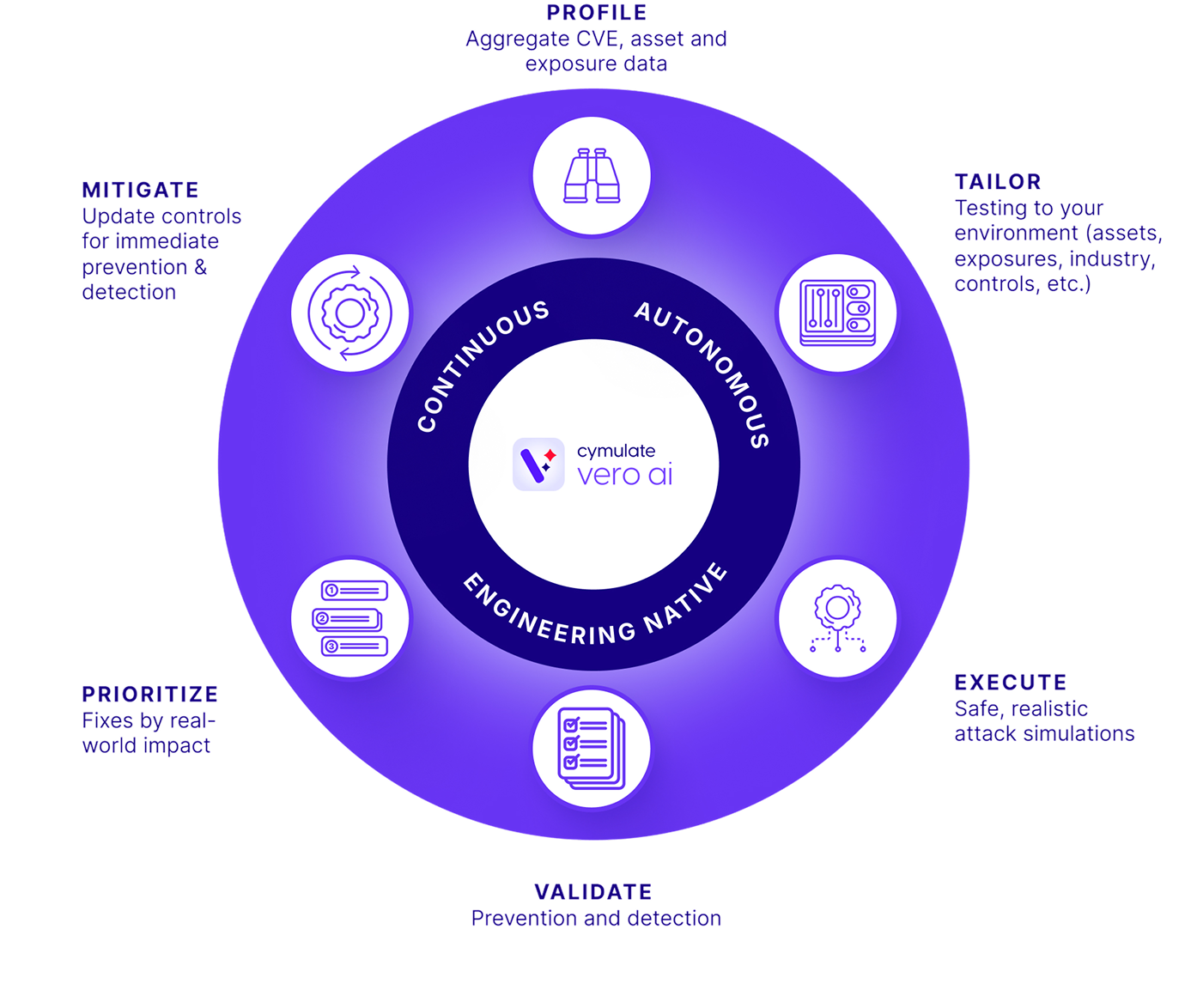
- Agents operate in a continuous closed loop. Security teams need a continuous cycle that profiles, tailors, executes, validates, prioritizes and optimizes defenses as threats and environments change.
- Agentic validation focuses action and accelerates proof. Organizations can focus on the threats and exposures that matter most while using security evidence to prove whether defenses work.
- Organizations need to adopt this model now. Offensive capabilities will continue to accelerate, making it increasingly difficult for security teams to keep pace without agentic exposure validation.
What Is Agentic Cyber Defense Engineering?
Agentic cyber defense engineering enables defenses to operate at machine speed in an era of continuous change.
In this new proactive security operating model, specialized AI agents work across threat intelligence, asset and exposure data, security controls, attack simulations and telemetry. Rather than treating these activities as separate security functions, agentic cyber defense engineering connects them through a continuous feedback loop.
Each agent autonomously performs a specific security function while coordinating with others to identify the threats that matter, test defenses safely, measure the response, direct remediation and verify that the improvement worked.
The result is a continuously adapting defense cycle that progresses at speed and scale, without relying on manual coordination at every step.
Why Traditional Cyber Defense Can't Keep Up With AI
Cybersecurity programs do not suffer from a lack of data or findings. They suffer from fragmentation. Security tools generate evidence within their own domains, teams manage separate priorities, activities are performed individually and processes depend on manual handoffs to connect one activity to the next.
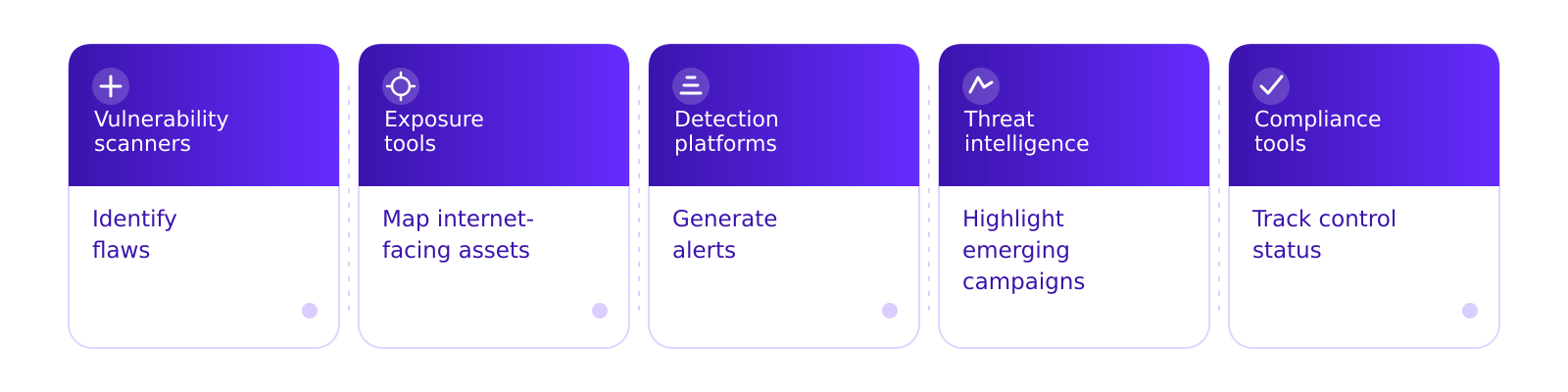
Each security activity provides a valuable perspective, but those perspectives often remain isolated across teams, tools and workflows. Another tool is not the answer. Organizations need an integrated security operating model that connects these activities into a shared understanding of risk and defensive performance. Only then can teams determine whether an attacker could combine multiple weaknesses to move through the environment and whether the existing security stack would prevent, detect and respond as intended.
This requires full integration into a shared feedback loop that brings together threat context, environmental exposure, control performance, mitigation and risk closure verification. When cybersecurity teams, tools and processes operate as an integrated system, disconnected findings become prioritized actions. This results in continuously validated defensive improvements at the speed required to keep pace with AI and the dynamic threat landscape.
Limitations of human-driven security operations
Traditional security operations are human-centric by design. Subject matter cyber experts interpret threat intelligence, determine relevance, configure tools, design assessments, run tests, correlate evidence, prioritize findings, develop mitigations and schedule retesting. That model made sense when change occurred at a manageable tempo. It breaks when infrastructure, software, identities, threats and controls all change continuously and rapidly.
Now, with agentic AI, attackers are increasingly using models to accelerate reconnaissance, generate or modify attack code, identify exploitable conditions and adapt techniques. Exposure windows that once lasted weeks have collapsed toward days, hours or less. Attackers are moving at machine speed, while defenders remain constrained by manual coordination and disconnected security.
Security defenders must use AI to their advantage and operate at machine speed. But how do they do that?
How Agentic Cyber Defense Engineering Works
Agentic cyber defense engineering connects security activities that have traditionally operated separately into a continuous defense cycle. Specialized AI agents perform specific security functions while coordinating with other agents and security technologies.
The cycle can be triggered whenever conditions change, including:
- New threat intelligence
- A newly disclosed zero-day vulnerability
- A new asset deployment
- A security control modification
- A newly ingested vulnerability
- A failed security validation
Instead of waiting for the next scheduled assessment, agents can evaluate the change, determine its relevance and initiate the appropriate validation and optimization activities.
This event-driven model enables cyber defense to adapt as the environment evolves.
The 6 Stages of Agentic Cyber Defense Engineering
A security program built on agentic cyber defense engineering connects the following six continuously repeating functions that operate in a closed-loop. In each of these phases, agents perform security tasks and coordinate, as needed.
- Profile. Continuously map critical assets, exposures and security controls while monitoring new threat intelligence and attacker behavior, determine which threats are most relevant to the organization and maintain a profile as conditions change.
- Tailor. Convert environmental and threat context into customized validation assessments by selecting the applicable assets, attack paths, techniques and controls, resulting in validating threats that matter the most.
- Execute. Launch relevant attack simulations that mimic realistic behavior and execute cleanup activities without disrupting operations.
- Validate. Determine whether controls blocked the simulated activity and whether detection and response systems generated the expected telemetry, alerts and signals.
- Prioritize. Correlate validation results with threat relevance, demonstrated exploitability, attack-path context and business impact, calculating true risk.
- Optimize. Generate and implement mitigations, such as control changes, indicators, detection rules and remediation recommendations.
Agentic Cyber Defense Engineering vs. Traditional Security Automation
Agentic cyber defense engineering is not simply another form of security automation.
Traditional automation follows predefined workflows that security teams must design and maintain. If conditions change outside those predefined paths, humans typically need to interpret the situation and determine what happens next.
Agentic AI changes that model. Within defined guardrails, AI agents can interpret context, select appropriate actions and adapt subsequent steps based on results without requiring humans to manually map every workflow and decision path in advance.
| Traditional Security Automation | Agentic Cyber Defense Engineering |
| Relies on predefined workflows | Operates toward defined security objectives |
| Requires human-defined decision paths | Uses context to determine appropriate actions |
| Often runs on scheduled processes | Can respond to events and environmental changes |
| Automates individual tasks or tools | Coordinates activities across the security ecosystem |
| Produces findings or executes actions | Validates outcomes and uses results to determine next steps |
| Requires ongoing manual workflow maintenance | Adapts activities based on changing context and evidence |
This distinction is why engineering matters. Agentic cyber defense engineering is not simply about using AI to automate security work. Engineering means designing, testing and continuously improving a defensive system against clear performance expectations.
Capabilities once treated as periodic validation exercises become part of an ongoing operational discipline.
Instead of producing an occasional snapshot of threat resilience, security validation becomes a continuous capability used whenever conditions change to prove and improve security performance.
Benefits of Agentic Cyber Defense Engineering
Confidence that teams are focused on the right exposures
Teams often struggle to determine which threats, attack paths and controls to test first, leading to generic assessments and misdirected resources. Agentic cyber defense engineering uses threat, environmental and validation context to focus testing and mitigation on the most relevant threats and riskiest exposures, giving leaders greater confidence while improving resilience and reducing business risk.
Faster measurement and reporting
Organizations already track prevention, detection, coverage drift and mitigation, but it is often resource-intensive to collect data, analyze and calculate results, which causes reporting delays.
Continuous validation and automated reporting keep baselines current and give leaders faster evidence of control performance and mitigation success. Agents handle high-volume measurement and reporting, while practitioners focus on investigation, approvals and business risk decisions.
The time to adopt an agentic security validation model is now
Organizations need a continuous feedback model operating at machine speed that connects threat intelligence, testing, prioritization and defensive improvement.
Agentic cyber defense engineering provides that model. It turns relevant threats into tailored tests, tests into evidence, evidence into prioritized action and action into verified resilience. By continuously profiling, validating and improving defenses, organizations can reduce the time between identifying a threat and proving they are protected against it.

Security leaders should adopt this model now. As attacks accelerate and environments become more dynamic, periodic testing and manual workflows will widen exposure windows and create uncertainty about whether controls still work.
The question is no longer simply, “Do we have the right controls?” It is, “Can we keep up by continuously proving our defenses work and closing exposures before attackers exploit them?”
Coming next in the series
In our next blog, “Defining Agentic Cyber Defense Engineering: Core Capabilities and Requirements”, we will dive more into each of the six phases and the must-have solution requirements to operationalize the model at scale and effectively defend at machine.
Until then, download the Agentic Cyber Defense Engineering e-book for a deeper look at the operating model and how it can help organizations strengthen threat resilience at machine speed.
Ready to explore how agentic cyber defense engineering can transform your security program?

Featured Resources
View More Resources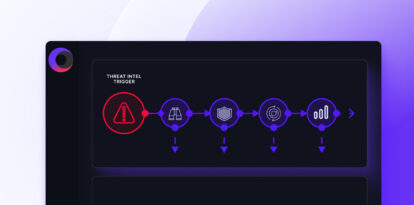
Beyond Validation. The Future is Agentic Cyber Defense Engineering.
Cymulate’s Vero AI powers agentic cyber defense engineering to prove, prioritize and adapt security.

From AI Hype to AI Risk: A New Security Reality
Join Cymulate CTO Avihai Ben-Yossef: explore AI-driven attacks and how continuous validation helps defenders prioritize.
Cymulate Cowork
Use AI agents and automated routines to validate exposures and streamline cyber defense engineering.