

CTEM at Machine Speed: Build Exposure-Informed Defenses with AI and Automation
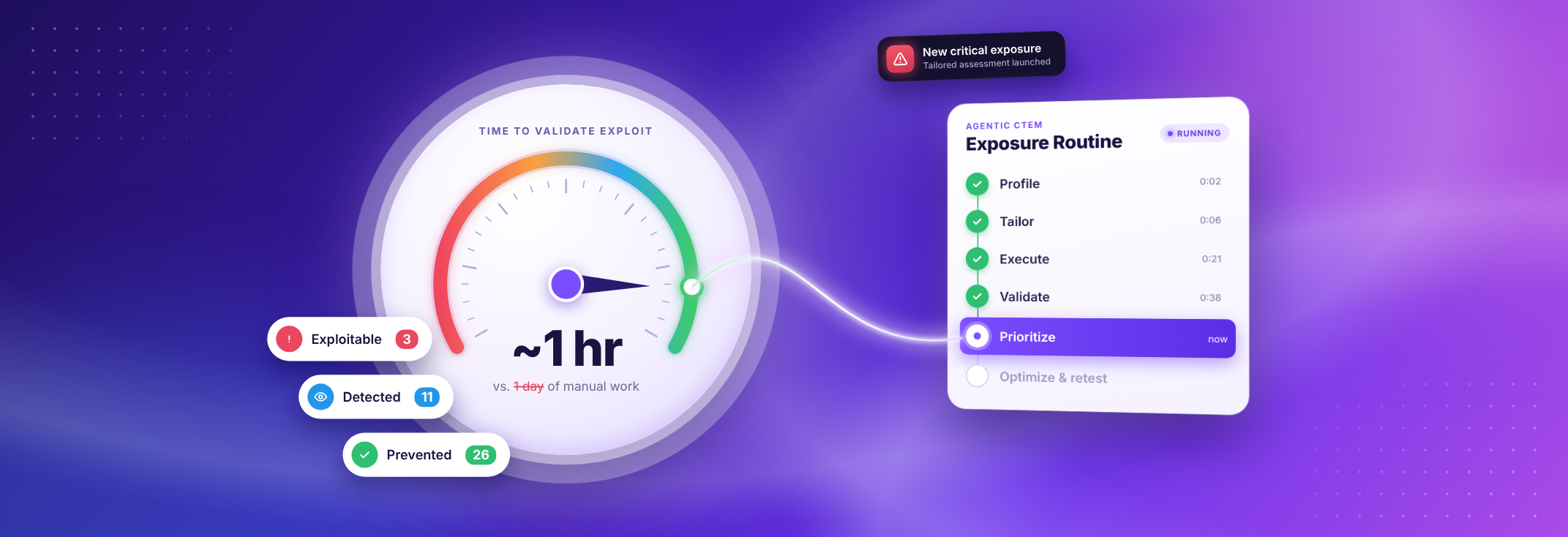
Attackers are already moving at machine speed. Your CTEM program should too.
AI is shrinking the gap between vulnerability disclosure, weaponization and attack from weeks to hours, and sometimes to minutes. Security teams are facing more exposures, faster exploitation and coordinated campaigns that can outpace a traditional remediation process before it reaches its first handoff.
Continuous threat exposure management (CTEM) was designed for this problem. It gives security teams a way to see their environment from an attacker’s perspective, identify the exposures that matter and act before those exposures are exploited.
Yet many CTEM programs still operate too slowly with disconnected tools and delayed action, where security gaps remain exposed for days or months. To keep pace with AI-powered attacks, CTEM must operate at machine speed.
That requires a shift from assumption-based prioritization to evidence-driven action that considers all options – and not just patching. Security teams need to validate what is exploitable in their environment, choose the fastest path to risk reduction and use AI and automation to coordinate work across the security program. The result is an exposure-informed defense: security controls continuously adapted to the threats and exposures that matter now.
CTEM starts with an outcome
Going back to the original Gartner guidance, CTEM should produce three things: clarity, alignment and action.
Clarity. A clear view of real security gaps.
Alignment. Shared priorities and an actionable plan across teams.
Action. Measurable improvements that prepare the organization for the next attack.
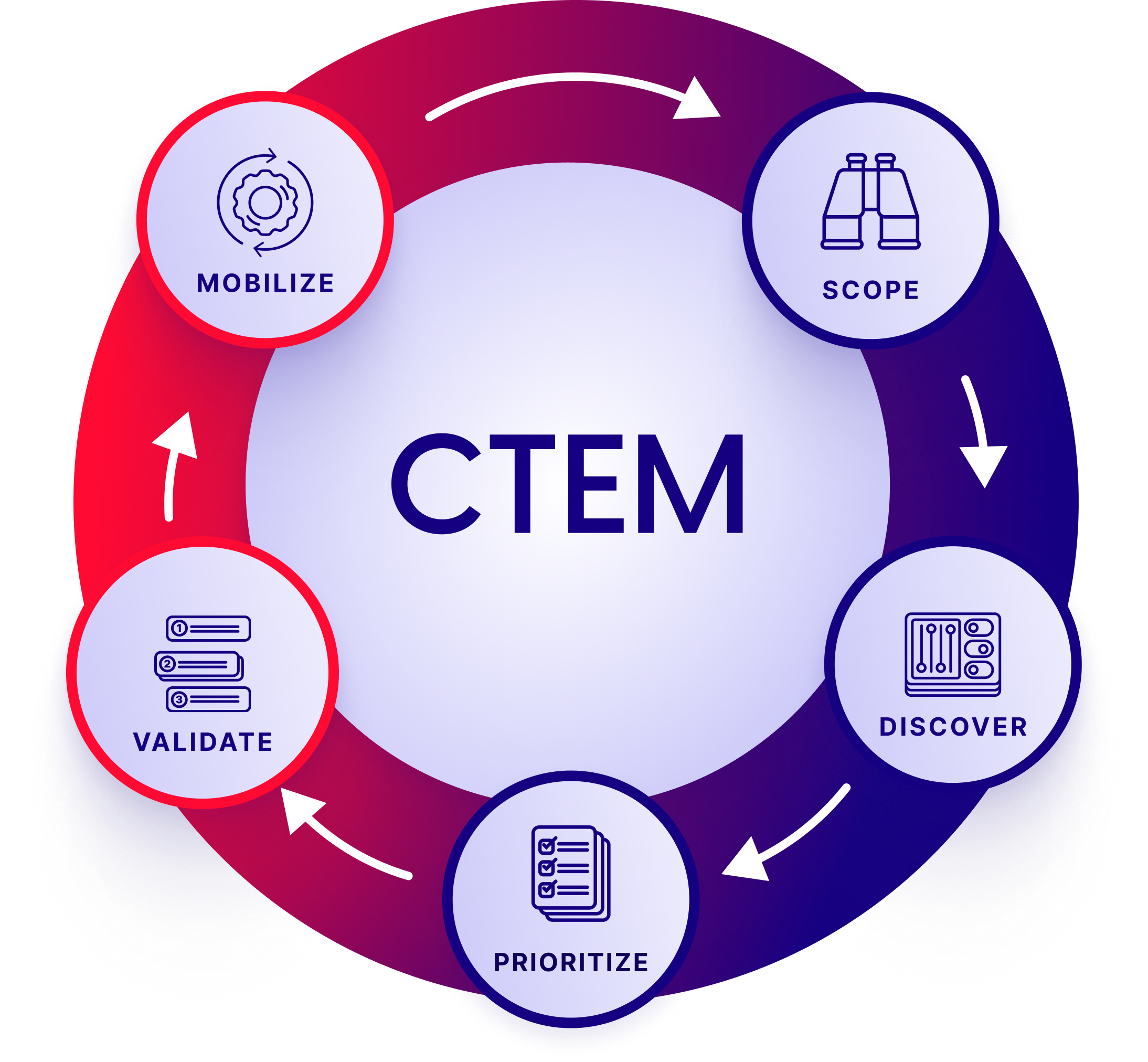
The CTEM framework creates a path to that outcome:
- Scope: Focus on the assets and business services that matter most
- Discover: Identify every source of exposure, including misconfigurations, identities, cloud paths and security control gaps, not only CVEs
- Prioritize: Stack-rank exposures using threat context, asset importance and business impact
- Validate: Prove what an attacker can exploit and whether existing controls prevent or detect the attack
- Mobilize: Coordinate teams to reduce the exposure through the fastest effective action
In Gartner’s early research on CTEM, they challenged security leaders to view their security programs through a new perspective and answer three essential questions:
- How do we look from an attacker's point of view?
- Which configurations leave us exposed?
- How would our controls and response cope?i
Those questions matter more as AI accelerates the discovery of vulnerabilities and the development of attacks. New exposures arrive faster. Threat actors weaponize them sooner. Once inside an environment, an adversary can move in minutes or even seconds. CTEM can only succeed if the process from discovery to mitigation moves just as quickly.
Why early CTEM programs stall
Many CTEM programs have the right framework but lack the operating model to deliver their intended result. Four problems repeatedly slow them down.
1. Prioritization relies on theory
Asset context, severity scores and modeled attack paths can narrow a long list of exposures. They cannot prove whether an attack will succeed in a specific environment.
A theoretical path may look urgent even when current controls block it. A moderate-rated exposure may create a direct path to a critical system because a control is misconfigured or a detection rule is missing. Without offensive testing, teams still make decisions based on assumptions.
2. Patching becomes the default response
Patching remains essential, but it is rarely the only option. An emergency patch may take a day to deploy. Routine patches can take weeks because teams must test them, coordinate change windows and protect system availability.
During that delay, security teams can often reduce risk by blocking an indicator of compromise, adding a behavioral rule, changing a control configuration or deploying a virtual patch. A CTEM program should identify the fastest effective mitigation, then confirm that it works.
3. CTEM remains inside vulnerability management
Some programs add asset context and attack-path data to an existing vulnerability management process, then call the result CTEM. The process still operates separately from threat intelligence, red teams, SecOps, security engineering and IT.
That separation limits the program. Discovery alone does not show exploitability. Validation alone does not improve a control. A recommendation alone does not deploy a fix.
4. Collaboration creates more handoffs
Program-wide CTEM requires collaboration, but each handoff can add friction. Teams work in different systems, use different measures of urgency and depend on scarce specialists. Exposure data moves from vulnerability management to threat intelligence, then to a red team, SecOps, engineering and IT. Each transfer delays action while the exposure remains open.
Automation must eliminate those delays rather than add another layer of coordination.
Exposure validation: Prove what attackers can exploit
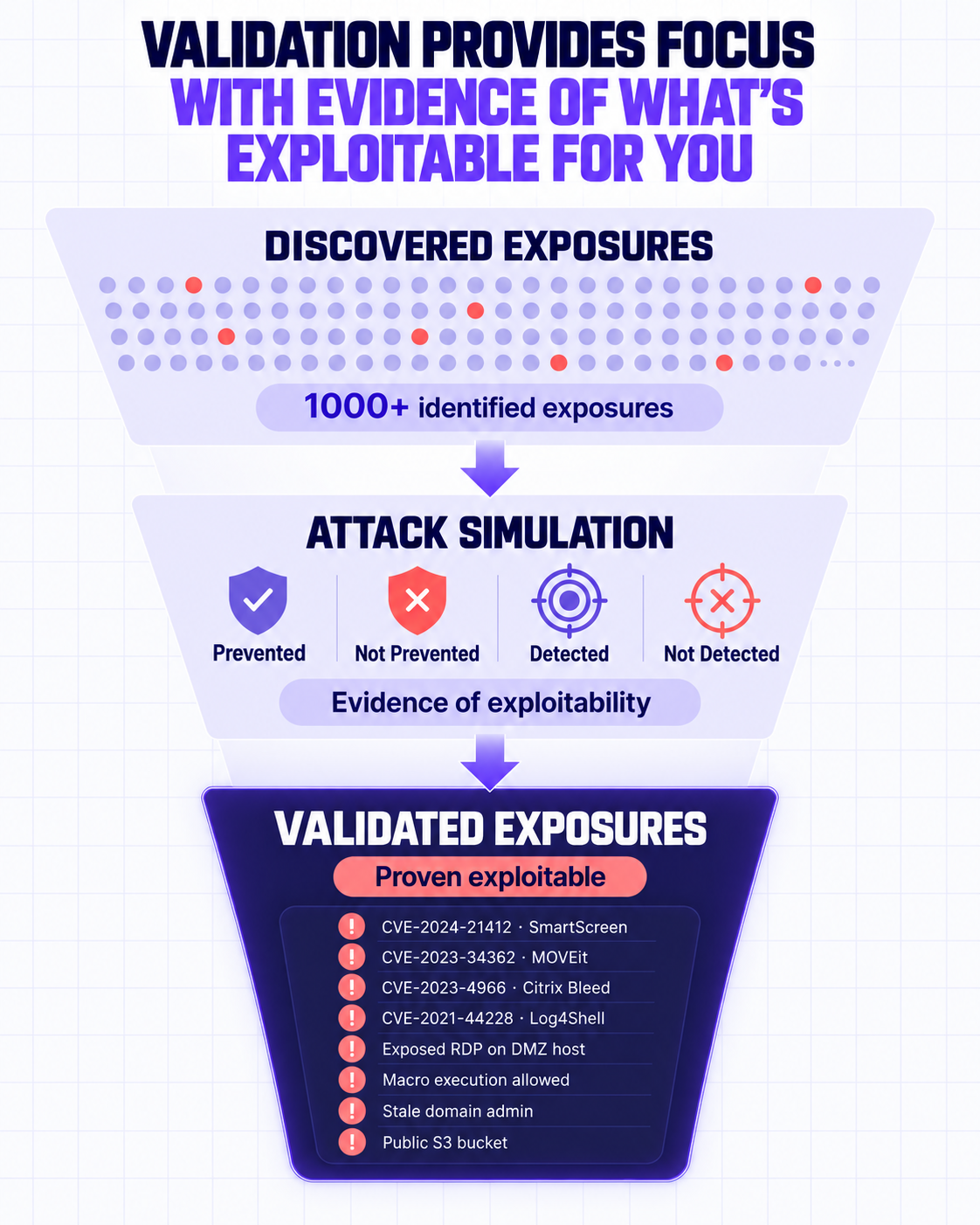
When thousands of potential exposures compete for attention, validation becomes the central filter.
The goal is more specific than identifying vulnerabilities known to be exploited in the wild. Security teams need to know what is exploitable in their environment.
Automated attack simulation can safely test an exposure against the organization’s assets, configurations and controls. The test shows whether the attack was prevented, whether it generated a detection and how the response process performed. It separates exposures already mitigated by existing defenses from gaps that demand immediate action.
This evidence changes prioritization. Teams can replace a broad list of theoretical risks with a focused set of proven gaps. They can see:
- Which attacks reached their target
- Which preventive controls failed
- Which malicious behaviors went undetected
- Which response workflows broke down
- Which changes reduced risk when the test was run again
Validation also creates a common fact base. Vulnerability management, SecOps, security engineering and IT can align around observed behavior rather than debate scores and assumptions.
However, validation cannot wait for manual testing and analysis. Automation is critical, and the latest Gartner report advocates for a validation KPI: time to validate exploit (TTVE).ii
Mobilize through the fastest path to risk reduction
Once an exposure is validated, CTEM must answer a practical question: What can reduce the risk fastest?
While a patch likely provides long-term remediation, the fastest option is likely a compensating control that protects the organization while a permanent fix moves through testing and deployment.
Options for threat mitigation include:
- Blocking indicators of compromise across security controls
- Creating or tuning behavioral detections in SIEM and EDR
- Updating EDR, email, network or cloud security configurations
- Applying WAF policies or virtual patches
- Restricting identity privileges or exposed services
- Deploying the vendor patch when operationally ready
Automation can compress these actions from days to hours or minutes. An indicator can be distributed across controls in minutes. A behavioral rule can be built, deployed and tested far faster than a manual process. A configuration change can close an immediate gap while patching continues.
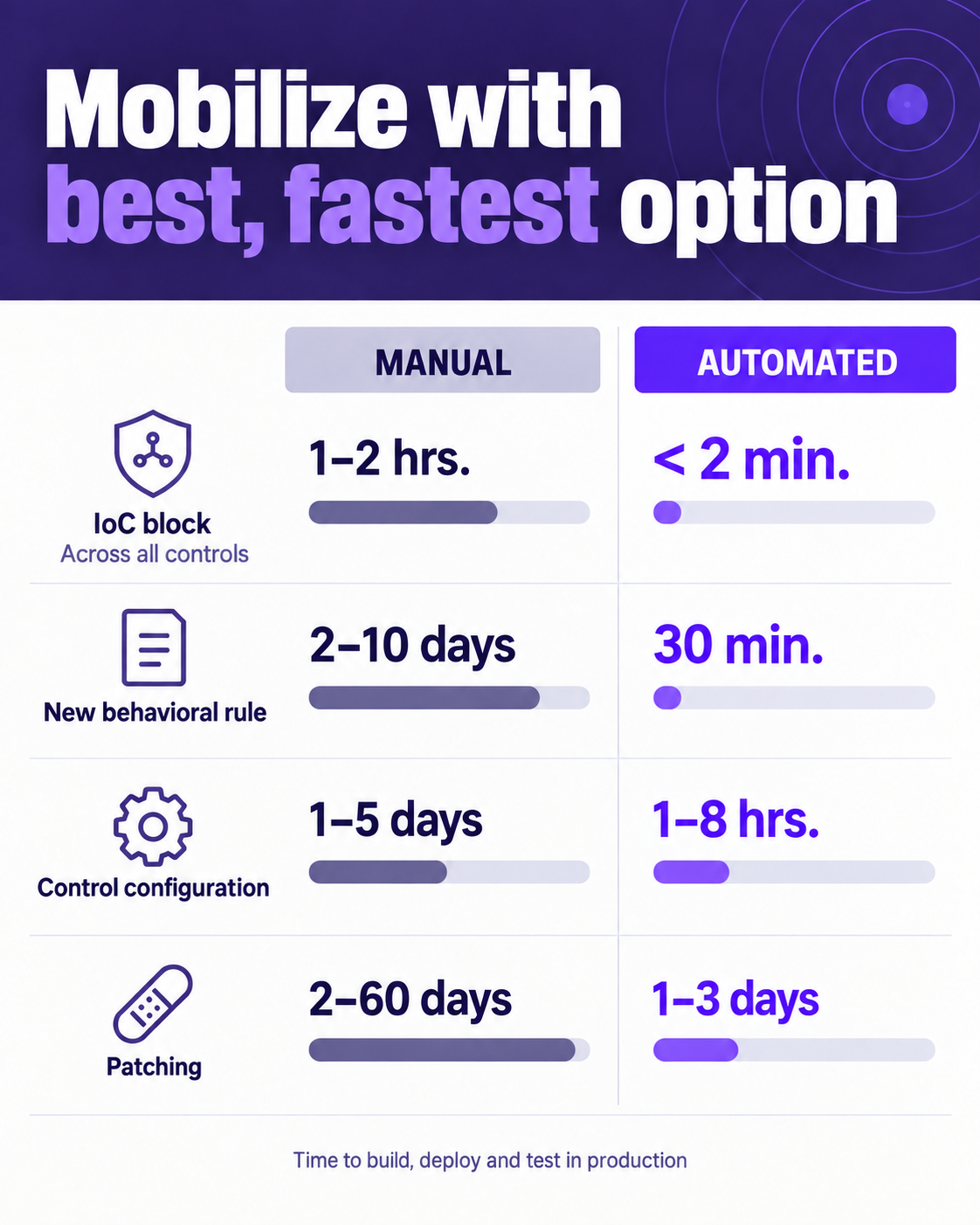
Automation can create a closed-loop process to validate the exposure, select the fastest effective mitigation, deploy it and retest. The final retest proves that the change reduced risk and did not simply create another unverified assumption.
This is how teams build exposure-informed defenses. Controls adapt based on evidence from the organization’s own environment and the threats most likely to target it.
CTEM is a team sport
Automation often hits snags and objectives because it challenges teams to trust the output of others, but successful CTEM relies on collaboration. No single team owns the full path from exposure discovery to risk reduction.
- Vulnerability management discovers exposures across infrastructure, applications, cloud, identities and configurations
- Cyber threat intelligence and red teams explain attacker behavior and prove exploitability
- SecOps and blue teams update prevention, detection and response controls
- IT and system owners deploy patches and configuration changes with the required urgency
All four groups need a shared objective: reduce the business risk created by threat exposure.
Automation can connect their work. A newly discovered exposure can trigger a tailored attack assessment. A failed prevention test can open a control optimization workflow. A detection gap can trigger the creation and validation of a new rule. A successful mitigation can automatically close the loop with evidence for every team involved.
AI extends this model by executing repeatable routines that previously required a trained engineer at the keyboard. People remain in the process to approve sensitive actions, review evidence and correct decisions. The routine handles the research, mapping, test creation, execution and reporting that slow manual workflows.
An agentic approach to CTEM
An agentic CTEM system continuously moves through six connected steps:
- Profile. Understand the attack surface, relevant threats, attacker behavior and business context
- Tailor. Map testing to the organization’s assets, exposures, industry and security controls
- Execute. Run safe, realistic attack simulations
- Validate. Measure prevention, detection and response
- Prioritize. Rank gaps by observed impact
- Optimize. Improve controls and retest continuously
This cycle turns exposure management into an adaptive security process. AI agents can read threat intelligence, map a new threat to the environment, create a test, run it and recommend the next action. Automation can deploy an approved change and run the test again.
By the time an analyst reviews the exposure, the team may already know whether the threat is relevant, which controls failed and which mitigation worked.
That is CTEM at machine speed.
How Cymulate builds exposure-informed defenses
The Cymulate approach connects exposure and threat context to continuous attack validation and control optimization.
The platform combines inputs from exposure discovery, threat intelligence and SecOps tools. Its breach and attack simulation engine maps relevant exposures, threats and assets to safe attack scenarios, then measures prevention and detection across the environment. The resulting evidence guides updates to indicators of behavior, indicators of compromise, SIEM and EDR rules, WAF policies and other security controls.
Use agentic AI and automated attack simulations to prove whether security controls can prevent and detect the attacks associated with each exposure.
Cymulate Vero AI and Cymulate Cowork extend this process with agents, skills and autonomous routines. They can coordinate repeatable tasks such as analyzing a breaking threat, validating a critical CVE, testing a detection rule, finding control drift or assembling evidence for a board report.
The difference appears in the operating tempo:
- A breaking threat can be mapped, tested and validated in about an hour rather than a day of manual work
- A critical CVE can trigger a tailored assessment before a team begins its review
- A detection gap can lead to a tuned and retested rule within hours
- Security posture evidence can be gathered continuously instead of being assembled through a weeks-long reporting exercise
The goal is measurable improvement: lower mean time to detect, lower mean time to remediate, stronger MITRE ATT&CK coverage, fewer false positives and more effective automated response.
Build CTEM for the speed of the next attack
AI-powered attacks expose the limits of CTEM processes built around manual research, theoretical prioritization and patching alone. Moving faster requires more than another dashboard or risk score.
A machine-speed CTEM program does four things:
- Operates across the security program instead of inside one team
- Uses validation to focus immediate action on what is exploitable in the organization’s environment
- Automates handoffs and repeatable work across discovery, validation and mobilization
- Builds exposure-informed defenses through the fastest effective mitigation, followed by continuous retesting
The objective is simple: know which exposures create real risk, act before attackers exploit them and keep defenses aligned with a threat environment that never stops changing.
Request a demo to see how Cymulate applies AI and continuous validation to run CTEM at machine speed.
i Gartner SecOps Hype Cycle 2023
ii Gartner. Modernize Exposure Management to Counter AI-Augmented Vulnerability Discovery, September 24, 2026.

Featured Resources
View More Resources
2026 Gartner® Market Guide for Adversarial Exposure Validation
The guide covers AEV use cases, key features, and market trends to improve threat exposure visibility and defenses.

Agentic Cyber Defense Engineering
This e-book explores the six stages of agentic cyber defense engineering and how they work together to strengthen cyber defenses.

Successful CTEM Depends on Validation
Explore how AI, automation, and proof-based validation shape effective CTEM strategies.