

Cymulate Launches MCP Server and Claude Plugin
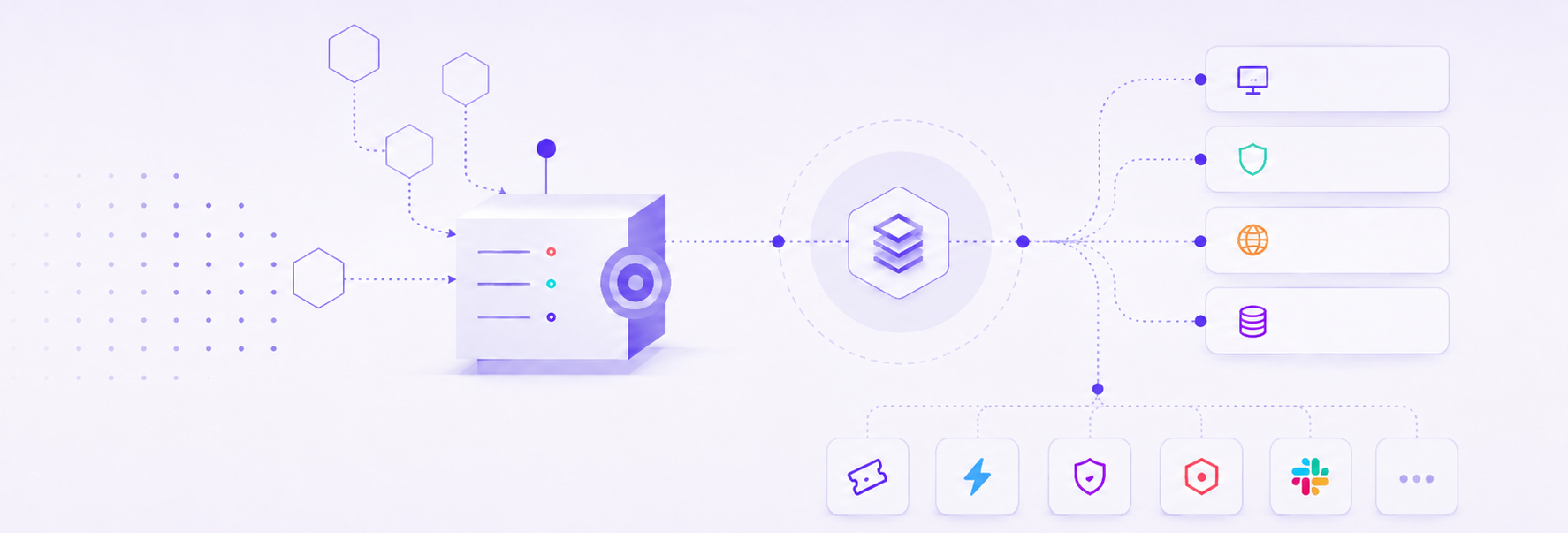
How Cymulate transforms exposure validation from a destination platform into an AI-native security capability
Security teams have more data than ever before, but less time to act on it. Over the past several years, Cymulate has continued to evolve continuous exposure validation beyond attack simulation. We've expanded the platform to help organizations continuously validate their security controls, prioritize vulnerabilities to support continuous threat exposure management (CTEM), auto-mitigate with vendor-specific remediation and accelerate security operations with agentic AI.
Now we're taking the next step to make automated validation more accessible across security teams and integrated into security processes with the Cymulate MCP Server and Cymulate Claude Plugin.
As AI becomes the primary interface for how security teams investigate threats, automate workflows and make decisions, exposure validation must become part of that AI ecosystem. It must not remain confined to another security console.
The Cymulate MCP Server and Cymulate Claude Plugin extend the platform beyond its own interface, enabling all customers to access validated exposure intelligence directly from the AI tools they already use to manage one-off tasks or create recurring agentic processes that execute assessments or apply validation findings.
Whether organizations are building enterprise AI workflows or empowering analysts with AI assistants, Cymulate now delivers exposure validation and agentic cyber defense engineering where security work is increasingly happening.
In this blog, you'll learn:
- Why AI is becoming the new interface for security operations and how leading organizations are moving beyond traditional security dashboards.
- How Cymulate is continuing to innovate Exposure Validation by bringing validated security intelligence directly into your organization's AI ecosystem.
- The difference between the Cymulate MCP Server and the Cymulate Claude Plugin, and how the Claude Plugin includes Cymulate expertise in through programmed AI skills.
- How integrating Cymulate with your preferred AI tools enables analysts to use AI systems with natural language to investigate threats, validate exposures, automate remediation workflows and generate reports.
- Why combining Cymulate with third-party security data, including SIEM, EDR, vulnerability management, threat intelligence, ticketing and cloud security platforms, expands security orchestration and creates a richer context for faster and better-informed security decisions.
- Real-world examples of how security teams can operationalize exposure validation through AI-driven workflows to accelerate detection engineering, CTEM, remediation validation and executive reporting.
- Cymulate vision for AI-native security operations to help organizations make validated exposure intelligence accessible with speed and scale wherever security decisions are made.
Expanding the Cymulate Platform into AI Ecosystems
Cymulate has always focused innovation on helping security teams move from identifying risk to validating it, prioritizing it and mitigating it. We have made major advancements in simplifying the complexity of operating exposure validation and making it accessible and usable for all types of organizations.
Our latest innovations continue that journey by extending Cymulate beyond the platform itself. Organizations can now integrate Cymulate Exposure Validation directly into their AI ecosystem through two complementary capabilities:
- The Cymulate MCP Server, the foundation to provide open access for enterprise AI platforms and custom workflows
- The Cymulate Claude Plugin, which builds on that foundation by adding Cymulate-managed AI skills that deliver expert guidance with minimal setup
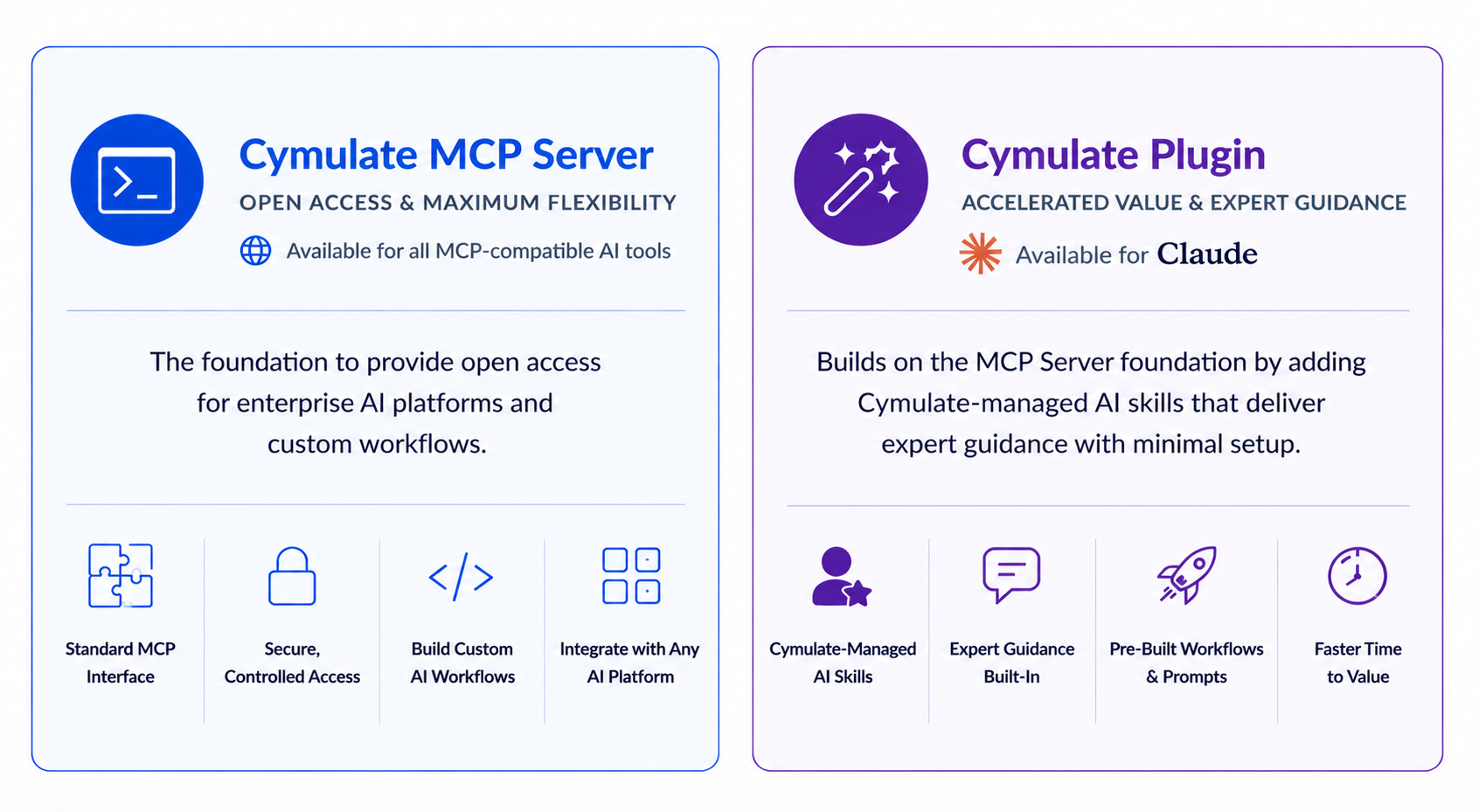
Together, these capabilities transform Cymulate from a siloed application into an intelligent service that becomes part of everyday security operations across all teams.
Innovation That Goes Beyond Connectivity
Many vendors are racing to expose APIs or deploy MCP servers. But simply connecting an AI assistant to a platform doesn't make it effective. Organizations still need to teach AI how experienced security practitioners investigate threats, validate exposures, prioritize findings and recommend actions.
That's where the Cymulate Claude Plugin delivers a different kind of innovation. Rather than starting with a blank slate, the plugin combines secure platform access with Cymulate-managed AI skills that package years of security expertise into reusable workflows.
Customers spend less time building prompts and more time solving problems.
The result is:
- Faster time to value
- More consistent outcomes
- Less prompt engineering
- Easier adoption across security teams and less maintenance
- AI workflows that reflect Cymulate best practices from day one
Operationalize and Integrate Exposure Intelligence Across Your Security Ecosystem
Connecting Cymulate to AI is about much more than replacing clicks with prompts. The real value comes from bringing validated exposure intelligence together with the rest of your security ecosystem. Every security decision relies on context. A vulnerability scanner may identify a critical CVE, your SIEM may detect suspicious activity and threat intelligence may indicate active exploitation. But these tools often answer different questions in isolation.
By integrating Cymulate into your AI ecosystem, security teams can combine validated exposure data with information from other security tools, risk-based asset and vulnerability management, threat intelligence, ticketing systems, CMDBs, cloud security platforms and other enterprise tools. Instead of manually correlating data across multiple consoles, AI can synthesize information from across the environment and provide a more complete picture of organizational risk.
For example, an analyst can ask:
"Which of our actively exploited vulnerabilities have already been validated by Cymulate, remain unmitigated and have open ServiceNow tickets?"
Rather than logging into multiple products to gather and synthesize the information, AI assembles the answer in seconds, streamlining the entire security workflow process. This is just one of many powerful ways that Cymulate validated exposure intelligence enhances AI-driven security operations.
A few additional examples include:
- Threat Validation: When a new threat actor or CVE is disclosed, AI can identify relevant campaigns, launch Cymulate assessments, determine whether your environment is exposed, and summarize the results for security leadership, all from a single prompt or as part of a scheduled AI workflow.
- Remediation Validation: After a patching effort, AI can automatically rerun relevant attack simulations, confirm whether mitigations are effective, identify remaining gaps and prioritize next steps.
- Detection Engineering: Detection engineers can validate and improve detection coverage by running a real-world attack simulation, generating a new detection rule, deploying it to their SIEM and rerunning the attack to confirm the threat is detected, all from a single prompt or automated workflow.
- Executive Reporting: AI can automatically generate weekly executive risk summaries, board-ready cyber posture reports, exposure trend analysis, MITRE ATT&CK coverage updates, and remediation progress reports by combining validated Cymulate findings with data from across the security ecosystem to communicate business risk and security improvements with confidence.
These aren't isolated AI use cases. They are examples of how organizations can operationalize Cymulate Exposure Validation as part of their everyday security operations. By combining proven exposure data with information from third-party security tools, organizations can accelerate investigations, improve decision-making, prioritize remediation based on actual risk, manage risk and make Continuous Exposure Validation an integral part of everyday security workflows
Continuing to Shape the Future of Exposure Validation
At Cymulate, innovation has never been about adding features for the sake of features. It's about helping organizations continuously improve their security posture while reducing operational complexity and streamlining resources.
By extending Exposure Validation into the AI platforms customers already use, we're operationalizing validated security intelligence by making it easier to access and combine with the rest of the security ecosystem.
Whether organizations choose the flexibility of the MCP Server for any AI platform or the guided and structured experience of the Cymulate Plugin (available only in Claude right now), they gain a new way to put validated exposure data at the center of AI-driven security operations.
Because the future of cybersecurity isn't just AI-powered. It's AI powered by validated security intelligence.
Ready to see how you can integrate the Cymulate platform into your AI ecosystem? Schedule a demo now.

Featured Resources
View More Resources
Cowork
Automate exposure validation with AI agents, expert skills and workflows for cyber defense engineering.
Cymulate Vero AI
See how Cymulate Vero AI tailors validation to your environment and automates the path to remediation.
The Truth About Your Security: Why We Built Cymulate Vero AI
Meet Cymulate Vero AI: the agentic AI system that validates threats, proves defenses and drives action.