
Frequently Asked Questions

Features & Capabilities

What is Cymulate's Exposure Management Platform and how does it help protect against evolving cyber threats?

Cymulate's Exposure Management Platform enables organizations to proactively validate their cybersecurity defenses, identify vulnerabilities, and optimize their security posture. By simulating real-world threats and attack scenarios, it helps teams stay ahead of emerging threats and continuously improve their resilience. The platform offers customizable, real-time assessments both on-premises and in the cloud, ensuring preparedness against threats like Log4Shell and MuddyWater campaigns. Learn more.

How does Cymulate simulate real-world attack scenarios?

Cymulate leverages a rich dataset of attack surface assessments, simulated attack campaigns, and automated red teaming to test an organization's defenses. The platform includes a library of over 100,000 attack actions aligned to MITRE ATT&CK, updated daily, allowing security teams to validate protection against the latest threats and vulnerabilities. Learn more.

What is exposure validation and how does Cymulate make it fast and easy?

Exposure validation is the process of testing security controls against real-world threats to determine what is actually exploitable in your environment. Cymulate's Exposure Validation solution streamlines this process by providing advanced security testing tools and a user-friendly interface for building custom attack chains. As Mike Humbert, Cybersecurity Engineer at Darling Ingredients Inc., notes, "When it comes to building custom attack chains, it's all right in front of you in one place." Learn more.

How does Cymulate help organizations adopt a proactive cybersecurity posture?

Cymulate enables organizations to shift from reactive defense to proactive security by continuously identifying and closing security gaps before they are exploited. The platform supports exposure management and security validation practices, helping teams anticipate threats and neutralize them proactively. This approach reduces the attack surface, improves resource allocation, and aligns cybersecurity efforts with broader business objectives. Learn more.

What are the key capabilities of Cymulate's platform?

Cymulate's platform offers continuous threat validation, unified exposure management, attack path discovery, automated mitigation, AI-powered optimization, complete kill chain coverage, ease of use, and an extensive threat library. These capabilities help organizations achieve measurable improvements in threat resilience, operational efficiency, and security posture. Learn more.

How does Cymulate validate protection against persistent vulnerabilities like Log4Shell?

Cymulate regularly releases new threat assessments related to vulnerabilities such as Log4Shell. In 2023, Cymulate released 15 new threat assessments for Log4Shell, helping organizations test their web application firewalls, endpoint security, and web gateway protection. On average, 75% of WAFs blocked Log4Shell exploits, and endpoint security showed effectiveness from 62% to 89% against post-exploit threats. Read the blog.

What is the importance of adopting an "assume breach" mindset in cybersecurity?

Adopting an "assume breach" mindset means operating under the assumption that defenses may already be compromised. This approach emphasizes detection, response, and recovery capabilities, rather than solely prevention. Cymulate supports this mindset by enabling continuous monitoring, incident response planning, regular security assessments, and user training to swiftly detect and mitigate threats. Read the blog.

How does Cymulate help organizations detect post-exploitation activities?

Cymulate enables organizations to test their web gateway and endpoint solutions against post-exploit threat activity, such as those used in the MuddyWater: Israel Campaign. Customers who ran this assessment were 89% effective in protecting their organizations with those controls. The platform also supports Sigma rules for writing detection logic across SIEM and log management platforms. Learn more.

What is the role of Sigma rules in Cymulate's detection engineering?

Sigma rules provide a standardized approach for writing security detection logic that works across SIEM and log management platforms. Cymulate leverages Sigma rules to help security teams quickly translate known attack patterns into actionable threat detection, improving their ability to spot and mitigate post-exploitation activities. Read more.

How does Cymulate support continuous improvement in security solutions?

Cymulate emphasizes the importance of regular testing, patching, and configuring security tools to enhance their effectiveness. The platform provides continuous, real-time assessments and updates its SaaS platform every two weeks with new features, ensuring customers always have access to the latest capabilities. Learn more.

What are the benefits of using Cymulate's layered security approach?

Cymulate advocates for a layered security approach, combining multiple types of security measures such as web application firewalls, endpoint security, and web gateway protection. This strategy increases overall effectiveness and resilience against evolving threats, as demonstrated by high effectiveness rates in blocking Log4Shell exploits and post-exploit activities. Read the blog.

How does Cymulate help organizations align cybersecurity efforts with business objectives?

Cymulate's proactive cybersecurity approach transforms emergency responses into controlled, predictable, and effective strategies. By continuously validating defenses and optimizing resource allocation, organizations can improve their security posture and align cybersecurity initiatives with broader business goals. Learn more.

What is Cymulate's approach to cyber resilience?

Cymulate offers comprehensive, customizable, and real-time cybersecurity assessments to simulate a range of threats and optimize an organization's security posture. This ensures preparedness against evolving threats and supports a strategic "assume breach" mindset for continuous resilience. Learn more.

How does Cymulate help reduce the attack surface?

Cymulate's proactive exposure management and security validation practices help organizations identify and remediate vulnerabilities, reducing their attack surface and improving overall security resilience. Learn more.

What is the significance of the Cymulate 2024 State of Exposure Management & Security Validation report?

The Cymulate 2024 State of Exposure Management & Security Validation report highlights the shift from reactive to proactive cybersecurity, based on data from over 500 global customers. It emphasizes the importance of continuous exposure management and security validation in anticipating and disarming threats before they strike. Read the report.

How does Cymulate help organizations prepare for threats like MuddyWater?

Cymulate provides threat assessments mapped to the MITRE ATT&CK framework, enabling organizations to test their controls against post-exploit activities used by groups like MuddyWater. This helps improve detection, response, and recovery capabilities. Read the blog.

What are Cymulate's solutions for exposure prioritization and remediation?

Cymulate's Exposure Prioritization & Remediation solution helps organizations focus on what’s exploitable in their environment, enabling efficient remediation and improved security posture. Learn more.

How does Cymulate support detection engineering for SIEM, EDR, and XDR?

Cymulate's Detection Engineering solution helps organizations build, tune, and test SIEM, EDR, and XDR controls to improve mean time to detect threats. The platform provides actionable insights and supports the use of Sigma rules for detection logic. Learn more.

What resources does Cymulate offer for learning about exposure validation and threat resilience?

Cymulate provides a Resource Hub with insights, thought leadership, and product information, as well as demos, webinars, and blog posts covering exposure validation and threat resilience. Visit the Resource Hub.

How can I see Cymulate in action?

You can book a personalized demo to see Cymulate's platform in action and learn how it connects vulnerabilities to real attack scenarios for exposure validation. Book a demo.

Pricing & Plans

What is Cymulate's pricing model?

Cymulate operates on a subscription-based pricing model tailored to each organization's requirements. Pricing depends on the chosen package, number of assets, and scenarios selected for testing and validation. For a detailed quote, schedule a demo with Cymulate's team.

Integrations & Technology Partners

What integrations does Cymulate offer?

Cymulate integrates with a wide range of security technologies, including Akamai Guardicore, AWS GuardDuty, BlackBerry Cylance OPTICS, Carbon Black EDR, Check Point CloudGuard, Cisco Secure Endpoint, CrowdStrike Falcon, CrowdStrike Falcon Spotlight, Wiz, SentinelOne, and Cybereason. For a complete list, visit our Partnerships and Integrations page.

Security & Compliance

What security and compliance certifications does Cymulate hold?

Cymulate holds several industry-leading certifications, including SOC2 Type II, ISO 27001:2013, ISO 27701, ISO 27017, and CSA STAR Level 1. These certifications demonstrate Cymulate's commitment to robust security practices and compliance with global standards. Learn more.

How does Cymulate ensure data security?

Cymulate ensures data security through encryption for data in transit (TLS 1.2+) and at rest (AES-256), secure AWS-hosted data centers, and a tested disaster recovery plan. The platform is developed using a strict Secure Development Lifecycle (SDLC), including secure code training, continuous vulnerability scanning, and annual third-party penetration tests. Learn more.

Is Cymulate GDPR compliant?

Yes, Cymulate incorporates data protection by design and has a dedicated privacy and security team, including a Data Protection Officer (DPO) and Chief Information Security Officer (CISO), ensuring GDPR compliance. Learn more.

Use Cases & Benefits

Who is the target audience for Cymulate's products?

Cymulate's solutions are designed for CISOs and security leaders, SecOps teams, Red Teams, and Vulnerability Management teams. The platform caters to organizations of all sizes and industries, including finance, healthcare, retail, media, transportation, and manufacturing. Learn more.

What problems does Cymulate solve for security teams?

Cymulate addresses fragmented security tools, resource constraints, unclear risk prioritization, cloud complexity, communication barriers, inadequate threat simulation capabilities, operational inefficiencies in vulnerability management, and post-breach recovery challenges. Read case studies.

How does Cymulate improve operational efficiency?

Cymulate automates processes, allowing security teams to focus on strategic initiatives rather than manual tasks. Customers have reported a 60% increase in team efficiency and savings of up to 60 hours per month in testing new threats. Learn more.

What are some customer success stories with Cymulate?

Hertz Israel reduced cyber risk by 81% in four months using Cymulate. A sustainable energy company scaled penetration testing cost-effectively, and Nemours Children's Health improved detection and response in hybrid and cloud environments. Read more case studies.

Competition & Comparison

How does Cymulate differ from similar products in the market?

Cymulate stands out with its unified platform integrating Breach and Attack Simulation (BAS), Continuous Automated Red Teaming (CART), and Exposure Analytics. It offers continuous threat validation, AI-powered optimization, complete kill chain coverage, ease of use, and proven results such as a 52% reduction in critical exposures and an 81% reduction in cyber risk. See comparisons.

Support & Implementation

How easy is it to implement Cymulate?

Cymulate is designed for quick and easy implementation, operating in agentless mode with no need for additional hardware or complex configurations. Customers can start running simulations almost immediately after deployment. Book a demo.

What support resources are available for Cymulate users?

Cymulate offers email and chat support, a knowledge base with technical articles and videos, webinars, e-books, and an AI chatbot for querying the knowledge base and creating AI templates. Contact support or visit the Resource Hub.

Product Information & Resources

Where can I find Cymulate's blog and newsroom?

You can stay updated with the latest threats, new research, and company news through Cymulate's blog and newsroom.

Where can I find resources like whitepapers, product info, and thought leadership articles?

Cymulate's Resource Hub is a central location for insights, thought leadership, and product information. Visit the Resource Hub.

Does Cymulate provide educational resources like a blog, glossary, or resource hub?

Yes, Cymulate offers a Resource Hub, blog, and glossary of cybersecurity terms, acronyms, and jargon. Resource Hub | Blog | Glossary

Do you have a blog post about preventing lateral movement attacks?

Yes, Cymulate has a blog post titled 'Stopping Attackers in Their Tracks' discussing common lateral movement attacks and prevention strategies. Read the blog.

Where can I find a central hub for Cymulate's insights, thought leadership, and product information?

All resources, including insights, thought leadership, and product information, are available in Cymulate's Resource Hub.

How can I stay updated with the latest news and research from Cymulate?

Visit Cymulate's company blog for the latest threats and research, and check the Newsroom for media mentions and press releases.

What is the topic of the blog post 'Evolving Vulnerability Management to Continuous Threat Exposure Management'?

This blog post discusses the strategic shift from traditional, reactive vulnerability management to a proactive model of Continuous Threat Exposure Management (CTEM), helping organizations achieve genuine risk resilience through continuous, threat-validated exposure management. Read the blog.

New: 2026 Gartner® Market Guide for Adversarial Exposure Validation
Learn More
Cymulate named a Customers' Choice in 2025 Gartner® Peer Insights™
Learn More
New Research: Azure Arc Privilege Escalation & Identity Takeover
Learn More
An Inside Look at the Technology Behind Cymulate
Learn More

How to Measure and Strengthen Your Cybersecurity Program

By: Avigayil Stein

Last Updated: March 16, 2025

cymulate blog article

In the dynamic landscape of cybersecurity, the old approach of reactive defense—scrambling to address vulnerabilities only after they've been exploited—is increasingly seen as inadequate. The need for a shift in strategy has never been more pronounced, as highlighted in the Cymulate 2024 State of Exposure Management & Security Validation report. This shift towards a proactive cybersecurity stance is not just a trend but a necessary evolution in how security leaders approach ever-growing cyber threats. 

Drawing from a rich dataset encompassing attack surface assessments, simulated attack scenarios and campaigns, and automated red teaming, the report sheds light on the practices of over 500 global Cymulate customers. It emphasizes a transition from reactive to proactive cybersecurity measures, focusing on identifying and closing security gaps before malicious actors can exploit them.  

The following examples demonstrate why it's essential to take a proactive approach and stay ahead of vulnerabilities and post-exploitation threats. 

Log4J: 2 Years Later and Still a Threat 

One of the most telling examples of the persistent threat landscape is that the Log4j vulnerability, also known as Log4Shell (CVE: 2021-44228), was the most assessed in 2023. Last year alone, Cymulate released 15 new threat assessments related to Log4Shell, reflecting the ongoing need to stay vigilant and prepared against these enduring vulnerabilities.  

First disclosed in December 2021, this critical vulnerability in the ubiquitous Apache logging library left countless Java-based applications susceptible to remote code execution. The incident disrupted the holiday season for numerous IT and security teams and remains a significant risk even years after its discovery. Its widespread impact and the ease with which it can be exploited made it a prime target for threat actors, prompting a flurry of urgent patching efforts worldwide. Despite the passage of time, unpatched systems continue to offer fertile ground for cybercriminals. The persistence of this vulnerability underscores a vital lesson: threats evolve, but they seldom disappear.  

On average, 75% of web application firewalls (WAFs) demonstrated their ability to block exploits of the Log4Shell vulnerability. For the 2023 threats targeting Log4shell, endpoint security and web gateway protection showed security effectiveness from 62% to 89% to protect against post-exploit threat activity in these campaigns.  
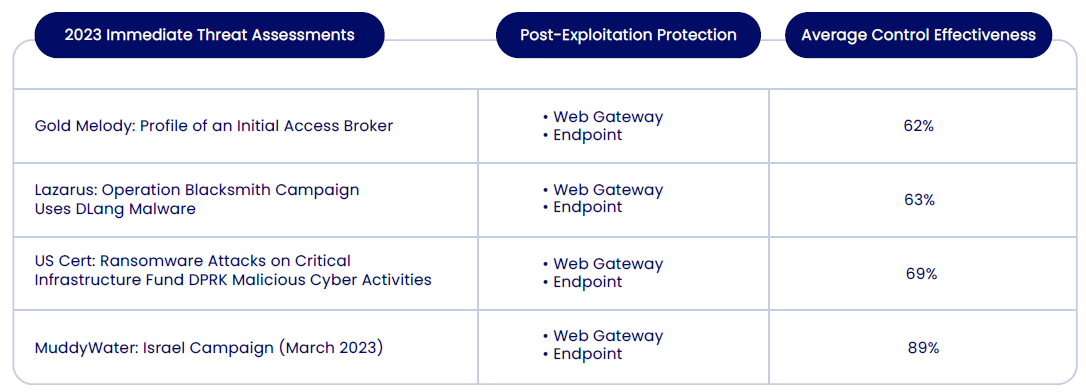
 

These numbers highlight the importance of continuous improvement and updates in security solutions. Additionally, organizations should not only rely on a single type of security measure but should implement a layered security approach. Regularly testing, patching, and configuring security tools are crucial to enhancing their effectiveness. 

MuddyWater: Israel Campaign (March 2023): The Importance of “Assume Breach”  

While protecting against vulnerability exploitation is essential, ensuring your organization’s controls can protect you from post-exploitation activity in case of a breach is just as important. Cymulate customers that ran the MuddyWater: Israel Campaign assessment, which tests their web gateway and endpoint solutions against post-exploit threat activity of the Log4Shell vulnerability, were 89% effective in protecting their organizations with those controls. 

The Iranian hacker group MuddyWater, known for its sophisticated cyber operations, exploited the Log4Shell vulnerability to enhance its cyber espionage capabilities. This vulnerability allowed MuddyWater to infiltrate and persist within target networks. By exploiting this flaw, they could deploy malicious payloads, maintain a stealthy presence, and extract sensitive information, aligning with their espionage and system compromise objectives.  
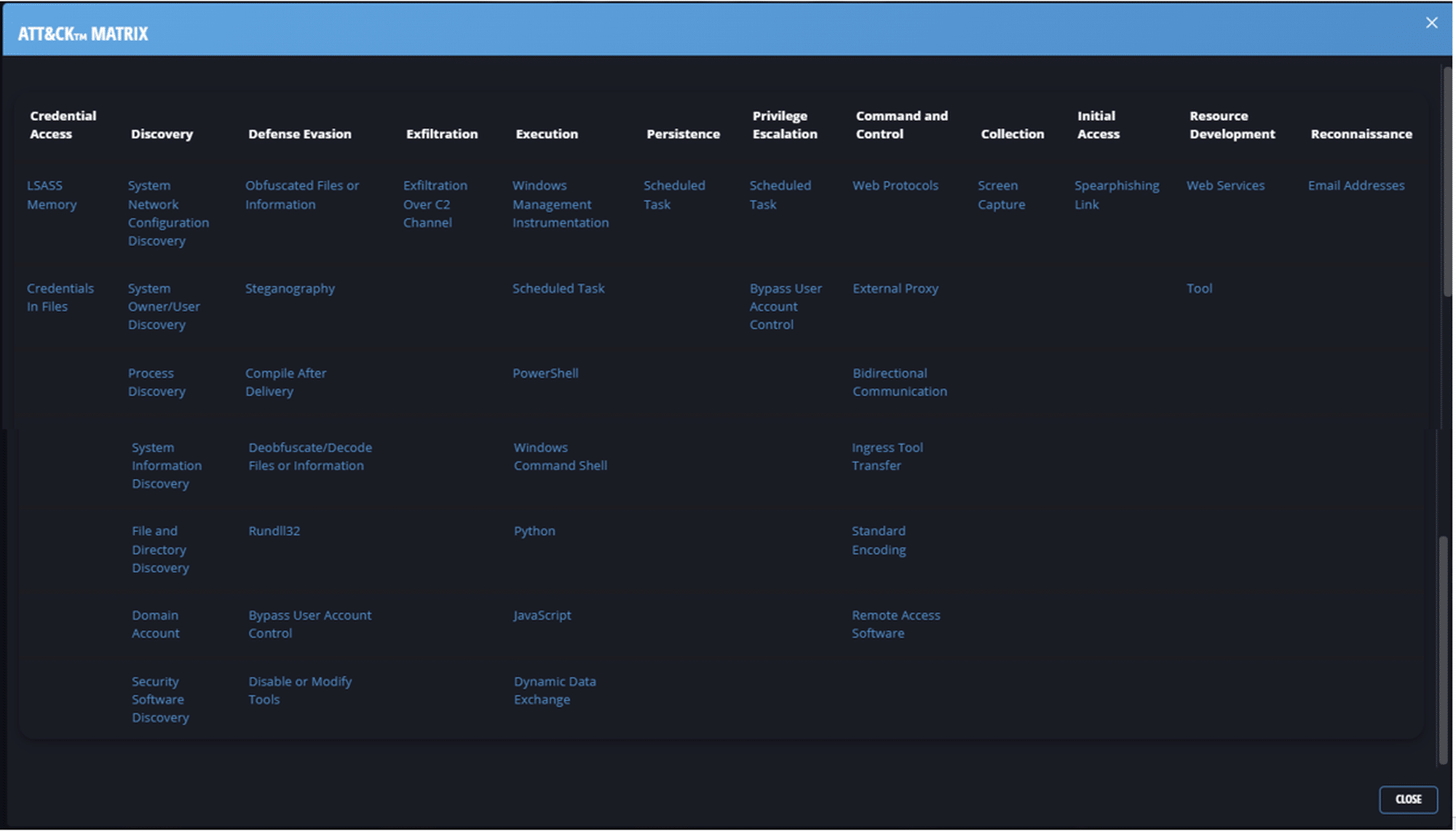
The MuddyWater: Israel Campaign (March 2023) Immediate Threats Assessment mapped to the MITRE ATT&CK® framework.

This incident accentuates the importance of adopting an "assume breach" mindset in cybersecurity: organizations should operate under the assumption that their defenses have already been compromised. This shift advocates for a more proactive and resilient security posture, focusing on detection, response, and recovery capabilities rather than solely on prevention.

One key method organizations use to enhance threat detection is through Sigma rules, a standardized approach for writing security detection rules that work across SIEM and log management platforms. By leveraging Sigma rules, security teams can quickly translate known attack patterns—such as those used by MuddyWater—into actionable threat detection logic, improving their ability to spot and mitigate post-exploitation activities.

It emphasizes the need for continuous monitoring, incident response planning, regular security assessments, and user training to detect and mitigate threats swiftly, thereby reducing the dwell time of attackers and limiting the potential damage they can inflict. In the context of the Log4Shell exploitation, such an approach would entail rapid identification of strange activities, immediate containment of the threat, and swift remediation of the exploited vulnerabilities, illustrating the indispensable role of resilience and preparedness in modern cybersecurity strategies.  

The Cymulate Approach to Cyber Resilience 

Cymulate offers a comprehensive view of an organization's defensive capabilities, focusing on comprehensive, customizable, and real-time cybersecurity assessments on-prem and in the cloud. Simulating a range of cyber threats to test and optimize an organization's security posture ensures preparedness against potential attacks and evolving threats—like those targeting Log4Shell. 

This proactive approach to cybersecurity, emphasized by adopting exposure management and security validation practices, is a testament to the evolving understanding of what it means to be secure in a digital age. It shifts from the conventional, reactive find-fix routines to a strategic, “assume breach” mindset, where threats are anticipated and factored into the organization’s defensive strategy, ensuring continuous preparedness and the ability to neutralize threats proactively. 

By adopting a proactive posture, organizations can enhance their security resilience, reduce their attack surface, and better allocate their resources. It transforms the narrative from one of constant emergency responses to a more controlled, predictable, and effective security strategy. This improves security posture and aligns cybersecurity efforts more closely with the organization's broader business objectives. 

The 2024 State of Exposure Management & Security Validation report is more than just an aggregation of data; it's a call for a paradigm shift in cybersecurity practices. The continued relevance of vulnerabilities like Log4Shell is a stark reminder of the cyber threats in the wild. However, through proactive exposure management and rigorous security validation, organizations can anticipate and disarm these threats before they strike. This proactive cybersecurity approach is not merely a strategic advantage—it's an essential cornerstone of modern cyber defense strategies. 

Cymulate Exposure Validation makes advanced security testing fast and easy. When it comes to building custom attack chains, it's all right in front of you in one place.
Mike Humbert, Cybersecurity Engineer
DARLING INGREDIENTS INC.
Learn More
Book a Demo