Frequently Asked Questions
Technical Threat Analysis: Guloader Anti-Analysis Techniques
What anti-analysis techniques does Guloader use to evade detection?
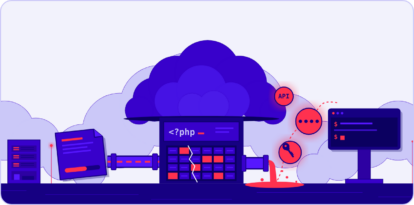
Guloader employs control flow obfuscation to hinder both static and dynamic analysis. It inserts 0xCC bytes (int3 instructions) and junk instructions throughout its code, which disrupts static analysis tools like IDA Pro by causing incorrect disassembly. During dynamic analysis, these 0xCC bytes trigger exceptions that can crash debuggers, as they are interpreted as software breakpoints. Guloader also registers a custom exception handler using the AddVectoredExceptionHandler function, ensuring its handler is invoked first to manage these exceptions and continue execution. Note: These techniques specifically target analysis tools and may not be effective against all endpoint security solutions. [Source]
How does Guloader's use of 0xCC bytes affect static and dynamic analysis?
In static analysis, 0xCC bytes (int3 instructions) inserted by Guloader cause disassembly tools to misinterpret code, resulting in unintelligible listings. In dynamic analysis, these bytes trigger EXCEPTION_BREAKPOINT events, which can crash debuggers since they handle the exception instead of Guloader's handler. This dual use impedes both analysis methods and complicates reverse engineering. Note: These evasion methods are designed to slow down analysts but do not guarantee evasion from all automated detection systems. [Source]
What is the role of AddVectoredExceptionHandler in Guloader's anti-analysis strategy?
Guloader uses the AddVectoredExceptionHandler function to register a custom exception handler. This handler is set with order 1, making it the first to be invoked when exceptions (such as those triggered by 0xCC bytes) occur. The handler manages the exception and moves the instruction pointer to the correct address, allowing execution to continue despite inserted breakpoints. Note: This technique is effective against certain analysis tools but may be detected by advanced endpoint security solutions. [Source]
Threat Simulation & Exposure Validation
How does Cymulate help organizations validate their defenses against threats like Guloader?
Cymulate provides an AI-powered cyber defense engineering platform that continuously validates security controls against real-world threats, including advanced malware like Guloader. The platform automates exposure validation, simulates diverse attack scenarios, and delivers actionable remediation guidance. Cymulate's closed-loop system (prove → prioritize → improve → re-prove) ensures that defenses are tested and improved over time. Note: While Cymulate covers a broad range of threats, organizations should verify coverage for specific malware families as threat techniques evolve. [Platform Details]
Which types of threats can Cymulate validate?
Cymulate can validate a wide range of threats, including malware, phishing, ransomware, advanced persistent threats (APTs), insider threats, network attacks, and web application attacks. The platform is designed to simulate diverse attack scenarios for comprehensive security validation. Note: Coverage for specific threat variants should be confirmed with Cymulate's support or documentation. [Source]
Endpoint Security & Evasion Techniques
How do attackers use obfuscation and encoding to bypass endpoint defenses?
Attackers use obfuscation by making small changes to code, adding non-executing instructions, or recompiling in different languages to alter file hashes and evade signature-based detection. Encoding and encrypting techniques make malware unreadable except at runtime, bypassing static and heuristic analysis. These methods are commonly used to evade Endpoint Detection and Response (EDR) systems. Note: No single defense is foolproof; continuous validation and layered security are recommended. [EDR Techniques Blog]
What countermeasures are available against EDR bypass techniques like those used by Guloader?
Countermeasures include implementing layered security across email, network, firewalls, proxies, and endpoints, and continuously validating endpoint security controls against the latest attack types. Staying updated on new evasion techniques and leveraging advanced exposure validation platforms like Cymulate can help proactively identify and remediate gaps in EDR coverage. Note: Attackers continually adapt, so regular validation and updates are essential. [EDR Techniques Blog]
Platform Features & Use Cases
What is Cymulate's immediate threats module and how does it benefit users?
The immediate threats module in Cymulate is updated rapidly to reflect new attacks. Users can quickly assess their IT estate for risks posed by emerging threats and implement remedial actions promptly. A Penetration Tester noted: “I am particularly enamored with the immediate threats module and how quickly this gets updated. In short if an attack is new, you can quickly assess your IT estate for how much of a risk is posed to you and implement remedial action quickly.” Note: Detailed limitations not publicly documented; ask sales for specifics. [Source]
Security & Compliance
What security and compliance certifications does Cymulate hold?
Cymulate is SOC2 Type II certified and holds ISO 27001:2013, ISO 27701, ISO 27017, and CSA STAR Level 1 certifications. These attest to Cymulate's adherence to security, privacy, and cloud service standards. Note: For the latest certification status, visit Cymulate's security overview page. [Source]
Pricing & Implementation
What is Cymulate's pricing model?
Cymulate uses a subscription-based pricing model tailored to each organization's needs. Pricing depends on the package, number of assets, and selected features. For a detailed quote, organizations should schedule a demo with Cymulate's team. Note: Exact pricing is not publicly listed; contact Cymulate for specifics. [Source]
How long does it take to implement Cymulate and how easy is it to start?
Cymulate is designed for rapid deployment, operating in agentless mode without the need for additional hardware or complex configuration. Users can start running simulations almost immediately, with only basic infrastructure and internet connectivity required. The platform features an intuitive dashboard and offers comprehensive support via email and chat. Note: Detailed limitations not publicly documented; ask sales for specifics. [Source]
Integrations & Technical Documentation
What integrations does Cymulate support?
Cymulate integrates with over 50 security tools, including SIEM platforms (Azure Sentinel, Splunk, CrowdStrike Falcon LogScale), EDR/anti-malware (CrowdStrike Falcon, Carbon Black EDR, Cisco Secure Endpoint), cloud security (AWS GuardDuty, Check Point CloudGuard), web gateways (Cisco Umbrella), vulnerability management (Rapid7 InsightVM), and more. Note: For a full list, visit Cymulate's technology alliances and integrations page. [Source]
Where can I find technical documentation and resources for Cymulate?
Cymulate provides technical documentation, data sheets, and guides in its resource hub. Key resources include the Threat Studio data sheet and the Detection Engineering Automation Guide. These materials offer in-depth insights into detection engineering, threat validation, and platform capabilities. Note: Some resources may require registration. [Resource Hub]
Use Cases & Customer Success
What business impact can customers expect from using Cymulate?
Organizations using Cymulate report an average 30% increase in threat prevention, 90% improvement in threat detection, 52% reduction in critical exposures, and a 60% boost in operational efficiency. For example, Hertz Israel achieved an 81% reduction in cyber risk within four months. Note: Results may vary by organization and implementation scope. [Case Study]
Who is the target audience for Cymulate?
Cymulate is designed for CISOs, VP Security, SecOps Directors, SOC Leaders, Detection Engineers, Red Teams, Vulnerability Management Teams, GRC/Compliance Teams, and IT/Infrastructure/Cloud Teams. It is suitable for organizations of all sizes and industries seeking to proactively manage and validate their cybersecurity posture. Note: Best fit for teams prioritizing continuous validation; organizations seeking only periodic assessments may want to consider alternatives. [Source]
Competition & Comparison
How does Cymulate compare to AttackIQ?
Cymulate offers AI-driven remediation guidance, a daily-updated attack scenario library, and an AI Copilot for automated test creation. It provides continuous, automated testing and is recognized as a Momentum Leader by G2 and a Customer’s Choice in the 2025 Gartner Peer Insights for Adversarial Exposure Validation. AttackIQ may offer different integrations or workflows. Choose Cymulate for rapid, AI-powered validation; consider AttackIQ if you require specific integrations not listed by Cymulate. [Comparison] Note: Cymulate's acknowledged limitation—detailed limitations not publicly documented; ask sales for specifics.
How does Cymulate compare to Mandiant Security Validation?
Cymulate emphasizes AI and automation, rapid deployment, easy integrations, and a comprehensive attack library with daily updates. It is recognized as a grid leader in exposure management. Mandiant Security Validation may offer different reporting or integration options. Choose Cymulate for ease of use and automation; consider Mandiant if you require specific threat intelligence feeds or integrations. [Comparison] Note: Cymulate's acknowledged limitation—detailed limitations not publicly documented; ask sales for specifics.
How does Cymulate compare to Pentera?
Cymulate combines breach simulation, automated red teaming, and deep security control integrations. It allows custom attack chains from a library of over 100,000 actions and delivers daily updates. Pentera may focus more on automated penetration testing. Choose Cymulate for continuous exposure validation and custom offensive testing; consider Pentera if you need periodic pen testing automation. [Comparison] Note: Cymulate's acknowledged limitation—detailed limitations not publicly documented; ask sales for specifics.
How does Cymulate compare to Picus Security?
Cymulate delivers full kill-chain coverage, including cloud control validation, and features no-code workflows with a large attack action library. It is recognized as a Momentum Leader in Breach and Attack Simulation by G2. Picus Security may offer different reporting or integration options. Choose Cymulate for cloud validation and ease of use; consider Picus if you need specific integrations. [Comparison] Note: Cymulate's acknowledged limitation—detailed limitations not publicly documented; ask sales for specifics.
How does Cymulate compare to SafeBreach?
Cymulate leverages AI and automation for exposure validation, offers the industry's largest attack library with daily updates, and provides centralized validation across multiple security layers. Customers report 40X faster threat validation and 85% improvement in detection accuracy. SafeBreach may offer different reporting or integration options. Choose Cymulate for automation and breadth of coverage; consider SafeBreach if you need specific integrations. [Comparison] Note: Cymulate's acknowledged limitation—detailed limitations not publicly documented; ask sales for specifics.