

Privilege Escalation: Unlocking the Hacker's Toolkit
Privilege escalation is generally considered an important stage in the life cycle of any cyber-attack. During this stage, attackers initially acquire unauthorized access to extend privileges in organizational systems and resources. It normally happens when an attacker exploits certain vulnerabilities, weaknesses, or other configuration issues in a system to enjoy higher privileges.
Privilege escalation is a process that bypasses weak security measures by leveraging system vulnerabilities, human errors, or software bugs to gain high access privileges. Many initial attempts at compromising a system cannot provide access to critical data. The attackers thus use the privilege escalation technique to increase access toward deeper network penetration and to reach critical assets where sensitive information can be leaked.
What is Privilege Escalation in Cybersecurity?
Not every cyberattack can provide direct, immediate and complete access to the attacked system to the attackers, and that is where privilege escalation plays an important role. These are utilized to disrupt a business by stealing very important data, planting backdoors, or further compromising the system. The ultimate goal often is unlimited control over the network or system, which results in serious security breaches or data exfiltration in most cases.
Both external hackers and insiders can use privilege escalation to meet their attack objectives. Social engineering attacks like phishing attacks initially trigger most privilege escalation attacks to gain credentials and access. If such an attack succeeds, it may lead to disastrous outcomes, such as deleting critical databases, installing malware, exfiltrating sensitive data, or bringing key services to a complete standstill. The increased access may also become a steppingstone toward other attacks, such as deploying ransomware or DDoS.
The Three Types of Privilege Escalation
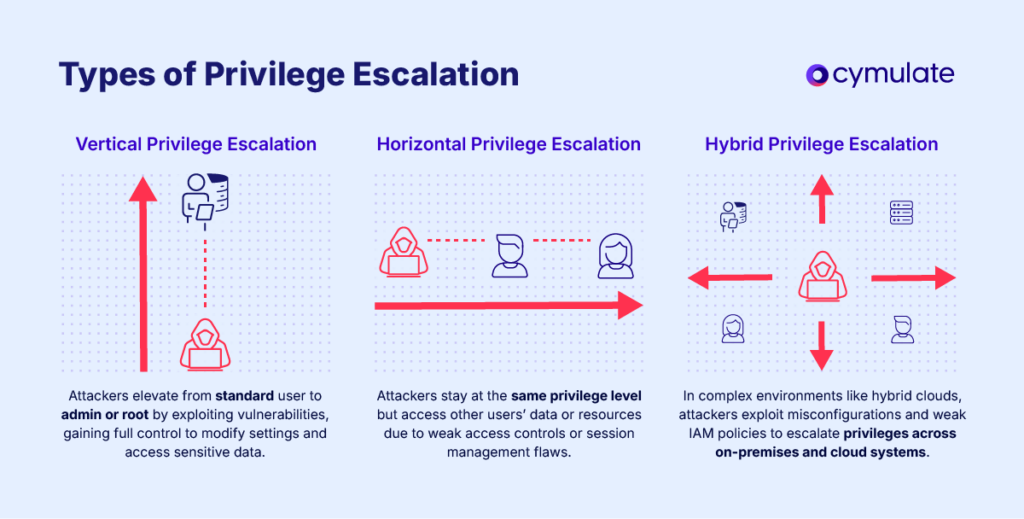
1. Vertical privilege escalation
Vertical privilege escalation is an attack in which an attacker elevates his privileges or permissions within a system. An attacker normally starts with limited access, such as a standard user account, and then exploits vulnerabilities to elevate the privileges to an administrator or root level. In this way, the attacker will be able to gain full control over the system, perform administrative tasks, modify system configurations, and access sensitive information. An adversary gains vertical escalation through the exploitation of bugs in software or leveraging system flaws like unpatched vulnerabilities. Using the example above, if the attacker had been a standard user, then using the local privilege escalation bug can actually escalate their privileges to superuser, rootor even administrator.
2. Horizontal privilege escalation
The other type of privilege escalation attack is horizontal privilege escalation; this is when an attacker can gain access to other users' resources or data yet stays at the same level of privileges.
The difference with vertical privilege elevation is that he cannot elevate his privilege level, but he can act as other users at his level. For example, if a user can only access their data and nobody else's, an attacker with the ability to conduct a horizontal privilege escalation attack would be able to gain unauthorized access, manipulate, or even delete the data belonging to other users possessing similar privileges. Some of those vulnerabilities could be attributed to improperly implemented access controls, failures in session management, and lack of input validation of valid user authentication mechanisms.
3. Hybrid privilege escalation in complex environments
Hybrid privilege escalation occurs in complex environments, such as cloud or hybrid cloud infrastructure, where there are different systems and platforms, on-premises and cloud-based.
Hybrid environments, most of the time, include a mix of on-premises servers, cloud services, and third-party applications. Attackers can leverage misconfigurations or weaknesses in communication between these diverse systems to gain privilege escalation. They may use cloud-specific misconfigurations, such as weak IAM policies in the cloud, to escalate their privileges. All these usually have much more complex architectures in place for security—complexity that may, at times, create gaps in their security controls or trust relationships that allow privilege escalation exploits.
With the hybrid setup, an attacker is able to compromise weak access controls and leverage his credentials with a cloud-based service where higher privileges reside. With SSO configuration, in order to grant users access, say, an organization requires access both on-premise and cloud. A compromise of either brings about similar effects for all parts linked to it. Besides misconfigured APIs, an unsecured container and poor segmentation between on-premises and cloud assets can all give vectors for privilege escalation.
The Privilege Escalation Process
1. Initial access acquisition
Attackers first gain access to a system with basic user rights. They do this through phishing—malicious communications that trick users into giving up their credentials—exploiting vulnerabilities in software or systems that haven't been secured or using default credentials that were never changed after installation. The main objective at this point is to gain a foothold inside the system to create a launch pad from which they can further attack.
2. System enumeration and reconnaissance
Once inside the system, the attackers carry out system enumeration and reconnaissance in order to get detailed information about the environment. They compile the architecture of the existing user accounts, installed applications, running services, operating system versions, and the system. Information gathering is, therefore, further supported with the help of network scanning tools, system scripts, and command-line utilities that map out the system's structure and search for potential targets to be exploited.
3. Identifying vulnerabilities
Empowered by this detailed insight, attackers shift their attacking goal to finding exploitable vulnerabilities that allow for privilege elevation: unpatched vulnerabilities where public exploits are provided for some of the bugs, or maybe just configuration errors, such as wrong permissions, insecure settings in default configurations, misconfigured services, or any one of a number of credential-related problems—weak or easily guessed password or even just reused at some other system, as well as exposed authentication tokens those can be picked off the wire and used to gain access.
4. Exploitation techniques
Once vulnerabilities are identified, attackers apply specific techniques to the vulnerability. Here are some scenarios where exploitation techniques apply:
- Software vulnerability exploitation: Buffer overflow attacks, where an attacker injects malicious code by overwriting the buffer's boundary or even code injection attacks, where an attacker is able to embed malicious scripts into trusted applications.
- Misconfiguration abuse: Attackers can exploit vulnerable configurations, such as poor file permissions, to access or make unauthorized modifications to files. Using the SUID/SGID settings on Unix/Linux systems, attackers can execute files with higher privileges. This means that attackers can bypass any restrictions already in place and elevate their access within a system.
5. Gaining High-Level Privileges
Attackers elevate privileges on a system from identified vulnerabilities by using exploitation techniques. They leverage crafted scripts or tools to exploit weaknesses that have been found during reconnaissance. This usually involves the use of privilege escalation payloads—malicious software designed to grant escalated access upon execution. More so, attackers will execute arbitrary code targeting high-privilege services to bring about generalized control over the system.
6. Post-Exploitation Activities
Having escalated privileges, the attackers will solidify their foothold for long-term operations. In this context, they are most likely to install backdoors that guarantee continued access. Attackers maintain persistence mechanisms used to penetrate the system again after it has been rebooted or updated. Another popular way is to create new administrative users and grant them long-term access independent of the initial breach. Attackers also tend to cover their traces actively. In other words, they tamper with the system logs by deleting or manipulating entries in an attempt to eliminate evidence of the activities. They can also manipulate file timestamps, thus making forensic investigation even more complicated and resulting in an attacker staying within a system for a longer period.
What is an Escalation Attack?
An escalation attack involves exploiting weak points, such as flaws in software or system misconfigurations and poorly managed access controls.
All user accounts on a system have privileges assigned to them. Standard accounts are normally denied access to critical databases, confidential files, or other protected resources. However, some users do have more access than they need and usually do not even realize it because they do not try to access more than they are privileged to do. Attackers take advantage of this and exploit the weakness to gain a higher level of access.
It involves an initial compromise of a low-level user account and exploitation of its excessive privileges or the escalation of privileges beyond that. They manage to get a foothold within the system. They could stay in the system, performing reconnaissance and waiting for opportunities to elevate their privileges for some time. Quite often, they will figure out how to leverage privilege escalation beyond those granted to the initially compromised account in order to gain complete control over critical systems and sensitive data.
Privilege Escalation Attack Vectors
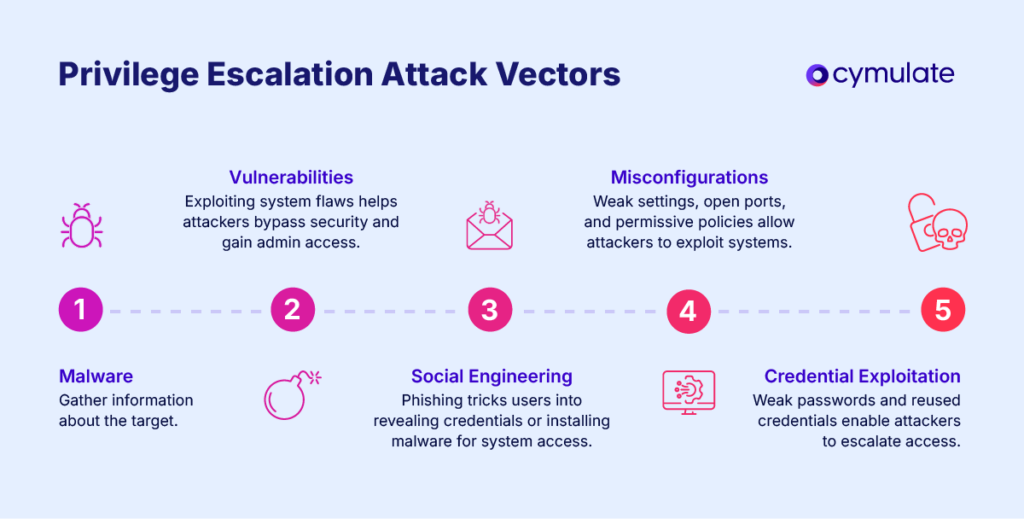
- Malware: Attackers commonly use malware such as Trojans and rootkits to elevate privileges in individual user systems. When the malware is executed, it runs under the privileges of the user account from which it was launched. In this way, an attacker can perform elevated tasks. For example, attackers can install hidden rootkits that give them complete control of the system.
- Vulnerabilities and exploits: Attackers exploit vulnerabilities found in a system's design or configuration in order to gain privilege escalation. They target some weakness in an operating system, software, or network protocol, allowing them to bypass security. After identifying the vulnerability, an attacker will then leverage that vulnerability to gain higher privileges, escalating from a low-privilege user account to that of an administrator or root. Unpatched or poorly secured vulnerabilities give attackers the leverage needed to escalate privileges and compromise critical systems.
- Social engineering: Social engineering attacks manipulate users into giving up sensitive information or inducing some specific action that bypasses existing security controls. These methods include phishing, spear-phishing, and vishing to dupe victims into releasing login credentials or downloading malware. Once the attacker gains these credentials or another access method through malicious software, he can escalate privileges to have access to sensitive systems.
- Misconfigurations: Many of the misconfigurations in system settings and security policies are the enablers for privilege escalation. In many cases, attackers exploit the default settings, like open ports or weak access control, to gain unauthorized access to systems. These may include misconfigured storage buckets or overly permissive users in cloud environments. This is usually due to either oversight or lack of security awareness that leaves the system open to exploitation.
- Credential exploitation: Attackers exploit weak or exposed credentials to escalate privileges. They use techniques such as pass-the-hash, credential stuffing, and password guessing to gain access to privileged accounts. When users reuse passwords or store them insecurely, attackers can easily exploit these weaknesses to move laterally across the system. Even if an account is reset, attackers may retain access through compromised devices or backdoors, allowing them to continue escalating their privileges.
What is the Best Defense Against Privilege Escalation?
- Principle of least privilege: Grant users, applications, and services only minimal access. This will restrict the attack surface because, upon privilege escalation, the attacker has less ability to go all the way. Because of strict controls over access to resources and permissions, these measures make unauthorized privilege elevation hard to exploit, reducing breaches.
- Regular audits: Regular security audits detect misconfigurations, overprovisioning, and unpatched vulnerabilities. This helps in observing whether security policies are being followed and whether no account or service has unnecessary elevated privileges. Audits should involve reviewing all access logs, permission settings, and privilege assignments for every user and service.
- Patching and vulnerability management: Continuous patching of systems and software is necessary to address known vulnerabilities that could be used in privilege escalation. The vulnerability management processes should prioritize the patching of critical vulnerabilities that directly affect privilege controls, such as flaws in authentication protocols or operating system vulnerabilities.
- Separation of duties: This is an effective way of dividing critical functions and tasks among different individuals to prevent a single user from having too much control over the systems. This decreases the possibility of privilege abuse and minimizes the risk that a single compromised account could provide full system control.
Role of Automated Tools
Automated tools play a very important role in finding out and addressing privilege escalation risks. Tools such as vulnerability scanners will identify with minimal effort those known vulnerabilities within operating systems, applications, or network infrastructure that might be exploited to create privilege escalation. Additionally, there are configuration management tools that can ensure the established security best practices are implemented correctly. Meanwhile, automated patch management can guarantee timely patches, reducing the chance of exploitation by unpatched holes. These tools help streamline the identification of weaknesses, thus enabling organizations to respond proactively rather than reactively to emerging threats.
How Cymulate Addresses Privilege Escalation
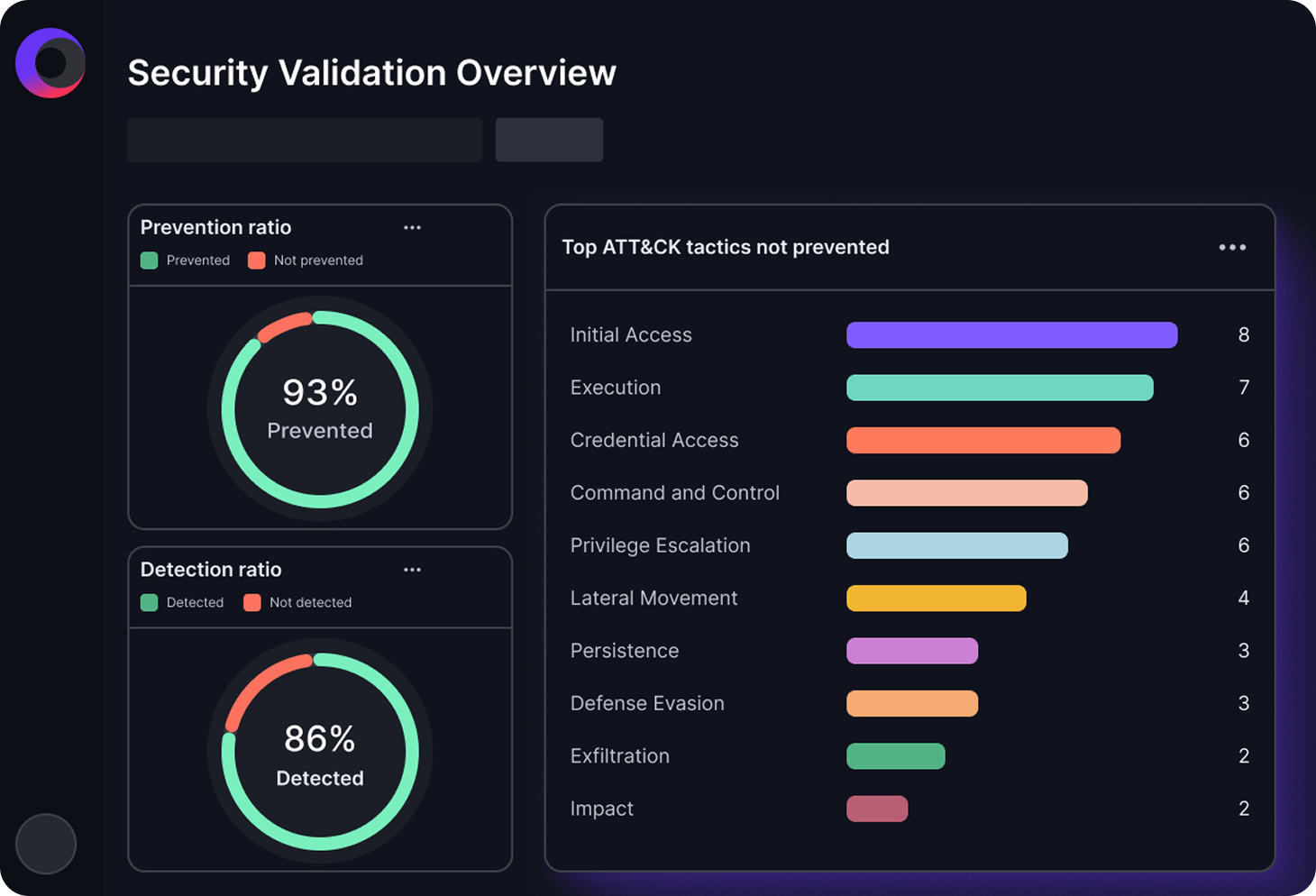
The Cymulate Platform helps security teams proactively reduce the risk of privilege escalation by continuously validating security controls against real-world attack techniques. Through safe attack simulations, organizations can assess whether privilege escalation paths can be exploited, measure the effectiveness of preventive and detective controls, and prioritize remediation based on validated exposure rather than theoretical risk.
Key features and benefits:
- Optimize Threat Resilience: Cymulate continuously validates security controls against privilege escalation techniques and other attack vectors, helping security teams determine whether misconfigurations, software weaknesses, excessive permissions, or weak access controls can be exploited. Actionable remediation guidance enables security teams to strengthen defenses before attackers do.
- Attack-Based Exposure Prioritization: Cymulate combines continuous attack simulation with exposure analytics to prioritize validated security risks based on exploitability, business context, and potential impact on critical assets. This enables security teams to focus remediation efforts on privilege escalation paths that present the greatest operational risk.
- Cloud Security Validation and Exposure Management: Cymulate validates cloud security controls against identity-based attacks, privilege escalation techniques, and misconfigurations across hybrid and multi-cloud environments. Organizations can continuously assess whether identity permissions, cloud configurations, and security controls effectively prevent unauthorized privilege escalation and lateral movement.
- Identity Security Validation: Cymulate validates identity security controls by simulating attacks that attempt to abuse excessive privileges, compromised credentials, and identity misconfigurations. By safely testing authentication, authorization, and privilege boundaries, security teams can identify weaknesses that could enable privilege escalation and prioritize remediation based on validated risk.
- Detection Validation: Cymulate Detection Studio helps security teams validate that SIEM and XDR detection rules correctly identify privilege escalation techniques mapped to the MITRE ATT&CK framework, highlighting detection gaps and providing recommendations to improve coverage.
Key Takeaways
Privilege escalation remains a significant threat in cybersecurity, with the potential to cause severe damage to organizational systems and data. By understanding its methods, attack vectors, and defenses, organizations can take a proactive approach to mitigating these risks. Continuous validation, strong access controls, and leveraging automated tools are essential in maintaining a robust security posture.
- Privilege escalation allows attackers to gain unauthorized high-level access, often leading to significant breaches or disruptions.
- Key attack vectors include software vulnerabilities, misconfigurations, social engineering, and credential exploitation.
- Defensive measures like the principle of least privilege, regular audits, and patching reduce the likelihood of escalation.
- Automated tools play a critical role in detecting vulnerabilities, misconfigurations, and privilege escalation risks.
- Cymulate provides continuous security validation and exposure management, enabling organizations to proactively identify and mitigate risks associated with privilege escalation.
Featured Resources
View More Resources
Continuous Threat Exposure Management
Make CTEM actionable with continuous threat validation that proves and improves your real-world resilience.

The Principle of Security Validation
Get practical, expert-backed strategies to validate your security defenses

10 Best Practices for Preventing a Data Breach
Preventing data breaches requires layered defenses with MFA, endpoint protection, employee training, and continuous validation