Frequently Asked Questions

Cloud Security Threats & Challenges

What are the top cloud security threats organizations should not ignore in 2026?

The most critical cloud security threats in 2026 include misconfigurations, insecure APIs, identity and access mismanagement, inadequate encryption, lack of visibility into ephemeral resources, overly permissive roles and entitlements, and shadow IT or unmanaged services. These threats are exacerbated by the complexity and dynamism of modern cloud environments, as detailed in the 2025 Threat Exposure Validation Impact Report and the Cloud Security Alliance’s 2024 Top Threats.

Why are traditional cloud security tools insufficient for modern cloud environments?

Traditional tools like CSPM, CIEM, and SIEM provide important baselines but have limitations: they offer static snapshots, miss logic errors or chained vulnerabilities, and generate alert fatigue without prioritizing exploitability. They do not validate how secure your cloud environment actually is or how it would withstand a real attack, especially in dynamic, ephemeral cloud architectures.

How prevalent is the challenge of identifying and remediating cloud exposures?

According to the Cymulate 2025 Threat Exposure Validation Impact Report, 61% of security leaders agree their organization lacks the ability to identify and remediate exposures in their cloud environments. Only 9% of organizations run exposure validation in their cloud environment daily, and 37% say it can take up to 24 hours to validate cloud exposures.

What is the impact of misconfigurations in cloud security?

Misconfigurations, such as exposed storage buckets and incorrect network controls, are responsible for the majority of cloud breaches. In fast-paced DevOps environments, default settings and human error significantly increase risk, making misconfigurations a leading cause of cloud security incidents.

Why is visibility into ephemeral resources a challenge for cloud security?

Ephemeral resources like serverless functions and containers often exist for only seconds or minutes, making them difficult for traditional tools to monitor. This lack of visibility creates blind spots that attackers can exploit for lateral movement and data exfiltration.

How do overly permissive roles and entitlements increase cloud risk?

Overly permissive roles and entitlements, often managed by CIEM tools, can persist without contextual validation. Attackers exploit these gaps for privilege escalation and lateral movement, increasing the risk of significant breaches.

What is shadow IT and why is it a concern in cloud security?

Shadow IT refers to cloud resources spun up by developers or business units outside sanctioned infrastructure. Without governance or validation, these unmanaged assets become soft targets for attackers, increasing organizational risk.

Why is cloud exposure validation critical for modern organizations?

Cloud exposure validation provides continuous, real-time testing of your actual security posture. It answers critical questions such as whether controls are working as intended, if attackers can exploit chained misconfigurations, and what the blast radius of a compromised credential would be. This proactive approach is essential for staying ahead of evolving threats.

How quickly can most organizations validate cloud exposures?

Only 1 in 6 organizations can validate cloud exposures within an hour, according to Cymulate’s 2025 research. 37% of organizations report it can take more than 24 hours to validate exposures, giving attackers a significant advantage.

What are the limitations of perimeter-based security models in the cloud?

Perimeter-based security models do not translate well to decentralized, dynamic, and ephemeral cloud infrastructures. They often fail to provide the necessary validation and assurance needed to protect against modern cloud threats.

Cymulate Cloud Security Validation & Platform Features

What is Cymulate’s cloud security validation solution?

Cymulate’s cloud security validation solution enables organizations to validate controls across IaaS, PaaS, and SaaS layers, test against real-world attack paths in multi-cloud and hybrid environments, simulate breaches to uncover exploitable misconfigurations or identity flaws, and automate continuous assessment for rapid remediation and security assurance. Learn more.

How does Cymulate help organizations move from reactive to proactive cloud security?

Cymulate automates security validation, increases coverage by mapping assessments to NIST and MITRE frameworks, and provides strong customer support. This enables organizations to shift from reactive alert handling to proactive exposure management, turning cloud security into a strategic advantage.

What are the key capabilities of the Cymulate platform?

The Cymulate platform offers continuous threat validation, a unified platform combining BAS, CART, and Exposure Analytics, attack path discovery, automated mitigation, AI-powered optimization, complete kill chain coverage, ease of use, and an extensive threat library with over 100,000 attack actions updated daily. See platform details.

How does Cymulate integrate with existing security tools?

Cymulate integrates with a wide range of security technologies, including Akamai Guardicore, AWS GuardDuty, BlackBerry Cylance OPTICS, Carbon Black EDR, Check Point CloudGuard, Cisco Secure Endpoint, CrowdStrike Falcon, Wiz, SentinelOne, and more. For a complete list, visit the Partnerships and Integrations page.

What certifications and compliance standards does Cymulate meet?

Cymulate holds SOC2 Type II, ISO 27001:2013, ISO 27701, ISO 27017, and CSA STAR Level 1 certifications. These cover security, availability, confidentiality, privacy, and cloud security controls, ensuring robust compliance and data protection. See details.

How does Cymulate ensure data security and privacy?

Cymulate ensures data security through encryption in transit (TLS 1.2+) and at rest (AES-256), secure AWS-hosted data centers, a tested disaster recovery plan, and a dedicated privacy and security team including a DPO and CISO. The platform is GDPR compliant and developed using a secure SDLC.

What is Cymulate’s pricing model?

Cymulate operates on a subscription-based pricing model tailored to each organization's requirements. Pricing is determined by the chosen package, number of assets, and scenarios selected. For a detailed quote, schedule a demo with the Cymulate team.

How easy is it to implement Cymulate and start using it?

Cymulate is designed for quick and easy implementation, operating in agentless mode with no need for additional hardware or complex configurations. Customers can start running simulations almost immediately, with comprehensive support and educational resources available.

What feedback have customers given about Cymulate’s ease of use?

Customers consistently praise Cymulate for its intuitive, user-friendly interface and actionable insights. Testimonials highlight easy implementation, accessible support, and immediate value in identifying and mitigating security gaps. Read customer stories.

Use Cases, Benefits & Business Impact

What business impact can organizations expect from using Cymulate?

Organizations using Cymulate have reported up to a 52% reduction in critical exposures, a 20-point improvement in threat prevention, a 60% increase in team efficiency, and an 81% reduction in cyber risk within four months. These outcomes are supported by customer case studies and the 2025 Threat Exposure Validation Impact Report.

Who can benefit from Cymulate’s solutions?

Cymulate’s solutions are designed for CISOs and security leaders, SecOps teams, red teams, and vulnerability management teams across organizations of all sizes and industries, including finance, healthcare, retail, media, transportation, and manufacturing. Learn more about roles.

What are some real-world case studies demonstrating Cymulate’s value?

Examples include Hertz Israel reducing cyber risk by 81% in four months, a sustainable energy company scaling penetration testing cost-effectively, and Nemours Children’s Health improving detection in hybrid and cloud environments. See all case studies.

How does Cymulate address the pain points of fragmented security tools?

Cymulate integrates exposure data and automates validation, providing a unified view of the security posture and reducing gaps caused by disconnected tools.

How does Cymulate help with resource constraints in security teams?

Cymulate automates manual processes, improves operational efficiency, and enables teams to focus on strategic initiatives, addressing resource constraints and operational inefficiencies.

How does Cymulate support communication and risk prioritization for CISOs?

Cymulate provides quantifiable metrics and validated data to justify investments, align security strategies with business objectives, and prioritize exposures based on exploitability and business context.

How does Cymulate help red teams and vulnerability management teams?

Red teams benefit from automated offensive testing with a library of over 100,000 attack actions aligned to MITRE ATT&CK and daily threat intelligence. Vulnerability management teams use Cymulate for ongoing validation between pen tests and effective vulnerability prioritization.

What is Cymulate’s overarching vision and mission?

Cymulate’s vision is to transform cybersecurity practices by enabling organizations to proactively validate defenses, identify vulnerabilities, and optimize their security posture. The mission is to empower teams to achieve lasting improvements in cybersecurity strategies. About Cymulate.

Where can I find Cymulate’s blog, newsroom, and resource hub?

You can stay updated on the latest threats, research, and company news through the Cymulate blog, newsroom, and resource hub.

Does Cymulate offer resources for learning about cloud security validation?

Yes, Cymulate provides guides, webinars, e-books, and a knowledge base with technical articles and videos on best practices for cloud security validation. Explore resources.

New: 2026 Gartner® Market Guide for Adversarial Exposure Validation
Learn More
Cymulate named a Customers' Choice in 2025 Gartner® Peer Insights™
Learn More
New Research: The Security Tradeoffs Behind AI Tooling
Learn More
An Inside Look at the Technology Behind Cymulate
Learn More

Cloud Security Threats You Can’t Afford to Ignore in 2026 
By: Jake O’Donnell

Last Updated: February 16, 2026

Cymulate blog article

Cloud environments have become mission-critical, but they’re also difficult to secure.  

Despite significant investment in cloud security tools, 61% of security leaders agree their organization lacks the ability to identify and remediate exposures in their cloud environments, according to the Cymulate 2025 Threat Exposure Validation Impact Report.  

As cloud infrastructures grow more complex, dynamic and ephemeral, attackers are exploiting the widening security gaps faster than most teams can respond. 

For CISOs, DevSecOps leaders, and cloud security architects, the takeaway is clear: traditional approaches are no longer enough. Effective cloud security demands validation, not just visibility. 

The Challenge of Securing the Cloud 

Modern cloud architecture is inherently volatile. With multi-layered deployments spanning hybrid, multi-cloud and containerized environments, assets appear and vanish in real time. Serverless functions, short-lived containers and decentralized development practices exacerbate visibility and control challenges. 

This complexity overwhelms conventional cloud security tools. Cloud Security Posture Management (CSPM), Cloud Infrastructure Entitlement Management (CIEM) and Security Information and Event Management (SIEM) solutions provide vital baselines—but they have serious limitations. 

  • Static snapshots don’t account for the fluidity of ephemeral resources. 
  • Rules-based detections miss logic errors or chained vulnerabilities. 
  • Cloud-native controls offer reactive telemetry but lack proactive assurance. 
  • SIEM platforms generate alert fatigue without prioritization based on exploitability. 

These tools don’t validate how secure your cloud environment actually is—or how it would stand up against a real attack. 

61%

of security leaders agree their organization lacks the ability to identify and remediate exposures in their cloud environments.

Only 9%

of organizations run exposure validation in their cloud environment on a daily basis.

37%

say it can take up to 24 hours to validate cloud exposures.

Cloud Security Threats You Shouldn’t Ignore in 2026 

As detailed in the Cloud Security Alliance’s 2024 Top Threats and reinforced by the latest research from Cymulate, the cloud threat landscape continues to evolve. The following threats demand urgent attention from cloud defenders:  

1. Misconfigurations 

Misconfigured storage buckets, exposed management interfaces and incorrect network controls are responsible for the majority of cloud breaches. In a high-velocity DevOps environment, default settings and human error compound risk. 

2. Insecure APIs 

Cloud APIs serve as the backbone for application communication. When improperly secured, they become prime entry points for attackers. Broken authentication, lack of rate limiting and excessive permissions are commonly exploited flaws. 

3. Identity and Access Mismanagement 

With identities functioning as the new perimeter, any misstep in IAM policies—like role sprawl or credential reuse—can lead to full account compromise. Overly permissive roles are a recurring weakness across cloud environments and steps need to be taken to ensure there are no long-term issues. 

4. Inadequate Encryption 

Data in transit and at rest must be encrypted with modern, properly configured algorithms. However, failure to rotate keys, enforce TLS everywhere or segment encrypted data still leaves many assets exposed. 

5. Lack of Visibility into Ephemeral Resources 

Kubernetes has revolutionized cloud computing and the way applications are built. But its increasingly ephemeral nature adds layers of abstraction to your environment that can leave you exposed to threats if not properly secured. 

Serverless functions and containers often run for seconds or minutes, which is too fast for traditional tools to monitor. This blind spot enables lateral movement and data exfiltration undetected. 

6. Overly Permissive Roles and Entitlements 

CIEM tools attempt to manage these issues around overly permissive roles and entitlements, but without contextual validation, excessive permissions often persist. Attackers exploit these gaps for privilege escalation and lateral movement. 

7. Shadow IT and Unmanaged Services 

Developers and business units can easily spin up cloud resources outside of sanctioned infrastructure. Without governance or validation, these “invisible” assets become soft targets despite the best intentions of those within an organization. 

Despite these clear risks, the Cymulate2025 research revealed that only 1 in 6 organizations can validate cloud exposures within an hour, leaving attackers with a massive head start. 

Why Cloud Security Validation is Critical 
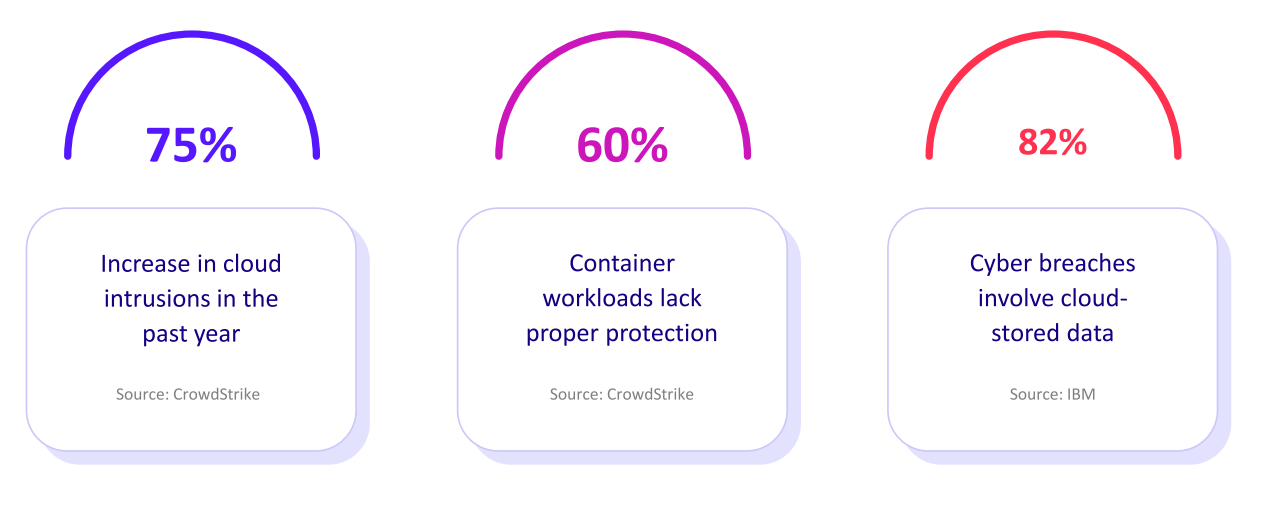
Threat actors target cloud platforms

Legacy thinking still dominates many cloud security programs. That type of outdated thinking can lead directly to threats to your business. The perimeter-based model doesn’t translate to a cloud-native world where your infrastructure is decentralized, dynamic and ephemeral.  

What’s missing is cloud exposure validation. It provides continuous, real-time testing of your actual security posture. Instead of assuming configurations are effective, validation provides hard evidence and answers critical questions such as: 

  • Are controls working as intended? 
  • Can attackers exploit chained misconfigurations? 
  • What’s the blast radius of a compromised credential? 

The 2025 Threat Exposure Validation Impact Report found that 37% of organizations say it can take more than 24 hours to validate cloud exposures. That’s a gap that adversaries can easily exploit. 

The Cymulate cloud security validation solution addresses this problem head-on. It enables teams to: 

  • Validate controls across IaaS, PaaS and SaaS layers. 
  • Test against real-world attack paths in multi-cloud and hybrid environments. 
  • Simulate breaches to uncover exploitable misconfigurations or identity flaws. 
  • Automate continuous assessment, enabling rapid remediation and security assurance. 

This is not theoretical security—it’s operational, actionable insight delivered at the speed of cloud. 

The result? One finance company said they saw a 60% increase in the efficiency of their SecOps team. Another company, in the global transportation sector, saw an 81% reduction in cyber risk in four months. And a healthcare organization saw 168 exploits prevented from one policy change. 

Cloud Security Validation in Action 

Those examples above aren’t then only ones we can share. Consider a leading IT services consulting firm featured in a recent Cymulate customer story. With sprawling cloud environments supporting global clients, their security team struggled to maintain control over cloud exposures. 

After implementing the Cymulate automated cloud validation platform, the organization now enjoys the following benefits: 

  • Automation: The organization automates security validation to cover every control across on-prem and cloud environments. 
  • Increased coverage: By mapping assessments to NIST and MITRE frameworks and testing against the latest threats, the security team evaluates its security posture against a broader range of known threats and improves its overall security resilience. 
  • Strong customer support: Customer support is always readily available, and the company views Cymulate as a full partner in its cybersecurity journey. 

This shift enabled them to move from reactive alert handling to proactive exposure management, turning cloud security into a strategic advantage. 

What to Know About Cloud Security Threats 

Cloud environments are under constant siege, and the threats are evolving faster than traditional defenses can adapt. While CSPM, CIEM and SIEM tools provide important visibility, they fall short of validating whether your security controls work in the face of real-world threats.  

Validation is the missing layer.   

By adopting the Cymulate real-time cloud exposure validation platform, security teams gain continuous assurance of their posture across the entire cloud stack. In 2026, where breaches are a matter of “when,” not “if,” proactive validation isn’t optional. It’s essential. 

Dive deeper into the insights driving modern cloud defense. Download the Threat Exposure Validation Impact Report and explore the Cymulate Cloud Security Validation Solution

Cymulate Exposure Validation makes advanced security testing fast and easy. When it comes to building custom attack chains, it's all right in front of you in one place.
Mike Humbert, Cybersecurity Engineer
DARLING INGREDIENTS INC.
Learn More
Book a Demo