Frequently Asked Questions

Hybrid Cloud Security Fundamentals

What is hybrid cloud security?

Hybrid cloud security is the practice of protecting data, applications, and infrastructure in environments that combine private and public cloud resources with on-premises infrastructure. It requires solutions that address the unique demands of both on-premises and cloud environments, ensuring data remains secure regardless of where it is stored or accessed. This includes securing communication between clouds, unified access control, and real-time threat detection.

Why is hybrid cloud security important for organizations?

Hybrid cloud security is crucial because organizations increasingly use a mix of on-premises, private, and public cloud resources to balance flexibility, scalability, and control. This approach introduces complex security challenges, such as maintaining visibility, ensuring compliance, and protecting data across diverse environments. Effective hybrid cloud security helps organizations safeguard assets, reduce risks, and ensure seamless operations.

What are the main challenges in securing a hybrid cloud environment?

The main challenges include achieving full visibility across environments, ensuring compliance with various regulations, managing data securely as it moves between clouds, and preventing resource misconfigurations. Each of these challenges can introduce vulnerabilities if not addressed with consistent policies and advanced security tools.

What are the key components of hybrid cloud security?

Key components include data protection (encryption and DLP), unified identity and access management (IAM), continuous threat detection and response, and compliance and governance frameworks. These elements work together to secure data, control access, monitor threats, and ensure regulatory compliance across all environments.

How does a zero-trust approach enhance hybrid cloud security?

A zero-trust approach enforces the principle of "never trust, always verify," requiring all access requests to be rigorously validated. This includes least-privilege access, multi-factor authentication (MFA), and single sign-on (SSO), reducing the risk of unauthorized access from compromised credentials or insider threats.

What is the role of automation in hybrid cloud security?

Automation streamlines security operations by providing real-time monitoring, automated incident response, and patch management. Automated tools can quickly detect, contain, and remediate threats, minimizing potential damage and improving overall security posture.

What tools are essential for hybrid cloud security?

Essential tools include Cloud Security Posture Management (CSPM) for identifying misconfigurations, workload protection platforms for monitoring and enforcing policies, and unified IAM solutions for consistent access control. These tools help maintain secure configurations, detect vulnerabilities, and centralize user management across hybrid environments.

How does Cymulate support hybrid cloud security?

Cymulate enhances hybrid cloud security through continuous exposure validation, asset identification, misconfiguration detection, prioritized mitigation, and targeted remediation. The platform provides actionable insights to help security teams focus on high-risk areas and improve security across both cloud and on-premises environments. Learn more about Cymulate's cloud security validation.

What is microsegmentation and why is it important in hybrid cloud security?

Microsegmentation divides the network into isolated segments, restricting lateral movement and limiting breaches to specific areas. Each segment can have tailored policies based on data sensitivity, enhancing security and reducing the impact of potential attacks.

How do organizations ensure compliance in hybrid cloud environments?

Organizations ensure compliance by implementing governance frameworks, unified security policies, and tools that monitor adherence to regulations like GDPR, HIPAA, and CCPA. Managing data residency, privacy, and security measures across both private and public clouds is essential for audit readiness and regulatory compliance.

Features & Capabilities

What features does Cymulate offer for hybrid cloud security?

Cymulate offers continuous exposure validation, asset and misconfiguration detection, prioritized mitigation based on breach feasibility and business impact, and targeted remediation with actionable insights. These features help organizations secure hybrid environments and focus on high-risk areas. Learn more.

Does Cymulate integrate with other security tools for hybrid cloud environments?

Yes, Cymulate integrates with a wide range of security technologies, including Akamai Guardicore, AWS GuardDuty, BlackBerry Cylance OPTICS, Carbon Black EDR, Check Point CloudGuard, Cisco Secure Endpoint, CrowdStrike Falcon, Wiz, and SentinelOne. For a complete list, visit our Partnerships and Integrations page.

How does Cymulate help with misconfiguration detection in hybrid cloud environments?

Cymulate's exposure validation platform scans for assets and misconfigurations in both cloud and hybrid environments, helping organizations identify and remediate configuration issues before they lead to security breaches.

What is prioritized mitigation and how does Cymulate provide it?

Prioritized mitigation means focusing remediation efforts on the most critical risks based on breach feasibility and business impact. Cymulate's exposure analytics prioritize mitigation, enabling security teams to address high-risk areas efficiently and effectively.

How does Cymulate support compliance in hybrid cloud environments?

Cymulate helps organizations meet compliance requirements by validating security controls, monitoring for misconfigurations, and providing actionable insights to maintain regulatory standards across both private and public cloud segments.

Can Cymulate help with vulnerability assessments in hybrid cloud environments?

Yes, Cymulate enables regular vulnerability assessments by simulating real-world threats and identifying security gaps across hybrid environments. This helps organizations detect misconfigurations, unpatched software, and weak access controls.

What is exposure validation and why is it important for hybrid cloud security?

Exposure validation is the process of continuously testing and validating security controls to identify exploitable vulnerabilities and misconfigurations. In hybrid cloud environments, exposure validation ensures that security measures are effective across all platforms, reducing risk and improving resilience.

How does Cymulate's platform provide actionable insights for hybrid cloud security?

Cymulate delivers actionable insights by analyzing exposure data, prioritizing risks based on business impact, and recommending targeted remediation steps. This enables security teams to address the most critical vulnerabilities efficiently.

What is the benefit of unified security policies in hybrid cloud environments?

Unified security policies ensure consistent enforcement of access, encryption, and data handling rules across both private and public cloud resources. This reduces the risk of misconfigurations, compliance issues, and security gaps.

Use Cases & Benefits

Who can benefit from Cymulate's hybrid cloud security solutions?

Cymulate's hybrid cloud security solutions are ideal for organizations of all sizes and industries that use a mix of on-premises and cloud resources. This includes finance, healthcare, retail, media, transportation, and manufacturing sectors, as well as security teams responsible for compliance, risk management, and operational efficiency.

What business impact can organizations expect from using Cymulate for hybrid cloud security?

Organizations using Cymulate can expect improved security posture, operational efficiency, faster threat validation, cost savings, enhanced threat resilience, and better decision-making. Customers have reported up to an 81% reduction in cyber risk and a 60% increase in team efficiency. Read the Hertz Israel case study.

How does Cymulate help organizations address compliance challenges in hybrid cloud environments?

Cymulate helps organizations address compliance challenges by validating security controls, monitoring for misconfigurations, and providing actionable insights to maintain regulatory standards across both private and public cloud segments. This supports audit readiness and reduces the risk of non-compliance penalties.

What are some real-world examples of Cymulate improving hybrid cloud security?

Hertz Israel reduced cyber risk by 81% in four months using Cymulate to address gaps in visibility and control. Nemours Children's Health increased visibility and improved detection and response capabilities in hybrid and cloud environments. Read the Hertz Israel case study and Nemours Children's Health case study.

How does Cymulate help with resource misconfiguration in hybrid cloud environments?

Cymulate scans for misconfigurations across cloud and on-premises resources, helping organizations identify and correct issues before they lead to security breaches. Automated monitoring and regular configuration reviews are supported to maintain a strong security posture.

How does Cymulate support security teams with limited resources?

Cymulate automates exposure validation, prioritization, and remediation, reducing manual effort and enabling security teams to focus on strategic initiatives. This improves operational efficiency and helps teams address critical risks even with limited resources.

How does Cymulate help organizations communicate risk to stakeholders?

Cymulate provides quantifiable metrics and actionable insights, enabling security leaders to communicate risk, justify investments, and align security strategies with business objectives. This supports better decision-making and stakeholder engagement.

What pain points does Cymulate address for hybrid cloud security?

Cymulate addresses pain points such as fragmented security tools, resource constraints, unclear risk prioritization, cloud complexity, communication barriers, inadequate threat simulation, operational inefficiencies, and post-breach recovery challenges. The platform provides a unified view, automation, and actionable insights to solve these issues.

How does Cymulate's hybrid cloud security solution differ for different user roles?

Cymulate tailors its solutions for CISOs (providing metrics and risk prioritization), SecOps teams (automating processes and improving efficiency), Red Teams (offensive testing with a large attack library), and Vulnerability Management teams (in-house validation and prioritization). Each role benefits from features aligned to their specific needs. Learn more for CISOs, SecOps, Red Teams, and Vulnerability Management.

Implementation & Support

How easy is it to implement Cymulate for hybrid cloud security?

Cymulate is designed for quick and easy implementation, operating in agentless mode without the need for additional hardware or complex configurations. Customers can start running simulations almost immediately after deployment, with comprehensive support and educational resources available. Schedule a demo to learn more.

What support resources are available for Cymulate users?

Cymulate offers email and chat support, a knowledge base with technical articles and videos, webinars, e-books, and an AI chatbot for real-time assistance. These resources help users optimize their use of the platform and address any issues quickly. Contact support or visit the Resource Hub.

How do customers rate Cymulate's ease of use?

Customers consistently praise Cymulate for its intuitive, user-friendly interface and ease of implementation. Testimonials highlight the platform's simplicity, actionable insights, and accessible support. For example, Raphael Ferreira, Cybersecurity Manager, stated, "Cymulate is easy to implement and use—all you need to do is click a few buttons, and you receive a lot of practical insights into how you can improve your security posture." Read more customer quotes.

What educational resources does Cymulate provide for hybrid cloud security?

Cymulate provides a Resource Hub, blog, webinars, e-books, and a continuously updated cybersecurity glossary. These resources help users stay informed about best practices, emerging threats, and platform capabilities. Visit the Resource Hub and Glossary.

Where can I find a glossary of cybersecurity terms related to hybrid cloud security?

Cymulate offers a comprehensive, continuously updated cybersecurity glossary that explains terms, acronyms, and jargon. Access it at https://cymulate.com/cybersecurity-glossary/.

Security & Compliance

What security and compliance certifications does Cymulate hold?

Cymulate holds several key certifications, including SOC2 Type II (covering security, availability, confidentiality, and privacy), ISO 27001:2013 (Information Security Management), ISO 27701 (Privacy Information Management), ISO 27017 (Cloud Services Security Controls), and CSA STAR Level 1. These certifications demonstrate Cymulate's commitment to industry-leading security and compliance standards. Learn more.

How does Cymulate ensure data security in hybrid cloud environments?

Cymulate ensures data security through encryption for data in transit (TLS 1.2+) and at rest (AES-256), secure AWS-hosted data centers, and a tested disaster recovery plan. The platform also includes mandatory 2-Factor Authentication (2FA), Role-Based Access Controls (RBAC), and IP address restrictions.

Is Cymulate compliant with GDPR and other privacy regulations?

Yes, Cymulate incorporates data protection by design and has a dedicated privacy and security team, including a Data Protection Officer (DPO) and Chief Information Security Officer (CISO). The platform is compliant with GDPR and other privacy regulations, ensuring robust data protection and privacy management.

How does Cymulate maintain application security?

Cymulate follows a strict Secure Development Lifecycle (SDLC), including secure code training, continuous vulnerability scanning, and annual third-party penetration tests. These measures ensure the platform is secure, reliable, and up to date with the latest security practices.

What HR security measures does Cymulate implement?

Cymulate's employees undergo ongoing security awareness training, phishing tests, and adhere to comprehensive security policies. This ensures that all personnel are equipped to maintain the highest security standards.

Pricing & Plans

What is Cymulate's pricing model for hybrid cloud security solutions?

Cymulate operates on a subscription-based pricing model tailored to each organization's requirements. Pricing is determined by the chosen package, number of assets, and scenarios selected for testing and validation. For a detailed quote, schedule a demo with the Cymulate team.

Cymulate named a Customers' Choice in 2025 Gartner® Peer Insights™
Learn More
New Case Study: Credit Union Boosts Threat Prevention & Detection with Cymulate
Learn More
New Research: Cymulate Research Labs Discovers Token Validation Flaw
Learn More
An Inside Look at the Technology Behind Cymulate
Learn More

Hybrid Cloud Security

As organizations increasingly adopt hybrid cloud solutions, balancing flexibility, scalability, and security has become a top priority. A hybrid cloud environment combines on-premises infrastructure with public and private cloud services, offering a customizable solution for managing workloads, storing data, and supporting application demands. However, with this added flexibility comes a unique set of security challenges.

Hybrid cloud setups require a security approach that protects assets across diverse environments while maintaining visibility and control over data, applications and resources.

What is Hybrid Cloud Security?

Hybrid cloud security is the practice of protecting data, applications, and infrastructure in a cloud environment that integrates private and public cloud resources. Unlike traditional IT security, hybrid cloud security requires solutions that address the unique demands of both on-premises infrastructure and cloud environments.

In a hybrid setup, sensitive data or mission-critical applications may reside in a private cloud or on-premises for tighter control. In contrast, less sensitive workloads can be deployed in the public cloud for scalability and cost savings. This flexibility enhances efficiency, but it also introduces complex security challenges.

Hybrid cloud security ensures that data remains secure regardless of where it is stored or accessed. This includes securing communication and data flow between private and public clouds, implementing unified access control, and monitoring for potential threats. Effective hybrid cloud security relies on a blend of tools and practices, such as encryption, identity and access management (IAM) and real-time threat detection.
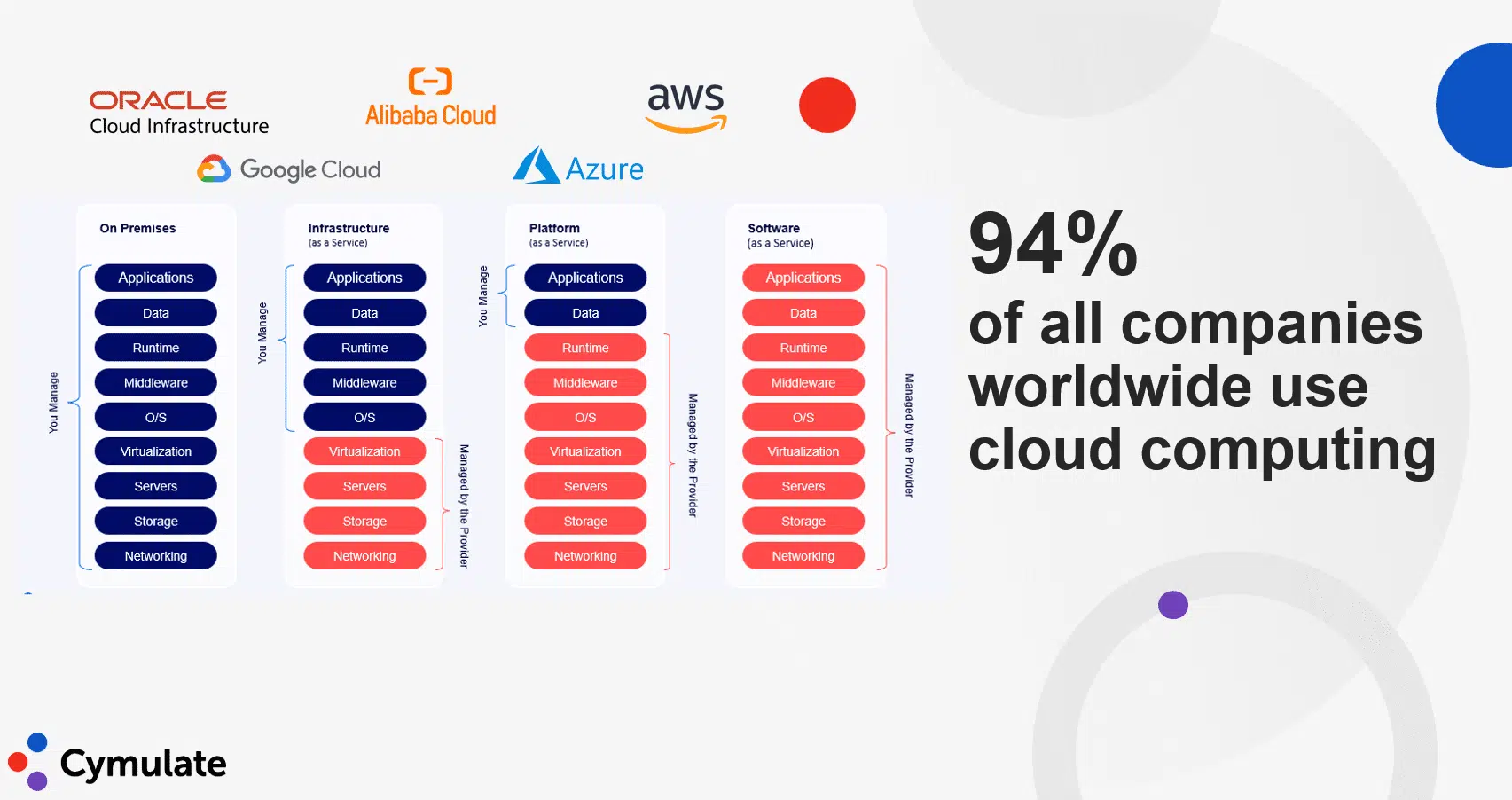
The rise of cloud computing

Key Components of Hybrid Cloud Security

Hybrid cloud security is built on several foundational components that protect data, ensure compliance and secure access across environments.

1. Data protection

Data protection is essential for securing sensitive information within hybrid environments. Encryption is a primary measure, ensuring data is encrypted at rest and in transit. This prevents unauthorized access, even if data is intercepted or stored in a public cloud. Data Loss Prevention (DLP) tools are also crucial, preventing unauthorized sharing or downloading of sensitive information. Secure storage solutions that adhere to strict access controls are essential for hybrid cloud security, particularly when handling regulated data.

2. Identity and access management (IAM)

Unified Identity and Access Management (IAM) is vital in hybrid environments to control access consistently. IAM solutions enforce least-privilege access, limiting user permissions based on roles and responsibilities. Multi-factor authentication (MFA) further strengthens access control by requiring verification beyond a simple password. Unified IAM allows seamless access control across private and public cloud resources, reducing risks associated with access mismanagement.

3. Threat detection and response

Hybrid cloud environments require continuous threat monitoring to detect and respond to suspicious activities. Advanced threat detection tools use behavioral analytics to spot anomalies and flag potential risks in real time. Automated incident response capabilities then allow for rapid containment of threats, minimizing potential damage. Effective threat detection and response ensure that hybrid cloud environments are constantly monitored for evolving threats.

4. Compliance and governance

Hybrid cloud environments must adhere to industry-specific regulatory requirements such as GDPR, HIPAA, and CCPA. Compliance frameworks and governance policies ensure that security measures align with regulatory standards, mitigating risks and maintaining audit readiness. In hybrid setups, compliance often involves managing data residency, privacy and security measures across both private and public cloud segments. Governance frameworks help maintain control and provide a structured approach to ensuring that all security policies are met.

Hybrid Cloud Security Architecture

A robust hybrid cloud security architecture secures data flow, segments environments, and applies layered security controls across on-premises and cloud resources.

  • Data flow management: Encrypting data in transit and at rest ensures secure data transfer between private and public clouds. Secure APIs and VPNs further protect data exchanges, maintaining data integrity and preventing unauthorized access.
  • Environment segmentation: Microsegmentation divides the network into isolated segments, restricting lateral movement and limiting breaches to specific areas. Each segment can have tailored policies based on data sensitivity.
  • Layered security controls: Multiple layers of defense, including firewalls, IDS/IPS, and encryption, address various threat vectors, enhancing the overall security of the hybrid environment.
    Adaptability and flexibility: The architecture can scale security measures based on business needs, integrate new tools, and adapt to regulatory changes.

Main challenges in a hybrid cloud environment

Securing a hybrid cloud environment is complex and introduces several unique challenges organizations must address to protect their data and applications effectively.

1. Visibility

Due to their inherent differences, achieving full visibility across private and public cloud environments can be challenging. Maintaining consistent monitoring and control with multiple platforms and providers becomes difficult, increasing the risk of undetected threats. Lack of visibility can lead to blind spots, where suspicious activities or vulnerabilities go unnoticed.

2. Compliance

Hybrid environments must often meet regulatory requirements that differ by location, data type, and industry standards. Ensuring compliance across different environments is complex, as each platform may have unique data handling and storage standards. Failure to comply with regulations like GDPR, DORA or HIPAA can result in severe penalties, making this a critical area of focus.

3. Data management

Data management is complicated in hybrid clouds, as data frequently moves between private and public environments. Securing data in transit and ensuring proper encryption across platforms is essential. Additionally, organizations must ensure that sensitive data complies with residency requirements, which can vary by country or region.

4. Resource misconfiguration

Misconfigurations are a leading cause of vulnerabilities in hybrid environments, often resulting from human error or inconsistent configurations across platforms. A misconfigured access control or unprotected API can expose sensitive resources, creating significant security risks. Regular configuration reviews and automated monitoring tools can help identify and correct these issues before they lead to security breaches.

top cloud security challenges in 2024

Building a Strong Hybrid Cloud Security Posture

A strong hybrid cloud security posture requires more than just technology—it demands a strategic approach tailored to the complexities of managing both private and public cloud environments. By addressing these unique cloud security challenges with proven best practices, organizations can safeguard their assets, reduce risks, and ensure seamless operations across the hybrid cloud. Below are four critical strategies to help secure your hybrid cloud infrastructure effectively.

  1. Zero-trust approach: Adopting a zero-trust approach is essential in hybrid cloud environments, where resources are distributed across diverse locations. Zero trust is based on the principle of “never trust, always verify,” meaning all access requests are rigorously validated before access is granted.

    This approach enforces least privilege access, ensuring users have only the permissions necessary to perform their tasks. Implementing multi-factor authentication (MFA) and single sign-on (SSO) for all applications and data access strengthens the zero-trust framework. This reduces the risk of unauthorized access, especially from compromised credentials or insider threats.
  2. Regular vulnerability assessments: Conducting cloud risk assessments is crucial to identifying security gaps and potential risks. Hybrid environments can be particularly susceptible to vulnerabilities due to the different configurations across on-premises and cloud platforms. Regular scanning, both automated and manual, helps detect misconfigurations, unpatched software and weak access controls.
  3. Consistent security policies: Inconsistent security policies across environments can lead to misconfigurations and compliance issues. To prevent this, organizations should establish unified security policies that apply consistently across private and public cloud resources. Unified policies make managing access, enforcing encryption, and regulating data handling easier, regardless of where data or workloads reside.
  4. Security automation: Automation is a powerful tool in hybrid cloud security, helping to streamline and enhance security operations. Automated monitoring tools provide real-time insights into network activity, immediately flagging any anomalies or suspicious behavior. Automated incident response systems can contain and address threats faster than manual methods, minimizing potential damage.

    Automation also supports patch management, ensuring that software and applications across environments remain up-to-date and secure. By integrating security automation, organizations improve their ability to quickly detect, respond to and recover from incidents, maintaining a strong security posture.

Tools for Hybrid Cloud Security

  • Cloud security posture management (CSPM): CSPM tools help organizations maintain secure configurations in their cloud environments by identifying misconfigurations, compliance issues, and potential risks. By continuously scanning cloud assets, CSPM solutions detect vulnerabilities and provide remediation guidance, keeping the environment secure and compliant.
  • Workload protection platforms: These platforms protect applications and data across hybrid cloud environments. They monitor workloads for unusual activity, prevent unauthorized access, and enforce security policies, ensuring that workloads remain secure across all environments.
  • Identity and access management (IAM): Unified IAM solutions are essential in hybrid clouds, where access control must be consistent across platforms. IAM tools enforce least-privilege access, support multi-factor authentication and centralize user management, reducing the risk of unauthorized access and streamlining security operations.

By integrating CSPM, workload protection, and IAM tools, organizations can effectively secure hybrid cloud environments, ensuring that both cloud-based and on-premises assets are protected against evolving threats.

How Cymulate Can Help

Cymulate enhances hybrid cloud security through cloud security validation and exposure management, offering continuous visibility, control validation and risk-based mitigation across cloud and on-prem environments.

  • Asset identification and misconfiguration detection: Cymulate exposure validation platform scans for assets and misconfigurations in cloud and hybrid environments.
  • Prioritized mitigation: Cymulate exposure analytics prioritizes mitigation efforts based on breach feasibility and business impact, helping security teams focus on high-risk areas.
  • Targeted remediation: With actionable insights, Cymulate enables focused remediation based on risk and operational context, enhancing security across hybrid environments.
Book a Demo