Frequently Asked Questions

BYOVD Attacks: Definitions & Techniques

What is a BYOVD (Bring Your Own Vulnerable Driver) attack?

BYOVD attacks are a type of cyberattack where threat actors exploit vulnerabilities in legitimate drivers by loading them onto a system. These attacks leverage flawed but signed drivers to bypass security controls, disable defenses, and maximize disruption. The technique is effective because drivers operate at the highest privilege level (ring 0) in the operating system, granting attackers deep access to critical resources. (Source: Cymulate Blog, Nov 23, 2025)

How do BYOVD attacks work?

BYOVD attacks work by loading a vulnerable, legitimate driver onto a target system. Because drivers run at ring 0, attackers can use their privileges to corrupt, crash, or disable security tools and kernel-level defenses. This blinds security controls and allows attackers to encrypt or exfiltrate data without detection. (Source: Cymulate Blog)

Why are BYOVD attacks so effective at evading defenses?

BYOVD attacks are effective because they exploit signed, legitimate drivers, which are typically trusted by the operating system. Even revoked driver signatures may still load in Windows, making blacklisting ineffective. This allows attackers to bypass kernel-level protections and evade detection by most security tools. (Source: Cymulate Blog)

What role do drivers play in BYOVD attacks?

Drivers operate at the most privileged level of the operating system (ring 0), giving them direct access to memory, CPU, and I/O operations. BYOVD attacks exploit vulnerabilities in these drivers to disable or bypass security controls, making them a prime target for attackers. (Source: Cymulate Blog)

Which ransomware groups are known for using BYOVD attacks?

The Cuba ransomware group is a notable example, having inflicted over million in damages since 2019. They use BYOVD techniques to disable security controls and facilitate ransomware deployment. (Source: Cymulate Blog)

How do attackers use legitimate drivers in BYOVD attacks?

Attackers load legitimate but vulnerable drivers, often with valid digital signatures, to exploit their flaws. This allows them to disable or bypass security tools that rely on kernel-level drivers, making detection and prevention difficult. (Source: Cymulate Blog)

What is the impact of BYOVD attacks on organizations?

BYOVD attacks can result in the disabling of security controls, undetected ransomware deployment, data exfiltration, and significant financial losses. For example, the Cuba ransomware group has caused over million in damages globally. (Source: Cymulate Blog)

How do BYOVD attacks relate to kernel-level threats?

BYOVD attacks are a form of kernel-level threat because they exploit vulnerabilities in drivers that operate at the kernel (ring 0) level. This allows attackers to manipulate core OS functions and evade most security solutions. (Source: Cymulate Blog)

What are some common vulnerabilities exploited in BYOVD attacks?

Common vulnerabilities include flaws in drivers that allow privilege escalation, disabling of security tools, or direct access to sensitive system resources. Attackers often use vulnerabilities in outdated or unpatched drivers. (Source: Cymulate Blog)

How do BYOVD attacks compare to other ransomware techniques?

BYOVD attacks are more sophisticated than many traditional ransomware techniques because they target the kernel level, making them harder to detect and prevent. They often bypass standard security controls by abusing trusted drivers. (Source: Cymulate Blog)

Mitigation Strategies & Security Best Practices

What are the best practices for mitigating BYOVD attacks?

Best practices include upgrading end-of-life operating systems, regularly auditing and patching kernel drivers, hardening administrative privileges, implementing kernel protection tools, monitoring driver load events, and using behavioral monitoring to detect suspicious activity. (Source: Cymulate Blog)

How can organizations monitor for BYOVD attacks?

Organizations should collect event logs and telemetry from legacy servers and endpoints, use tools like Sysmon and Windows Event Forwarding (WEF) for kernel visibility, and feed this data into a SIEM to baseline normal driver load patterns and alert on anomalies. (Source: Cymulate Blog)

What should be done if a BYOVD attack is suspected?

If a BYOVD attack is suspected, isolate affected systems to prevent lateral movement, collect forensic data, and use application control solutions to prevent unauthorized kernel code execution. Physical containment may be necessary if software defenses are compromised. (Source: Cymulate Blog)

How can legacy systems be protected from BYOVD attacks?

Legacy systems should be upgraded where possible. If not, organizations should apply vendor patches, monitor driver loads, restrict administrative privileges, and use kernel protection tools to reduce exposure. (Source: Cymulate Blog)

What tools can help detect and prevent BYOVD attacks?

Tools like Sysmon, Windows Event Forwarding, and advanced SIEM solutions can help detect abnormal driver load events. Application control solutions can prevent unauthorized kernel code execution. (Source: Cymulate Blog)

How does behavioral monitoring help defend against BYOVD attacks?

Behavioral monitoring can detect driver-based termination of security processes and other suspicious activities that indicate a BYOVD attack, providing early warning and enabling rapid response. (Source: Cymulate Blog)

What is the importance of continuous security validation against BYOVD attacks?

Continuous security validation, such as through attack simulation platforms like Cymulate, helps organizations test their defenses against BYOVD and other advanced threats. This ensures detection, prevention, and response capabilities are effective before a real attack occurs. (Source: Cymulate Blog)

How can red teams simulate BYOVD attacks safely?

Red teams can use platforms like Cymulate BAS (Breach & Attack Simulation) to safely model BYOVD attacks in a sandboxed environment. This allows them to test detection and response without risking production systems. (Source: Cymulate BAS)

Cymulate Platform: Features, Use Cases & Security

How does Cymulate help organizations defend against BYOVD attacks?

Cymulate enables organizations to simulate BYOVD and other advanced ransomware behaviors, validating detection, prevention, and response capabilities. This proactive approach helps identify gaps and improve resilience before a real attack occurs. (Source: Cymulate Blog)

What are the key features of the Cymulate platform?

Cymulate offers continuous threat validation, unified Breach and Attack Simulation (BAS), Continuous Automated Red Teaming (CART), exposure analytics, attack path discovery, automated mitigation, AI-powered optimization, and an extensive threat library with over 100,000 attack actions updated daily. (Source: Cymulate Platform)

Who can benefit from using Cymulate?

Cymulate is designed for CISOs, security leaders, SecOps teams, red teams, and vulnerability management teams in organizations of all sizes and industries, including finance, healthcare, retail, and more. (Source: CISOs, SecOps, Red Teams, Vulnerability Management)

What security and compliance certifications does Cymulate hold?

Cymulate holds SOC2 Type II, ISO 27001:2013, ISO 27701, ISO 27017, and CSA STAR Level 1 certifications, demonstrating adherence to industry-leading security and privacy standards. (Source: Security at Cymulate)

How easy is it to implement Cymulate?

Cymulate is designed for quick, agentless deployment with no need for additional hardware or complex configurations. Customers can start running simulations almost immediately, with comprehensive support and educational resources available. (Source: Knowledge Base)

What integrations does Cymulate support?

Cymulate integrates with a wide range of security technologies, including Akamai Guardicore, AWS GuardDuty, BlackBerry Cylance OPTICS, Carbon Black EDR, Check Point CloudGuard, Cisco Secure Endpoint, CrowdStrike Falcon, Wiz, SentinelOne, and more. (Source: Integrations)

What is Cymulate's pricing model?

Cymulate uses a subscription-based pricing model tailored to each organization's needs, based on the chosen package, number of assets, and scenarios. For a detailed quote, organizations can schedule a demo with the Cymulate team. (Source: Knowledge Base)

How does Cymulate compare to other security validation platforms?

Cymulate stands out with its unified platform combining BAS, CART, and exposure analytics, continuous 24/7 threat validation, AI-powered optimization, ease of use, and measurable results such as a 52% reduction in critical exposures and an 81% reduction in cyber risk within four months. (Source: Cymulate vs Competitors)

What feedback have customers given about Cymulate's ease of use?

Customers consistently praise Cymulate for its intuitive interface, ease of implementation, and actionable insights. Testimonials highlight its user-friendly dashboard and the immediate value it provides in identifying and mitigating security gaps. (Source: Knowledge Base)

What business impact can organizations expect from using Cymulate?

Organizations using Cymulate report up to a 52% reduction in critical exposures, a 60% increase in team efficiency, validation of threats 40X faster than manual methods, and an 81% reduction in cyber risk within four months. (Source: Optimize Threat Resilience)

Where can I find Cymulate's blog, newsroom, and resources?

You can stay updated on the latest threats, research, and company news through Cymulate's blog, newsroom, and Resource Hub.

What is Cymulate's mission and vision?

Cymulate's mission is to transform cybersecurity practices by enabling organizations to proactively validate their defenses, identify vulnerabilities, and optimize their security posture. The vision is to create a collaborative environment for lasting improvements in cybersecurity strategies. (Source: About Us)

Where can I find case studies and customer success stories about Cymulate?

Cymulate's Case Studies page features real-world examples, such as Hertz Israel reducing cyber risk by 81% in four months and other organizations improving threat prevention and detection. (Source: Case Studies)

New: 2026 Gartner® Market Guide for Adversarial Exposure Validation
Learn More
Cymulate named a Customers' Choice in 2025 Gartner® Peer Insights™
Learn More
New Research: The Security Tradeoffs Behind AI Tooling
Learn More
An Inside Look at the Technology Behind Cymulate
Learn More

What Are  “Bring Your Own Vulnerable Driver” (BYOVD) Attacks?

By: Cymulate

Last Updated: November 23, 2025

cymulate blog article

BYOVD (Bring Your Own Vulnerable Driver) attacks are cyber security attacks that exploit vulnerabilities in drivers, leveraging new techniques that allow them to evade traditional protections and maximize disruption. This clever technique, described in detail in the September 2023 Cymulate Threat Research Lab Update Webinar, abuses legitimate but flawed driver software to disable security controls and encrypt systems.

How Do BYOVD Attacks Work?

BYOVD attacks aim to avoid defenses and bypass security. Running this technique involves loading vulnerable legitimate drivers to obfuscate against or even remove security control systems. To appreciate why this tactic is so effective, it helps to understand how drivers – and specifically kernel-mode drivers - work in Windows.

Drivers run at ring 0, the most privileged level of the operating system. This grants them direct access to critical memory, CPU, I/O operations, and other fundamental resources. Drivers underpin most core OS functions, security tools included. However, flaws in certain drivers allow attackers to abuse their privileges. It isn’t uncommon to see vulnerabilities in drivers that are installed and leveraged by threat actors to perform attacks; but in the case of BYOVD, the attack is designed to load a vulnerable driver to further the attack.

Modern security relies on kernel-level components like OS integrity checking, EDR, and behavioral monitoring, but many of these defenses run as drivers themselves or rely on drivers to function. By loading a vulnerable driver, attackers can exploit its bugs to corrupt, crash, or disable protective drivers and other ring 0 security tools. This blinds defenses at the lowest level, clearing the way for unimpeded encryption and exfiltration.

While advanced EDR/XDR solutions may detect this form of manipulation of the OS, not all platforms provide that functionality; leading to a gap in defenses that groups like Cuba can take advantage of.

Vulnerability Management Must Evolve to CTEM 
Further reading
Vulnerability Management Must Evolve to CTEM 

Discover how CTEM helps VM teams decide what to patch now, verify existing mitigations, and proactively strengthen threat resilience.

Read More

Meet the Cuba Ransomware Group, a Specialist in BYOVD Attacks

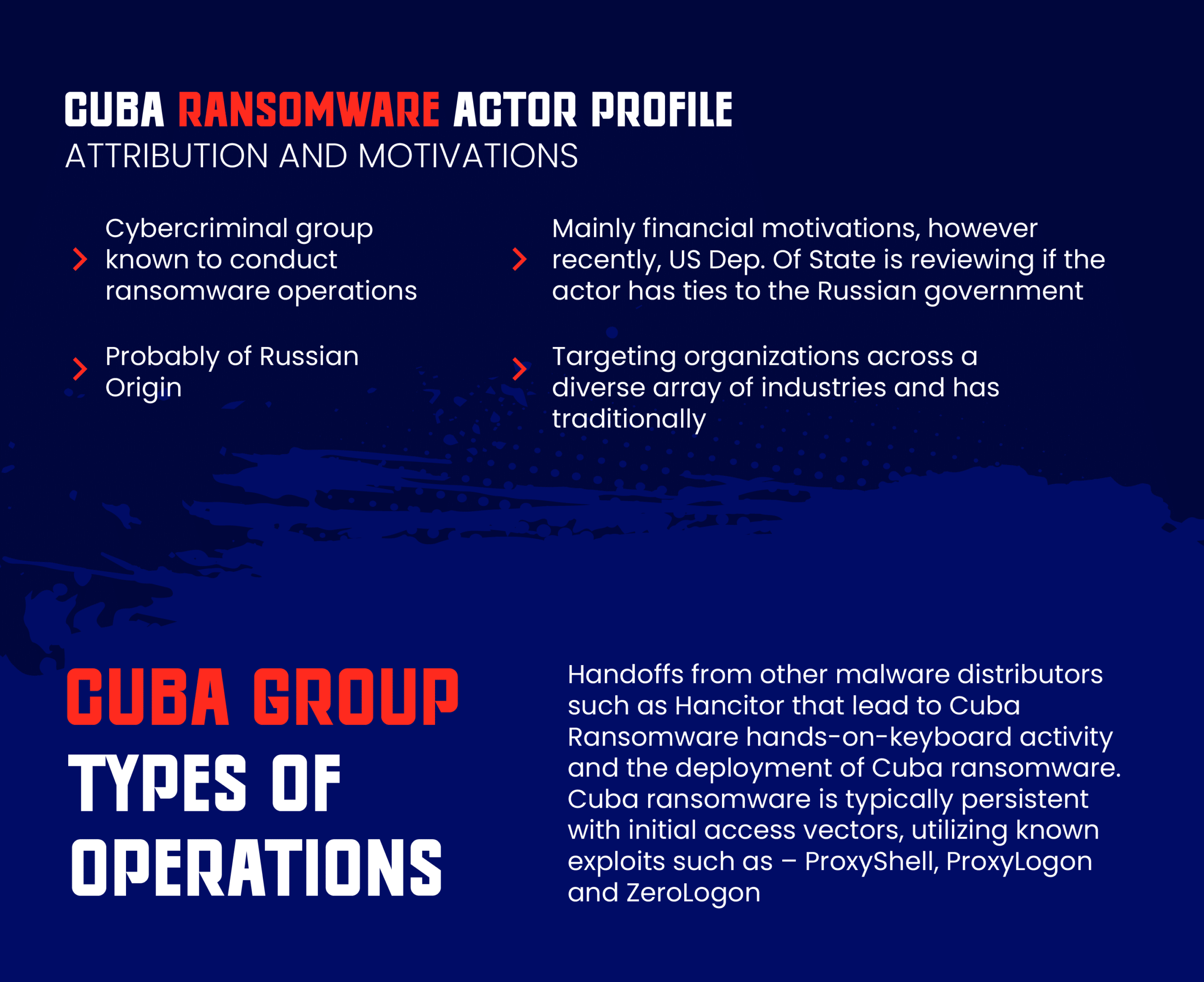
To understand the gravity of the BYOVD attacks, it is important to recognize the increasing danger posed by threat actors like Cuba ransomware. Suspected of emerging from Russia, Cuba ransomware has rapidly gained notoriety for ransoming and extorting major financial corporations worldwide.
Cuba Ransomware Profile

Since it was identified in 2019, the Cuba ransomware group has inflicted over $50 million in damages and displays a high degree of technical sophistication. Like other modern ransomware attackers, Cuba ransomware maintains an established infrastructure for initial compromise, lateral movement, data exfiltration, and money laundering.

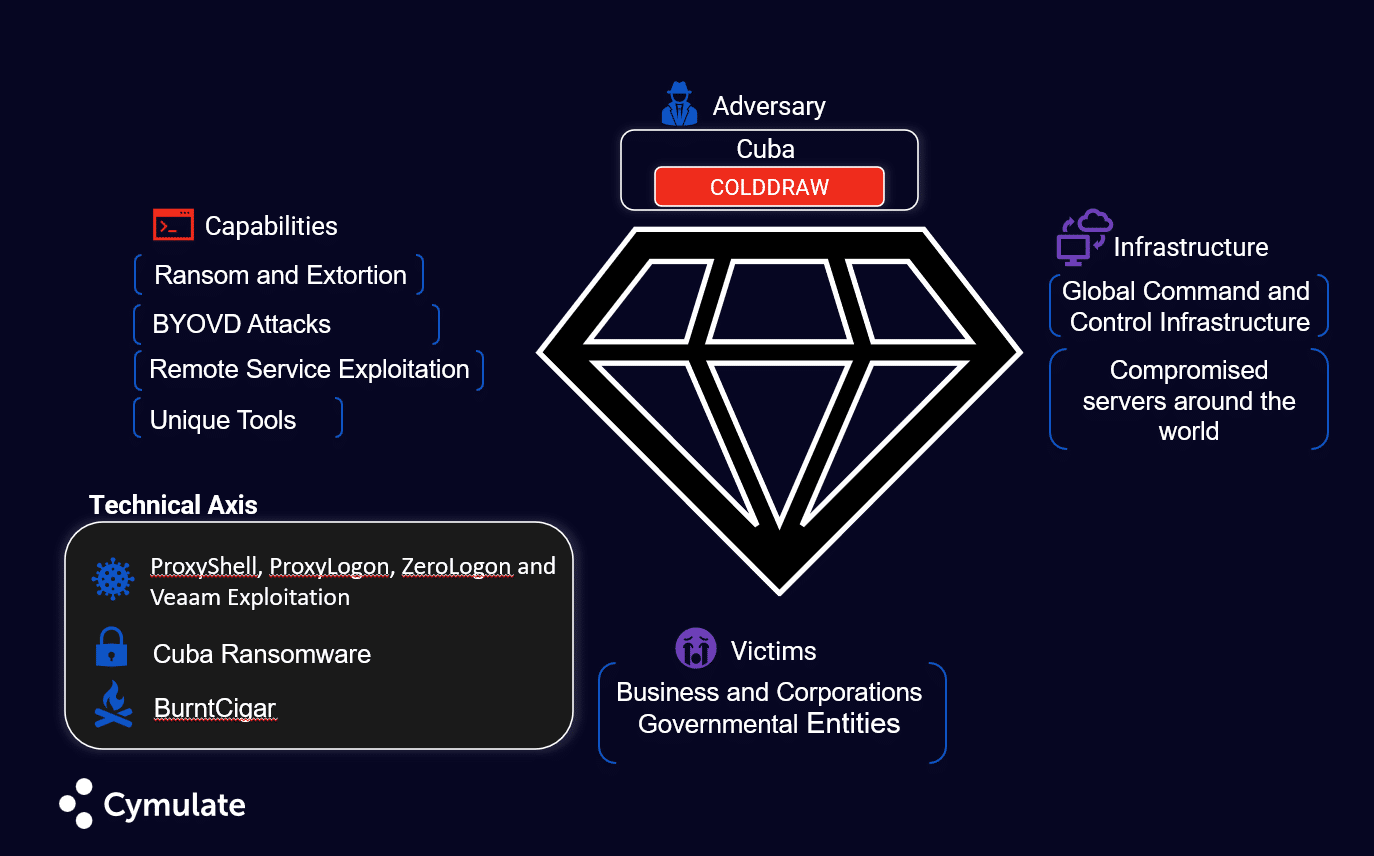
Their attack playbook relies heavily on exploiting common vulnerabilities like ProxyShell in Microsoft Exchange Servers, and also on using initial access brokers to further expand the breadth of environments they can engage in.
image

In addition to server exploits, Cuba ransomware's arsenal includes unique tools like "BurntCigar" malware and, more to the point, the BYOVD attack analyzed below.

Why Are BYOVD Attacks so Effective at Evading Defenses

What makes BYOVD attacks so insidious is their reuse of signed, legitimate drivers. Windows, in most default configurations, requires all drivers to be digitally signed by the vendor or Microsoft. This aims to prevent the loading of malicious unsigned drivers. BYOVD turns this security feature against itself by abusing properly signed but flawed drivers. Though more difficult to employ, even revoked driver signatures may still load in Windows. This means blacklisting vulnerable driver hashes is often ineffective.

Key Mitigation Strategies

How can organizations protect themselves from BYOVD attacks by threat groups like Cuba ransomware?

The most direct mitigation is upgrading end-of-life operating systems like Windows 7 and Server 2008 which are most vulnerable to BYOVD. However, if there is no possibility to rapidly evolve from relying on legacy infrastructure, applying the following best practices can help reduce exposure:

  1. Perform regular audits of kernel drivers and apply their vendor patches
  2. Harden administrative privileges required to load drivers
  3. Implement kernel protection tools that prevent unauthorized driver loading
  4. Monitor driver load events via Windows Event Logs
  5. Use behavioral monitoring to detect driver-based termination of security processes

For monitoring, make sure to collect event logs and telemetry from legacy servers, endpoints, and any other available devices. Tools like Sysmon and WEF are invaluable for gaining kernel visibility on servers. Feed this data into a capable SIEM to baseline normal driver, load patterns, and alert on anomalies.

Containment is also key, so you should isolate systems exhibiting suspicious kernel activity to prevent lateral movement. With BYOVD attacks, this may require fail-safe physical controls since software defenses are already compromised. An application control solution can also help prevent unauthorized kernel code execution.

Simulating BYOVD attacks

For proof of value, advanced attack simulation platforms like Cymulate can safely model BYOVD and other advanced ransomware behaviors. Running simulations helps validate detection, prevention, and response capabilities before a real attack. Running attack simulations to detect rootkit-type activities can be done with Cymulate BAS (Breach & Attack Simulation) in a production-safe way.

Red teams can load vulnerable drivers, terminate security processes, and encrypt files in a sandboxed environment to experience the attack's progression firsthand with advanced scenarios. Detailed post-execution reports assess performance in alerting on suspicious and malicious activity and stopping simulated ransomware at each stage. Simulation arms security teams with data to demonstrate inherent risks to leadership and prompt action on remediation recommendations.

Core Practices to Combat Evolving Ransomware Threats

While ransomware groups continue evolving, the core principles of good security hygiene still apply. This includes prompt patching, least privilege, segmentation, backups, and recovery planning. For critical legacy systems, compensate with rigorous monitoring and containment capabilities. Verify these controls through continuous red teaming and attack simulation. With robust defenses augmented by threat intelligence and testing, organizations can protect themselves against even sophisticated kernel-level attacks.

For a full overview of BYODV attacks, check out this Cymulate Threat Research Lab Update webinar that also covers topics such as:

  • Securing legacy infrastructure against modern threats
  • Using threat intelligence to improve ransomware defenses
  • The rise of kernel-level threats
  • Collaborative cybersecurity between business and IT
  • An in-depth analysis of the Cuba ransomware group

Cymulate Exposure Validation makes advanced security testing fast and easy. When it comes to building custom attack chains, it's all right in front of you in one place.
Mike Humbert, Cybersecurity Engineer
DARLING INGREDIENTS INC.
Learn More
Book a Demo