Frequently Asked Questions
Product Information & Continuous Security Validation
What is continuous security validation and how does Cymulate enable it?
Continuous security validation is an approach where security controls are tested on an ongoing basis, rather than through periodic penetration tests. Cymulate enables this by automating real-world attack simulations, allowing organizations to validate their defenses 24/7 and proactively identify vulnerabilities before attackers do. This approach reduces reliance on traditional pen testing and helps organizations keep pace with the evolving threat landscape. Source
How does Cymulate differ from traditional penetration testing?
Unlike traditional penetration testing, which is periodic and resource-intensive, Cymulate provides automated, continuous testing of security controls. This means vulnerabilities are identified and remediated in real time, reducing the window of exposure and the risk of undetected threats. Automation also lowers costs and manpower requirements compared to manual pen testing. Source
What is the primary purpose of Cymulate's platform?
The primary purpose of Cymulate's platform is to harden defenses and optimize security controls by proactively validating controls, threats, and response capabilities. It helps organizations focus on exploitable exposures and strengthen their overall security posture through continuous threat exposure management (CTEM). Source
How does Cymulate help organizations move beyond reactive security?
Cymulate enables organizations to shift from reactive to proactive security by continuously simulating real-world threats, validating defenses, and providing actionable insights for remediation. This approach ensures that security teams are always aware of their current risk posture and can address vulnerabilities before they are exploited. Source
What are the main components of Cymulate's Exposure Management Platform?
Cymulate's Exposure Management Platform includes Breach and Attack Simulation (BAS), Continuous Automated Red Teaming (CART), Exposure Analytics, Exposure Prioritization & Remediation, Attack Path Discovery, and Automated Mitigation. These components work together to provide comprehensive, continuous validation and optimization of security controls. Source
How does Cymulate automate security validation?
Cymulate automates security validation by running continuous, real-world attack simulations across the entire kill chain. This automation reduces manual effort, speeds up threat validation, and ensures that organizations can quickly identify and remediate vulnerabilities as they emerge. Source
What is the difference between Exposure Validation and Exposure Prioritization in Cymulate?
Exposure Validation in Cymulate refers to automated, real-world attack simulations that test the effectiveness of security controls. Exposure Prioritization & Remediation focuses on identifying which exposures are most critical based on exploitability, business context, and threat intelligence, enabling organizations to remediate the most pressing risks first. Source Source
How does Cymulate support detection engineering and SIEM optimization?
Cymulate helps organizations build, tune, and test SIEM, EDR, and XDR rules to improve mean time to detect threats. The platform provides automated validation and mapping of detection rules, ensuring that security teams can quickly identify and respond to attacks. Source
What is Attack Path Discovery in Cymulate?
Attack Path Discovery is a feature in Cymulate that automates offensive testing to identify and mitigate threats related to privilege escalation and lateral movement within an organization’s environment. This helps security teams understand and address potential attack paths before they can be exploited. Source
How does Automated Mitigation work in Cymulate?
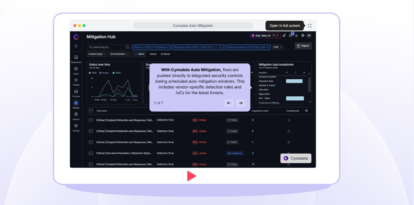
Automated Mitigation in Cymulate integrates with security controls to push threat updates and build custom detection rules for immediate prevention. This ensures that organizations can quickly respond to new threats and continuously improve their security posture. Source
What types of organizations can benefit from Cymulate?
Cymulate is designed for organizations of all sizes and industries, including media, transportation, financial services, retail, and healthcare. It is particularly valuable for CISOs, SecOps teams, Red Teams, and Vulnerability Management teams seeking to improve their security posture and operational efficiency. Source
How does Cymulate foster collaboration across security teams?
Cymulate enables collaboration between SecOps, Red Teams, and Vulnerability Management teams by providing a unified platform for exposure validation, prioritization, and remediation. This ensures a coordinated approach to security challenges and improves overall threat resilience. Source
What are some real-world examples of Cymulate's impact?
Case studies show Cymulate's impact, such as Hertz Israel reducing cyber risk by 81% in four months, Nemours Children's Health increasing visibility and detection, and a financial services organization automating risk measurement across 10+ entities. See more at Cymulate Customers.
Where can I find Cymulate's technical documentation and resources?
Cymulate offers whitepapers, guides, solution briefs, data sheets, and e-books covering its platform and CTEM. Access these resources at the Cymulate Resource Hub.
How can I stay updated on Cymulate's news, awards, and customer stories?
Stay informed through Cymulate's Newsroom, Blog, Events, Case Studies, Reviews, and Awards pages.
What is Cymulate's vision and mission?
Cymulate's mission is to revolutionize cybersecurity by fostering a proactive approach to managing security threats. The company empowers organizations to effectively manage their security posture and improve resilience against threats. Source
How does Cymulate help organizations communicate risk to stakeholders?
Cymulate provides validated exposure scoring and quantifiable metrics tailored to CISOs and security leaders, enabling clear communication of risk and justification for security investments. Source
What are the main pain points Cymulate addresses?
Cymulate addresses overwhelming threat volumes, lack of visibility, unclear prioritization, operational inefficiencies, fragmented tools, cloud complexity, and communication barriers for security teams. Source
How does Cymulate support cloud and hybrid environments?
Cymulate provides dedicated validation features for hybrid and cloud environments, helping organizations address new attack surfaces and validation challenges introduced by cloud adoption. Source
What integrations does Cymulate offer?
Cymulate integrates with numerous security technologies, including Akamai Guardicore, AWS GuardDuty, BlackBerry Cylance OPTICS, Carbon Black EDR, Check Point CloudGuard, CrowdStrike Falcon, Crowdstrike Falcon LogScale, and Cybereason. For a full list, visit the Partnerships and Integrations page.
Features & Capabilities
What are the key features of Cymulate's platform?
Key features include continuous threat validation, unified platform for BAS, CART, and Exposure Analytics, AI-powered optimization, complete kill chain coverage, attack path discovery, automated mitigation, cloud validation, and ease of use. Source
How does Cymulate use AI and automation?
Cymulate leverages machine learning to deliver actionable insights for prioritizing remediation, automates attack simulations, and updates its SaaS platform every two weeks with new AI-powered features like SIEM rule mapping and advanced exposure prioritization. Source
How easy is Cymulate to implement and use?
Cymulate is praised for its ease of implementation and use. Customers report that deployment is fast, requiring only a few clicks, and the platform is intuitive with a user-friendly dashboard. No additional hardware or complex configurations are needed, and comprehensive support is available. Source
What measurable outcomes can Cymulate deliver?
Cymulate customers report a 52% reduction in critical exposures, a 60% increase in team efficiency, an 81% reduction in cyber risk within four months, a 30% improvement in threat prevention, and 40X faster threat validation. Source
How does Cymulate help prioritize vulnerabilities?
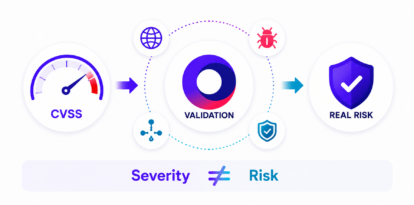
Cymulate ranks vulnerabilities based on exploitability, business context, and threat intelligence, enabling organizations to focus remediation efforts on the most critical exposures. Source
What support and educational resources does Cymulate provide?
Cymulate offers robust support via email and chat, as well as educational resources including webinars, e-books, a knowledge base, and technical documentation to ensure a smooth onboarding and ongoing experience. Source
How does Cymulate ensure continuous innovation?
Cymulate updates its SaaS platform every two weeks, adding new features such as AI-powered SIEM rule mapping and advanced exposure prioritization, ensuring customers always have access to the latest capabilities. Source
What is Cymulate's threat simulation library?
Cymulate provides an advanced library of attack simulations with daily updates, enabling organizations to test their defenses against the latest threats and tactics. Source
Pricing & Plans
What is Cymulate's pricing model?
Cymulate uses a subscription-based pricing model tailored to each organization's needs. Pricing depends on the chosen package, number of assets, and scenarios selected for simulation. For a custom quote, schedule a demo with Cymulate's team. Source
Competition & Comparison
How does Cymulate compare to AttackIQ?
Cymulate offers an industry-leading threat scenario library and AI-powered capabilities for workflow automation and security posture improvement. AttackIQ focuses on automated security validation but does not match Cymulate's innovation, threat coverage, or ease of use. Read more
How does Cymulate compare to Mandiant Security Validation?
Mandiant is one of the original BAS platforms but has seen little innovation in recent years. Cymulate continually innovates with AI and automation, expanding into exposure management and being recognized as a grid leader. Read more
How does Cymulate compare to Pentera?
Pentera is useful for attack path validation but lacks the depth Cymulate provides for fully assessing and strengthening defenses. Cymulate optimizes defense, scales offensive testing, and increases exposure awareness. Read more
How does Cymulate compare to Picus Security?
Picus may suit organizations seeking a BAS vendor with an on-prem option. Cymulate offers a more complete exposure validation platform covering the full kill chain and cloud control validation. Read more
How does Cymulate compare to SafeBreach?
Cymulate outpaces SafeBreach with unmatched innovation, precision, and automation. It features the industry’s largest attack library, a full CTEM solution, and comprehensive exposure validation. Read more
How does Cymulate compare to Scythe?
Scythe is suitable for advanced red teams building custom attack campaigns. Cymulate provides a more comprehensive exposure validation platform with actionable remediation and automated mitigation. Read more
How does Cymulate compare to NetSPI?
NetSPI excels in penetration testing as a service (PTaaS). Cymulate is designed for continuous, independent assessment and strengthening of defenses, recognized as a leader in exposure validation by Gartner and G2. Read more
Security & Compliance
What security and compliance certifications does Cymulate hold?
Cymulate holds SOC2 Type II, ISO 27001:2013, ISO 27701, ISO 27017, and CSA STAR Level 1 certifications, demonstrating its commitment to security, privacy, and compliance. Source
How does Cymulate protect customer data?
Cymulate hosts services in secure AWS data centers, uses strong physical security, encrypts data in transit (TLS 1.2+) and at rest (AES-256), and maintains high availability with redundancy and disaster recovery. Application security is ensured through a secure SDLC, vulnerability scanning, and annual third-party penetration tests. Source
Is Cymulate compliant with GDPR?
Yes, Cymulate incorporates data protection by design and has a dedicated privacy and security team, including a Data Protection Officer (DPO) and a Chief Information Security Officer (CISO), ensuring GDPR compliance. Source
Company Information
When was Cymulate founded and what is its global reach?
Cymulate was founded in 2016 and has a presence in 8 global locations, serving customers in 50 countries. Over 1,000 customers trust Cymulate to enhance their cybersecurity posture. Source
How does Cymulate demonstrate viability and ongoing innovation?
Cymulate demonstrates viability through continuous growth, a strong customer base, and bi-weekly platform updates that introduce new features and capabilities. Source