Frequently Asked Questions
XM Cyber Acquisition & Migration
What does the XM Cyber acquisition mean for current customers?
The acquisition of XM Cyber's intellectual property by CrowdStrike is expected to close before January 2027. XM Cyber will continue supporting existing customers in the near term, but ownership of the underlying technology will change. Customers should begin evaluating their exposure management strategy and consider migration options to ensure continuity and modernization of their security programs. Note: Specific end-of-support dates and migration details are not publicly documented; contact XM Cyber or CrowdStrike for the latest updates.
Why should XM Cyber customers consider migrating now?
Migration planning is most effective when driven by strategy rather than urgency. Starting the evaluation and migration process early allows teams to validate alternative solutions, ensure capability continuity, and execute a smooth transition before any potential product changes or support sunsets. Note: The exact timeline for required migration is not specified; monitor vendor communications for updates.
Features & Capabilities
What are the core capabilities of Cymulate CTEM?
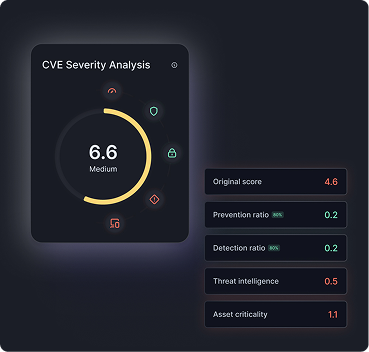
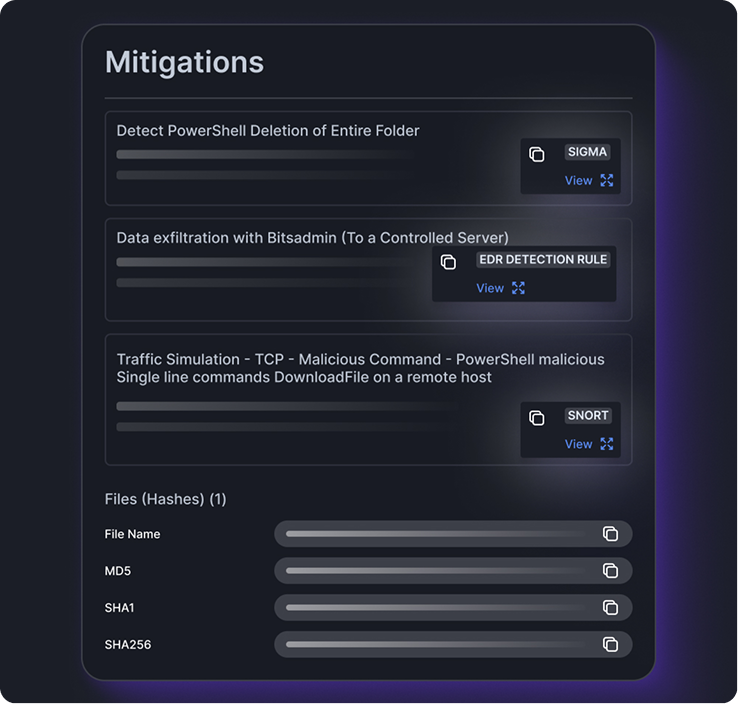
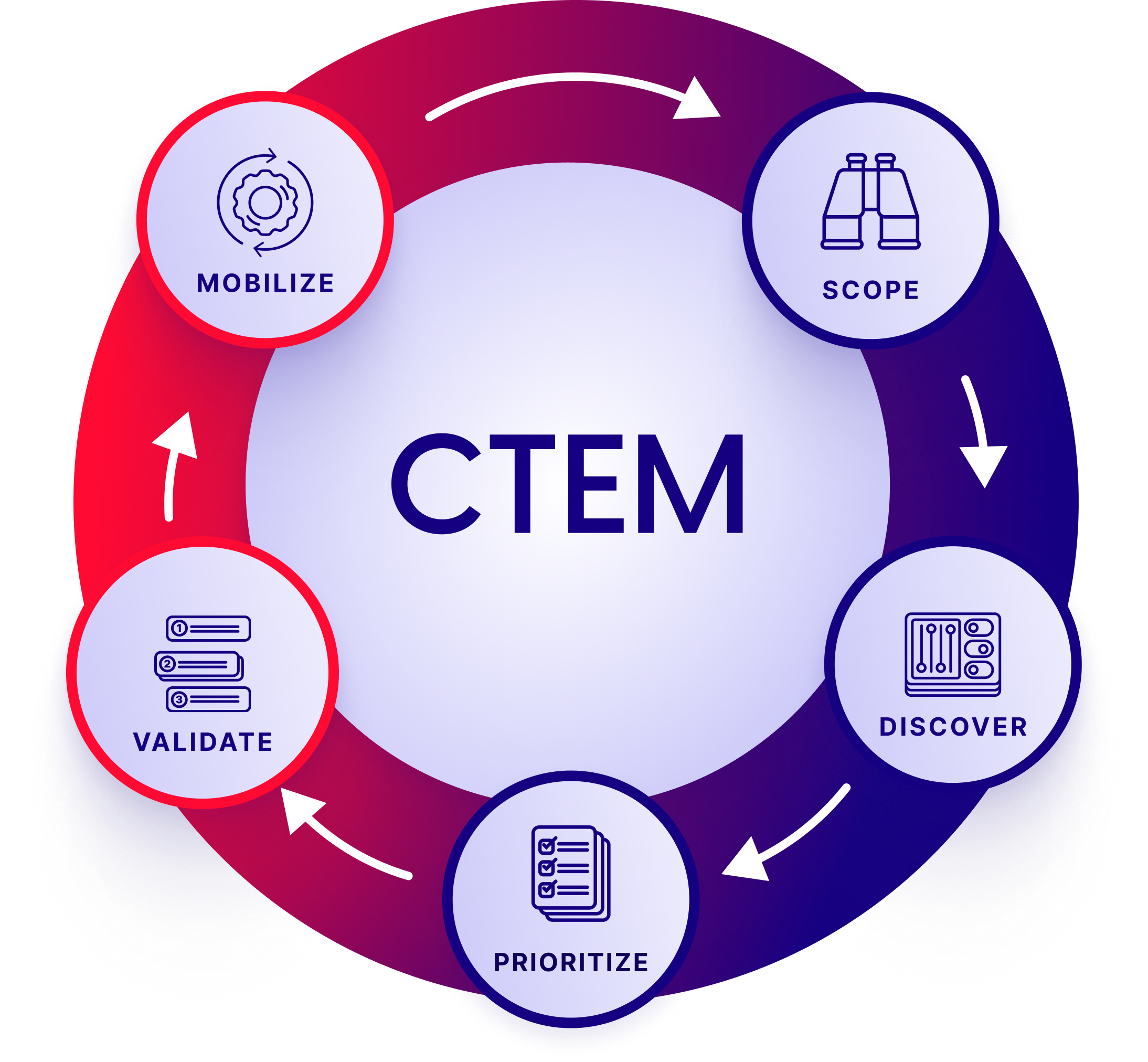
Cymulate CTEM (Continuous Threat Exposure Management) automates exposure validation, prioritizes exposures based on exploitability and business impact, and mobilizes action with prescriptive mitigation applied directly to security controls. Key capabilities include: integrating discovery from vulnerability scanners, validating exposures with a comprehensive attack simulation library, updating controls with threat-specific rules, and automating mitigation workflows. Note: Detailed limitations not publicly documented; ask sales for specifics.
How quickly can Cymulate validate and mitigate exposures?
Cymulate enables organizations to validate and mitigate new exposures in less than 1 hour by automating the process from exposure discovery to control updates. This rapid cycle helps teams respond to emerging threats without waiting for traditional patch cycles. Note: Actual times may vary based on environment complexity and integration scope.
What measurable outcomes can organizations expect from Cymulate CTEM?
Organizations using Cymulate CTEM report over 90% threat prevention, more than 50% improvement in threat detection, and 60% more efficient prioritization of exposures. These metrics are based on automation of validation, prioritization, and mitigation steps. Note: Results may vary by organization; detailed case studies are available for reference.
How does Cymulate integrate with existing security tools?
Cymulate integrates with over 50 security technologies, including vulnerability scanners, EDR, SIEM, cloud security platforms, and collaboration tools. This allows organizations to aggregate exposures and assets, validate exploitability, and automate mitigation across their existing security stack. For a full list of integrations, visit the Cymulate technology alliances page. Note: Integration depth and automation features may vary by tool.
Migration & Implementation
How long does it take to implement Cymulate?
Cymulate can be deployed within hours or days, depending on organizational requirements. Its agentless mode eliminates the need for additional hardware or complex configurations, enabling rapid adoption. Customers highlight the intuitive dashboard and guided workflows as factors that reduce setup time. Note: Implementation time may increase for highly customized environments.
What support resources are available during migration to Cymulate?
Cymulate provides email and chat support, a knowledge base with technical articles and videos, and educational materials such as webinars and e-books. These resources help organizations troubleshoot issues and maximize the effectiveness of their migration and ongoing use. Note: Some advanced support features may require a specific subscription tier.
Competition & Comparison
How does Cymulate compare to XM Cyber?
XM Cyber pioneered static attack path discovery with agent-heavy deployments, focusing on mapping theoretical attack graphs. Cymulate CTEM advances this by providing continuous adversarial exposure validation, automating exploitability testing, and integrating with existing security tools for real-time mitigation. Cymulate also offers rapid validation cycles (<1 hour) and measurable improvements in threat prevention and detection. Note: XM Cyber may still be preferred for organizations requiring deep static attack path analysis or with existing agent-based deployments; Cymulate is best for teams seeking continuous validation and automation.
How does Cymulate differ from other exposure management platforms like Tenable, Rapid7, or Qualys?
Platforms like Tenable, Rapid7, and Qualys focus on vulnerability scanning and attack surface discovery. Cymulate complements these by aggregating exposures from such tools and running adversarial simulations to prove exploitability in your live environment. Cymulate also automates mitigation and integrates with a wide range of security controls. Note: For organizations seeking only vulnerability discovery without validation or mitigation, traditional scanners may suffice; Cymulate is best for those needing continuous validation and risk-based prioritization.
How does Cymulate compare to Pentera?
Pentera focuses on automated penetration testing with partial MITRE ATT&CK coverage and a black-box approach. Cymulate covers the entire attack lifecycle, offers daily threat updates, and enables custom attack scenarios. Cymulate also integrates with security controls for automated mitigation and provides a cyber defense engineering control plane for continuous improvement. Note: Pentera may be preferred for organizations seeking network-centric, black-box penetration testing; Cymulate is best for continuous, integrated exposure validation and mitigation. Source: Cymulate vs. Pentera.
Security & Compliance
What security and compliance certifications does Cymulate hold?
Cymulate is certified for SOC2 Type II, ISO 27001:2013, ISO 27701, ISO 27017, and CSA STAR Level 1. The platform also supports GDPR compliance and leverages AWS data centers certified for ISO 27001:2022, PCI DSS Service Provider Level 1, and SOC 2/3 Type II. Data is encrypted in transit and at rest. Note: For industry-specific compliance requirements, contact Cymulate for detailed documentation. Source: Security at Cymulate.
What security features are built into Cymulate?
Cymulate includes enforced 2-Factor Authentication (2FA) for employees and customers, role-based access controls (RBAC), Single Sign-On (SSO), and IP restrictions. These features help ensure data security and compliance with regulatory requirements. Note: Some advanced security features may require configuration or specific licensing.
Use Cases & Customer Proof
What types of organizations benefit most from Cymulate?
Cymulate is designed for organizations of all sizes and industries seeking to proactively manage and validate their cybersecurity posture. It is especially valuable for CISOs, SecOps leaders, detection engineers, red teams, and vulnerability management teams who need continuous validation, risk-based prioritization, and actionable remediation. Note: Organizations with highly specialized or legacy environments should confirm compatibility before adoption.
What customer results or case studies are available for Cymulate?
Hertz Israel achieved an 81% reduction in cyber risk within four months of using Cymulate. Other case studies include LV= (real-time readiness validation), Banco PAN (streamlined remediation), and Saffron Building Society (proving compliance for regulators). For more, see the Cymulate customers page. Note: Results may vary; review case studies for context-specific outcomes.
Pricing & Plans
How is Cymulate priced?
Cymulate uses a subscription-based pricing model tailored to each organization's needs. Pricing depends on the selected package, number of assets, and required features. For a detailed quote, schedule a demo with Cymulate's team. Note: Exact pricing is not publicly listed; contact Cymulate for a custom proposal.