Frequently Asked Questions
Exposure Prioritization & Remediation: Core Concepts
What is exposure prioritization and remediation in Cymulate?
Exposure prioritization and remediation in Cymulate is the process of focusing on exploitable vulnerabilities by integrating automated validation with exposure discovery. The platform tests your defenses against real-world exploits and scores vulnerabilities to prioritize remediation based on what attackers are most likely to breach.
How does Cymulate validate exposures?
Cymulate performs automated attack simulations that test the real-world exploitability of identified exposures. It correlates data from vulnerability scanners with threat prevention and detection outcomes to provide proof of resilience against specific threats.
What is CTEM and how does Cymulate support it?
CTEM (Continuous Threat Exposure Management) is a strategic approach that continuously discovers, validates, and remediates exposures. Cymulate supports CTEM by integrating threat validation across security operations, red teams, and vulnerability management, making threat validation a continuous process.
Why should I prioritize validated exposures over CVSS scores?
CVSS scores indicate severity, but not exploitability. Cymulate helps security teams move beyond static scoring by validating which exposures are actively exploitable, enabling more effective and efficient remediation.
How does Cymulate help reduce critical exposures?
Cymulate customers have seen a 52% reduction in critical exposures by focusing remediation on exposures with proof of exploitability and effective mitigation strategies.
Can Cymulate integrate with my existing security tools?
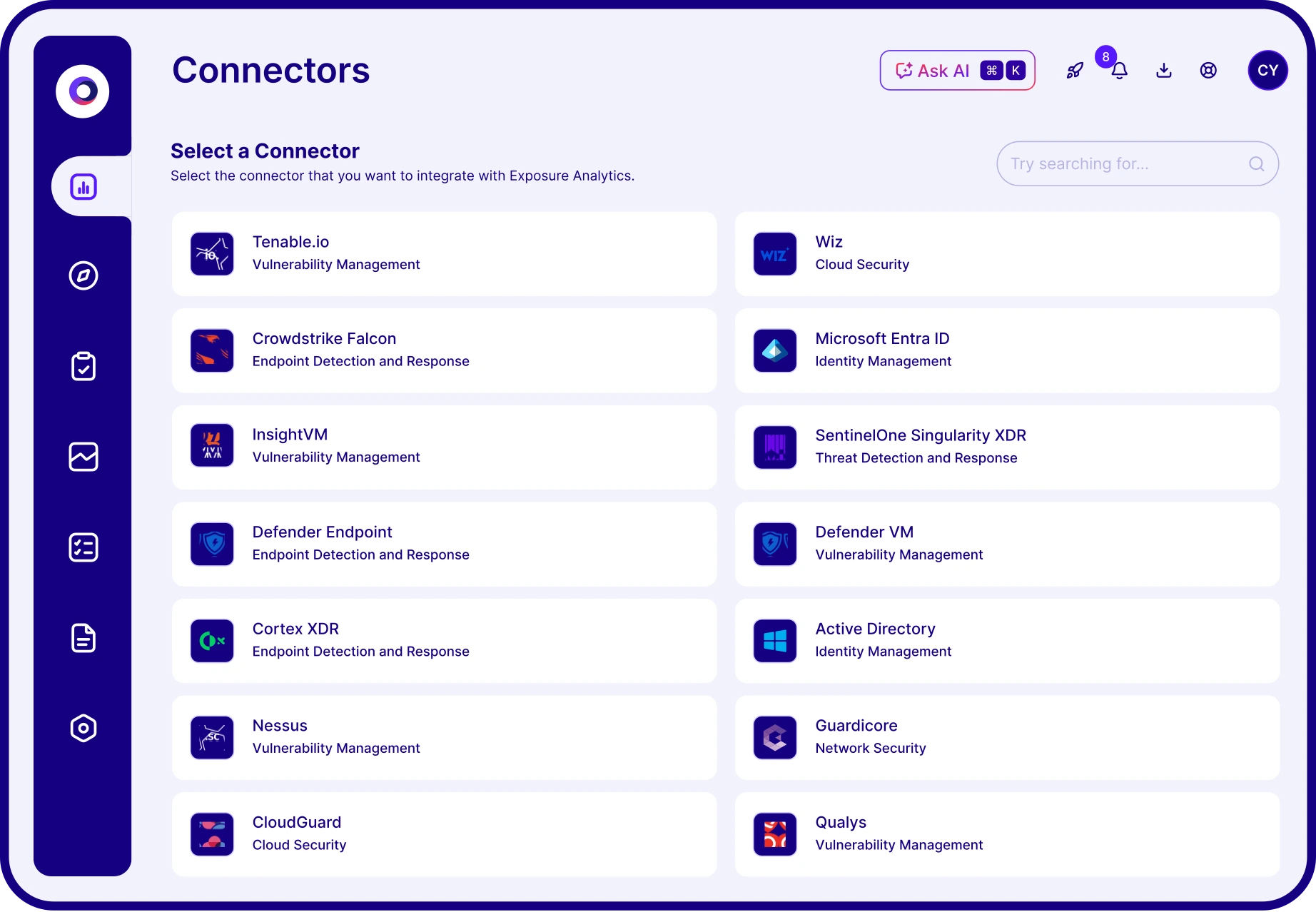
Yes. Cymulate integrates with vulnerability scanners, IT asset management, and other security tools to aggregate exposures, validate them through simulation, and provide a unified risk-based prioritization view.
What are the key features of Cymulate's exposure prioritization solution?
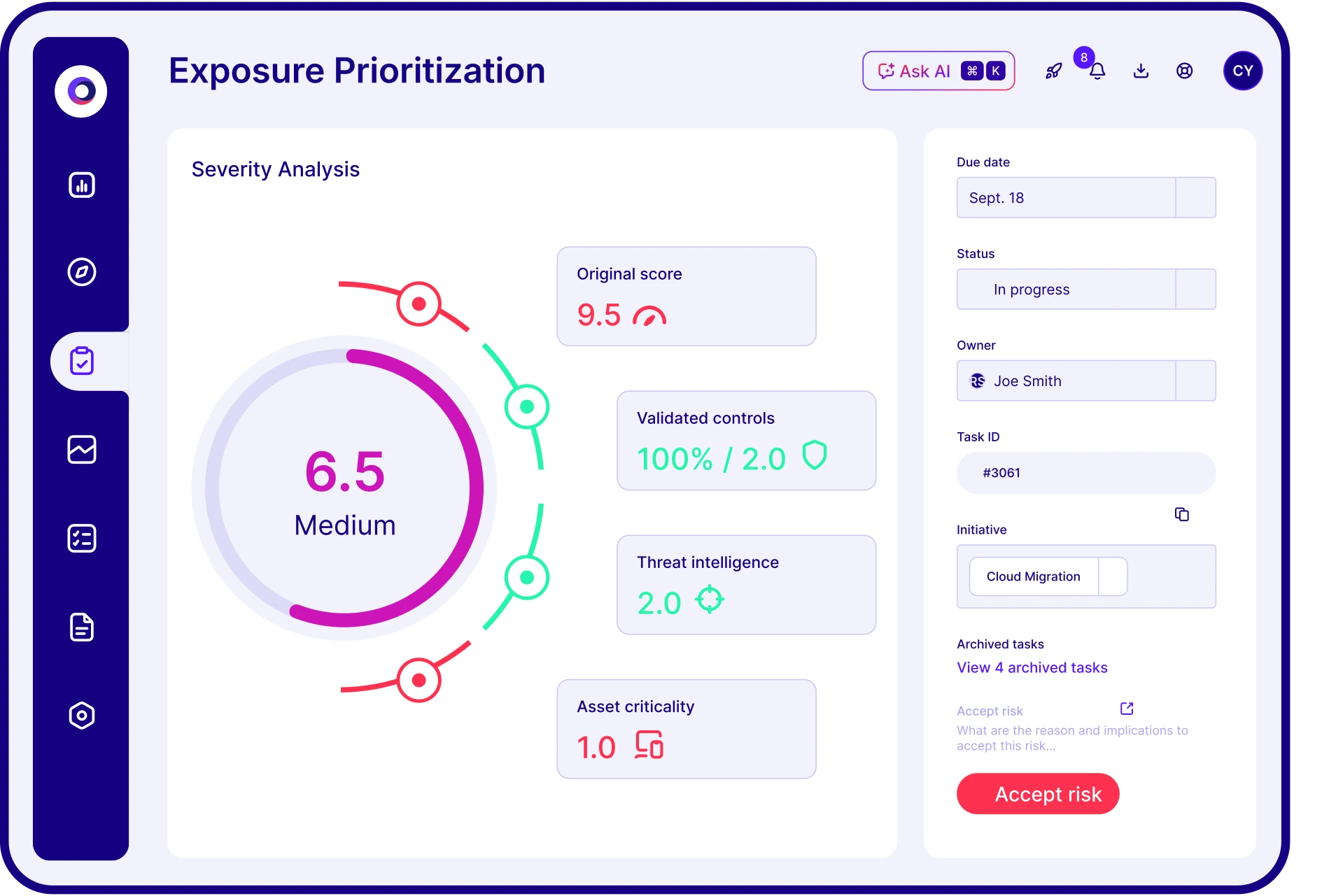
Key features include validated exposure scoring, a unified view of assets and exposures, business-aligned asset classification, and stack-ranked exposure prioritization based on threat intelligence, prevention, detection, and business impact.
How does Cymulate aggregate data on exposures and assets?
Cymulate consolidates exposure findings by integrating with vulnerability scanners and other discovery tools, correlating those exposures with attack simulation findings for proof of threat prevention and detection.
What measurable outcomes can I expect from using Cymulate for exposure prioritization?
Organizations have achieved up to a 52% reduction in critical exposures and a 60% increase in prioritization efficiency by focusing on validated, exploitable exposures and automating workflows with Cymulate.
How does Cymulate help escalate high-risk, low-severity exposures?
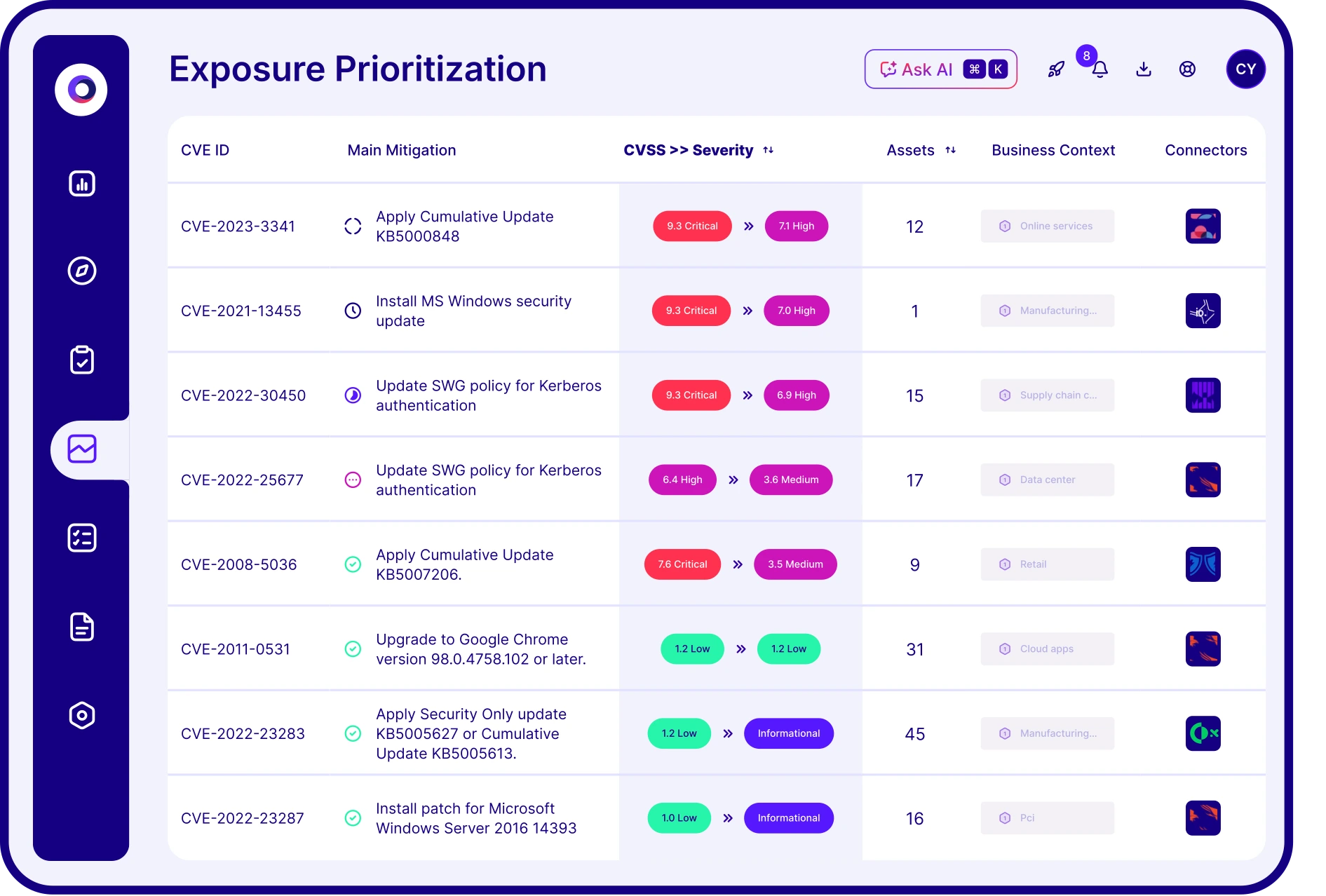
Cymulate enables organizations to elevate low and medium exposures that are exploitable and impact critical assets, ensuring that all relevant risks are addressed, not just those with high severity scores.
How does Cymulate support collaboration across security teams?
Cymulate provides a unified platform for SecOps, red teams, and vulnerability management to focus on validated exposures with the biggest potential business impact, supporting collaboration and continuous improvement.
What do customers say about Cymulate's exposure prioritization?
Customers praise Cymulate for providing actionable intelligence, helping prioritize exploitable vulnerabilities, and enabling small teams to focus on high-risk issues. For example, Shaun Curtis, Head of Cybersecurity, said, "Cymulate tells you if you will be compromised. Vulnerability scanning just gives a report, Cymulate gives us intelligence."
How does Cymulate help justify cybersecurity investments to executives?
Cymulate enables teams to quantify risk reduction and illustrate the value of cybersecurity efforts to executives by providing validated, actionable metrics and insights.
How does Cymulate's exposure prioritization differ from basic vulnerability scanning?
Basic vulnerability scans identify where you are vulnerable, but Cymulate validates if those vulnerabilities are exploitable and provides intelligence on which exposures are an actual threat, enabling more targeted remediation.
What resources are available to learn more about exposure prioritization?
You can access Cymulate's data sheet on Exposure Prioritization and Remediation, guides on exposure management, and e-books on CTEM and validation from the Cymulate Resource Hub.
How does Cymulate support continuous improvement in threat resilience?
Cymulate automates threat validation and remediation prioritization, enabling organizations to continuously improve their security posture and stay ahead of emerging threats.
What is the business impact of using Cymulate for exposure prioritization?
By focusing on validated exposures, organizations can reduce critical exposures, improve efficiency, and ensure that remediation efforts are aligned with business priorities, ultimately reducing risk and supporting business continuity.
How does Cymulate help prioritize patching efforts?
Cymulate shows security teams where to focus patching by identifying exposures that are both exploitable and impactful, ensuring resources are allocated to the most urgent risks.
How does Cymulate's exposure prioritization solution fit into a CTEM program?
Cymulate's solution enables organizations to integrate validation into prioritization and mobilization, supporting a collaborative, continuous threat exposure management (CTEM) program across teams.
Features & Capabilities
What features does Cymulate offer for exposure prioritization?
Cymulate offers validated exposure scoring, unified asset and exposure views, business-aligned asset classification, stack-ranked prioritization, and integrations with vulnerability scanners and IT tools for comprehensive risk assessment.
Does Cymulate support integration with third-party security tools?
Yes, Cymulate integrates with a wide range of security technologies, including Akamai Guardicore, AWS GuardDuty, BlackBerry Cylance OPTICS, Carbon Black EDR, Check Point CloudGuard, CrowdStrike Falcon, Wiz, SentinelOne, and more. For a complete list, visit the Partnerships and Integrations page.
How does Cymulate's exposure prioritization use business context?
Cymulate enables business-aligned asset classification, allowing organizations to categorize assets based on business impact and prioritize exposures that could affect critical operations.
What is stack-ranked exposure prioritization?
Stack-ranked exposure prioritization is Cymulate's method of ranking exposures based on the correlation of proven threat prevention and detection, threat intelligence, and business impact, ensuring the most urgent risks are addressed first.
How does Cymulate correlate exposure data with attack simulation findings?
Cymulate correlates exposure data from vulnerability scanners and discovery tools with attack simulation results, providing proof of threat prevention and detection for each exposure.
What types of organizations benefit from Cymulate's exposure prioritization?
Organizations of all sizes and industries, including finance, healthcare, retail, media, transportation, and manufacturing, benefit from Cymulate's exposure prioritization, especially those seeking to improve threat resilience and operational efficiency.
How does Cymulate support vulnerability management teams?
Cymulate automates in-house validation between penetration tests and prioritizes vulnerabilities effectively, enabling vulnerability management teams to focus on exposures that matter most. Learn more.
How does Cymulate help SecOps teams?
Cymulate automates processes, improves operational efficiency, and enables faster threat validation for SecOps teams. Learn more.
How does Cymulate help CISOs and security leaders?
Cymulate provides quantifiable metrics and insights to justify investments and align security strategies with business objectives for CISOs and security leaders. Learn more.
How does Cymulate help red teams?
Cymulate offers automated offensive testing with a library of over 100,000 attack actions aligned to MITRE ATT&CK and daily threat intelligence, supporting red teams in advanced adversary simulation. Learn more.
What are some real-world results achieved with Cymulate?
Hertz Israel reduced cyber risk by 81% in four months using Cymulate. Other organizations have reported a 52% reduction in critical exposures and a 60% increase in team efficiency. See more case studies.
What security and compliance certifications does Cymulate hold?
Cymulate holds SOC2 Type II, ISO 27001:2013, ISO 27701, ISO 27017, and CSA STAR Level 1 certifications, demonstrating adherence to industry-leading security and compliance standards. Learn more.
How easy is it to implement Cymulate's exposure prioritization solution?
Cymulate is designed for quick, agentless deployment with minimal resources required. Customers can start running simulations almost immediately, and comprehensive support is available via email, chat, and educational resources.
What is Cymulate's pricing model for exposure prioritization?
Cymulate operates on a subscription-based pricing model tailored to each organization's requirements, including chosen package, number of assets, and scenarios. For a detailed quote, schedule a demo.
How does Cymulate compare to other exposure management solutions?
Cymulate stands out with its unified platform combining Breach and Attack Simulation, Continuous Automated Red Teaming, and Exposure Analytics. It offers continuous validation, AI-powered optimization, and measurable outcomes such as a 52% reduction in critical exposures and a 60% increase in efficiency. See comparison details.
What support resources are available for Cymulate customers?
Cymulate provides email and chat support, a knowledge base with technical articles and videos, webinars, e-books, and an AI chatbot for quick answers and best practices. Explore resources.