

Frequently Asked Questions

Vulnerability Prioritization & Management

What is vulnerability prioritization and why is it important in cybersecurity?

Vulnerability prioritization is the process of identifying and ranking vulnerabilities based on their actual exploitability and impact on business-critical assets. It's crucial because organizations face an overwhelming volume of vulnerabilities, and prioritizing helps focus remediation efforts on the most critical risks, improving overall security posture. (Source: Cymulate Exposure Prioritization)

Why do traditional risk-based vulnerability prioritization methods fall short?

Traditional risk-based methods often rely on static risk scores (like CVSS) and industry-wide statistics, which may not reflect the real-time exploitability of vulnerabilities in your unique environment. These methods can be outdated due to continuous development changes and the rapid evolution of attacker tactics, leading to misaligned patching priorities. (Source: Original Webpage)

How does continuous development impact vulnerability management?

Continuous development leads to constant changes in system configurations, which can render scheduled patching irrelevant and introduce new vulnerabilities not included in previous prioritization schedules. This dynamic environment requires real-time validation and reprioritization. (Source: Original Webpage)

What role does MITRE ATT&CK play in vulnerability management?

MITRE ATT&CK provides a publicly available framework that maps known attacks and attackers, helping organizations understand potential attack routes and adversary tactics. This knowledge enables more effective prioritization and validation of vulnerabilities based on real-world threats. (Source: Original Webpage)

Why is prioritizing vulnerabilities based solely on threat intelligence not enough?

Prioritizing based only on threat intelligence is insufficient because it doesn't validate the actual exploitability of vulnerabilities in your environment. Without validation, vulnerability management becomes a guessing game, especially as attackers can move faster than patch cycles. (Source: Cymulate Guide)

How can organizations cut through vulnerability noise and focus on real risks?

Organizations can cut through vulnerability noise by validating, prioritizing, and focusing on real exploitable risks. Cymulate's approach emphasizes exposure validation to identify which vulnerabilities are truly exploitable and require immediate attention. (Source: Cymulate Guide)

What is attack-based vulnerability management (ABVM)?

Attack-based vulnerability management (ABVM) prioritizes vulnerabilities based on risk scores derived from actual attack simulations in your environment, rather than theoretical or statistical risk. This approach ensures patching efforts are focused on vulnerabilities that pose real threats. (Source: Original Webpage)

How does Cymulate help with vulnerability management across hybrid and cloud environments?

Cymulate provides continuous security validation and exposure management across legacy, hybrid, and cloud-native environments. It automates attack simulations and exposure validation, enabling organizations to prioritize and remediate vulnerabilities effectively in complex infrastructures. (Source: Original Webpage, Cymulate Cloud Security Validation)

What are the main challenges in vulnerability management today?

Main challenges include the overwhelming volume of vulnerabilities, constant changes in IT environments, the speed of attacker innovation, and the difficulty of distinguishing real risks from false positives. Effective management requires continuous validation and prioritization. (Source: Original Webpage)

How does Cymulate's Exposure Validation solution work?

Cymulate Exposure Validation automates real-world attack simulations to test and validate security controls. It provides actionable insights and an optimized patching priority schedule based on validated risks, making advanced security testing fast and easy. (Source: Original Webpage, Cymulate Exposure Validation Data Sheet)

What is continuous security validation and why is it important?

Continuous security validation involves ongoing, automated testing of security controls using real-world attack simulations. It's important because it helps organizations stay ahead of emerging threats, adapt to changes in their environment, and ensure that defenses remain effective over time. (Source: Original Webpage, Cymulate Threat Validation)

How does Cymulate's approach differ from traditional vulnerability management tools?

Cymulate combines Breach and Attack Simulation (BAS), Continuous Automated Red Teaming (CART), and Exposure Analytics in a unified platform. Unlike traditional tools that rely on point-in-time assessments, Cymulate offers continuous, automated attack simulations and real-time exposure validation, providing actionable insights and measurable improvements in security posture. (Source: Cymulate vs Competitors)

What are the benefits of using attack-based vulnerability prioritization?

Attack-based vulnerability prioritization ensures that remediation efforts focus on vulnerabilities that are actually exploitable in your environment, leading to more efficient use of resources, faster risk reduction, and improved security outcomes. (Source: Original Webpage, Cymulate Exposure Prioritization)

How does Cymulate help organizations stay ahead of emerging threats?

Cymulate continuously updates its threat simulation library and provides daily threat intelligence, enabling organizations to test their defenses against the latest attack techniques and adapt quickly to new risks. (Source: Cymulate Platform)

What is the role of continuous automated red teaming (CART) in Cymulate's platform?

Continuous Automated Red Teaming (CART) in Cymulate's platform enables organizations to emulate advanced adversary tactics and techniques, continuously testing their defenses and identifying weaknesses before attackers can exploit them. (Source: Cymulate CART)

How does Cymulate integrate with other security tools?

Cymulate integrates with a wide range of security technologies, including EDR, SIEM, vulnerability management, and cloud security tools. Examples include integrations with Akamai Guardicore, AWS GuardDuty, CrowdStrike Falcon, SentinelOne, Wiz, and more. (Source: Cymulate Integrations)

What is the Cymulate Exposure Management Platform?

The Cymulate Exposure Management Platform is a unified solution that combines continuous threat validation, exposure analytics, and automated mitigation to help organizations proactively manage and reduce their cyber risk. (Source: Cymulate Platform)

How does Cymulate support compliance and security certifications?

Cymulate holds key certifications such as SOC2 Type II, ISO 27001:2013, ISO 27701, ISO 27017, and CSA STAR Level 1, demonstrating adherence to industry-leading security and privacy standards. (Source: Security at Cymulate)

Features & Capabilities

What are the key features of Cymulate's platform?

Key features include continuous threat validation, unified BAS and CART, exposure analytics, attack path discovery, automated mitigation, AI-powered optimization, complete kill chain coverage, and an extensive threat simulation library updated daily. (Source: Cymulate Platform)

Does Cymulate support exposure prioritization and remediation?

Yes, Cymulate offers Exposure Prioritization & Remediation, enabling organizations to focus on exploitable vulnerabilities and automate the remediation process for improved security outcomes. (Source: Cymulate Exposure Prioritization)

How does Cymulate automate mitigation of security risks?

Cymulate integrates with security controls to push updates and automate the mitigation of identified risks, ensuring immediate prevention of threats and reducing manual intervention. (Source: Cymulate Automated Mitigation)

What is the benefit of Cymulate's extensive threat simulation library?

Cymulate's threat simulation library contains over 100,000 attack actions aligned to MITRE ATT&CK and is updated daily, allowing organizations to test their defenses against the latest threats and techniques. (Source: Cymulate Platform)

How easy is Cymulate to implement and use?

Cymulate is designed for ease of use, with agentless deployment, minimal setup, and an intuitive interface. Customers report being able to start running simulations quickly, with actionable insights available in just a few clicks. (Source: Cymulate Demo, Customer Testimonials)

What feedback have customers given about Cymulate's ease of use?

Customers consistently praise Cymulate for its intuitive dashboard, user-friendly portal, and accessible support. Testimonials highlight its simplicity, immediate value, and the ability to quickly identify and mitigate security gaps. (Source: Cymulate Customer Quotes)

What are the measurable outcomes of using Cymulate?

Organizations using Cymulate have reported up to an 81% reduction in cyber risk within four months, a 52% reduction in critical exposures, a 60% increase in team efficiency, and validation of threats 40 times faster than manual methods. (Source: Cymulate Case Studies)

Use Cases & Benefits

Who can benefit from using Cymulate?

Cymulate is designed for CISOs, security leaders, SecOps teams, red teams, and vulnerability management teams in organizations of all sizes and industries, including finance, healthcare, retail, and more. (Source: Cymulate for CISOs)

What problems does Cymulate solve for security teams?

Cymulate addresses fragmented security tools, resource constraints, unclear risk prioritization, cloud complexity, communication barriers, inadequate threat simulation, operational inefficiencies, and post-breach recovery challenges. (Source: Knowledge Base)

Are there case studies demonstrating Cymulate's effectiveness?

Yes, case studies include Hertz Israel reducing cyber risk by 81% in four months, a sustainable energy company scaling penetration testing, and Nemours Children's Health improving detection in hybrid environments. (Source: Cymulate Case Studies)

How does Cymulate tailor solutions for different roles?

Cymulate provides quantifiable metrics for CISOs, automates processes for SecOps, offers advanced offensive testing for red teams, and enables efficient vulnerability management for dedicated teams. (Source: Cymulate for CISOs, SecOps, Red Teams, Vulnerability Management)

What is the primary purpose of Cymulate's product?

The primary purpose is to help organizations proactively validate their cybersecurity defenses, identify vulnerabilities, and optimize their security posture through continuous threat validation and exposure management. (Source: About Cymulate)

How does Cymulate contribute to a proactive cybersecurity strategy?

Cymulate enables organizations to continuously test, validate, and improve their defenses, prioritize exposures, and automate remediation, supporting a proactive and resilient cybersecurity strategy. (Source: About Cymulate)

What is Cymulate's vision and mission?

Cymulate's vision is to transform cybersecurity practices by enabling organizations to proactively validate defenses, identify vulnerabilities, and optimize security posture. The mission is to empower teams to achieve measurable improvements in threat resilience and operational efficiency. (Source: About Cymulate)

Pricing & Plans

What is Cymulate's pricing model?

Cymulate uses a subscription-based pricing model tailored to each organization's needs. Pricing depends on the chosen package, number of assets, and scenarios selected. For a detailed quote, organizations can schedule a demo with Cymulate. (Source: Knowledge Base)

Support & Implementation

How long does it take to implement Cymulate?

Cymulate is designed for quick implementation, with agentless deployment and minimal setup. Customers can start running simulations almost immediately after deployment. (Source: Knowledge Base)

What support resources are available for Cymulate users?

Cymulate offers email and chat support, a knowledge base with technical articles and videos, webinars, e-books, and an AI chatbot for real-time assistance and best practices. (Source: Knowledge Base)

Security & Compliance

What security and compliance certifications does Cymulate hold?

Cymulate holds SOC2 Type II, ISO 27001:2013, ISO 27701, ISO 27017, and CSA STAR Level 1 certifications, ensuring compliance with industry-leading security and privacy standards. (Source: Security at Cymulate)

How does Cymulate ensure data security and privacy?

Cymulate uses encryption for data in transit (TLS 1.2+) and at rest (AES-256), secure AWS-hosted data centers, a tested disaster recovery plan, and a dedicated privacy and security team including a DPO and CISO. (Source: Security at Cymulate)

Resources & Learning

Where can I find Cymulate's blog and newsroom?

You can find the latest threats, research, and company news on Cymulate's blog and newsroom. (Source: Knowledge Base)

Where can I access Cymulate's Resource Hub?

Cymulate's Resource Hub contains insights, thought leadership, and product information. Access it at https://cymulate.com/resources/. (Source: Knowledge Base)

How can I stay updated with Cymulate's latest news and research?

Stay informed by visiting Cymulate's blog for the latest threats and research, and the newsroom for media mentions and press releases. (Source: Knowledge Base)

Where can I find events and webinars hosted by Cymulate?

Information about live events and webinars is available on Cymulate's Events & Webinars page. (Source: Knowledge Base)

Cymulate named a Customers' Choice in 2025 Gartner® Peer Insights™
Learn More
New Case Study: Credit Union Boosts Threat Prevention & Detection with Cymulate
Learn More
New Research: Cymulate Research Labs Discovers Token Validation Flaw
Learn More
An Inside Look at the Technology Behind Cymulate
Learn More

Vulnerability Prioritization: Best Practices for Modern Cyber Security Defense

By: Cymulate

Last Updated: September 7, 2025

cymulate blog article

With threat exposure distributed across legacy, hybrid, and cloud-native environments, patching vulnerabilities in a sensible order requires sifting through the astronomic amount of data generated by detection tools and prioritizing the patching order in line with business priorities. 

Understanding the Challenge of Vulnerability Management Across Diverse Environments

Vulnerabilities are the most pervasive weakness on the planet. Like a strained tendon, they slow down development and create a constant and hard-to-evaluate risk. They generate so much interest that new tools designed to detect them are sprouting up every day like mushrooms.

These tools come in many shapes and are called anything from network security monitoring, web vulnerability scanning, data loss prevention, endpoint detection and response, network defense wireless solution, packet sniffers, antivirus software, Web Application Firewalls or network firewalls, Public Key Infrastructures (PKIs), managed detection services, and the list goes on. 

And detect they do. So much, in fact, that new tools are sprouting up to help filter all these detected vulnerabilities according to various ratings. 

The Flaws in Risk-Based Vulnerability Prioritization

Not all vulnerabilities are equal. And the judges are out to score them on basic, temporal, and environmental metrics, the most dangerous of them scoring highest on the CVSS hall of fame and jostling for visibility in NVD and MITRE CVE lists. 

With all those sniffing tools, cyber defenders should be able to catch those pesky vulnerabilities and filter them to let the harmless ones run free and ruthlessly eliminate the dangerous ones, shouldn’t they? Well, not quite.  

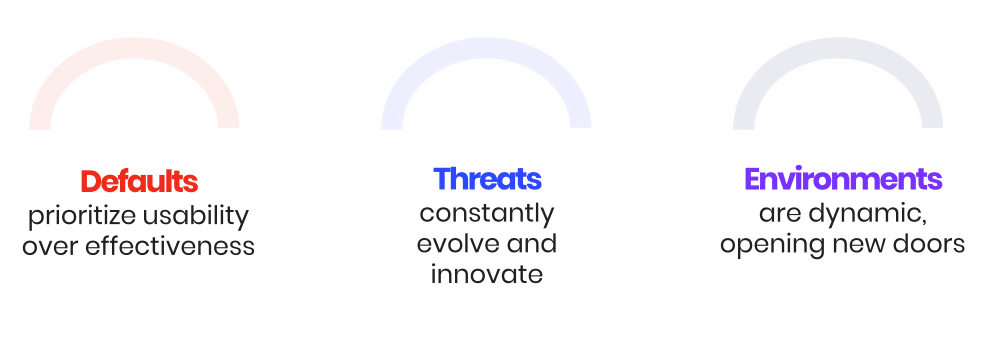
Despite their best efforts, these detecting and monitoring solutions generate too much data, including a sea of needlessly distracting false positives. By the time the valiant cyber defenders have gone through one batch and patched it, the environment configuration has changed, and new vulnerabilities have multiplied. 
security control validation

Why Traditional Vulnerability Prioritization Falls Short in Modern Cybersecurity

The problem is not with the detection tools that are performing remarkably well in providing the data to calculate cyber risk exposure. It is not even with the outstanding new tools that filter through the mass of data, filter them according to their CVSS score and intuit a patching prioritization order that, at the time it is generated, makes perfect statistical sense.  

The problem is that the entire concept of prioritizing vulnerability patching based on risk scores is rooted in yesterday’s thinking. Both the infrastructure and the attacker challenge its timeliness and relevance. 

The Impact of Continuous Development

On the enterprise side, the near-ubiquitous adoption of continuous development results in constant changes in a configuration that render some of the scheduled patching irrelevant and introduce new vulnerabilities that are not included in the prioritized patching schedule.  

The Rise of Advanced Hacking Tools and Organized Cybercrime

On the attacker side, the proliferation of hacking tools shopping centers flourishing on the darknet means that defenders are now contending not only with some hooded evil geniuses hidden in basements, they are facing a growing and increasingly organized industry, that also has R&D departments churning new TTPs (Tactics, Techniques & Procedures) at record speed, and selling them and their automated version. 

This means that prioritizing vulnerability patching based on risk scores established through industry-wide statistical means is fighting yesterday’s war. A new thinking paradigm to prioritize vulnerability patching is needed.  

Adopting Offensive Tactics for Effective Vulnerability Management

Instead of using techniques stemming from the erstwhile “securing the perimeter” line of thinking, it is time to take a leaf or two from tried and tested military strategy summarized into cliched adages:

“Know thy enemy” and “The best defense is a good offense.”

That may sound like a good idea, but unlike traditional military enemies, hackers do not operate as an army. They are faceless, motivated by any number of goals, ranging from greed to selfless hacktivistic defense of the oppressed (as defined by the hacktivist), from corporate to national spying, from information gathering to destructive abilities, and the list goes on. 

So, with such a multitudinous, multifaceted enemy, how is it possible to leverage military wisdom and get to know the enemy? 

Regardless of its identity or motivations, the enemy is going to use tools to launch attacks. And, as stated by theNational Security Agency“To effectively resist attacks against information and information systems, an organization needs to characterize its adversaries, their potential motivations and classes of attack.”

And we are in luck!

MITRE ATT&CK  does exactly that! It collates known attacks and attackers and then maps potential attack routes in a publicly available framework.

Leveraging Continuous Security Validation for Real-Time Threat Mitigation

The global nature of the internet makes going against all malicious actors a pipe dream. Yes, there are initiatives to catch and jail the worst offenders, but the odds of global cooperation reaching a level that enables catching and neutralizing all offenders is next to nil. 

With a comprehensive Continuous Security Validation (CSV) suite - that includes BAS (Breach and Attack Simulation), CART (Continuous Automated Red Teaming,) and Advanced modules. Any organization can continuously emulate attacks on their environment, exactly like a swarm of attackers would.  

ENDPOINT SECURITY cymulate

Yet, unlike what happens under a real attack, security validation attacks yield, among other data, an optimized vulnerability patching priority schedule created by an Attack-Based Vulnerability Management (ABVM) included in each CSV suite module and based on risk scores derived from the actual risk to the validated environment. 

Patching attack-based prioritized vulnerabilities are the most efficient way to continuously improve security posture. 

Cymulate Exposure Validation makes advanced security testing fast and easy. When it comes to building custom attack chains, it's all right in front of you in one place.
Mike Humbert, Cybersecurity Engineer
DARLING INGREDIENTS INC.
Learn More
Book a Demo