

Web Application Firewall Validation
Continuously test and optimize your web application firewall against the latest threats.
As web attacks grow more advanced, web application firewalls remain a critical line of defense.
137%
Increase in web DDOS attacks
Source: Radware Global Threat Analysis Report
61%
Increase in bad bot activity
Source: Radware Global Threat Analysis Report
22%
Increase in web/API attack activity
Source: Radware Global Threat Analysis Report
Agentic Cyber Defense Engineering for WAF
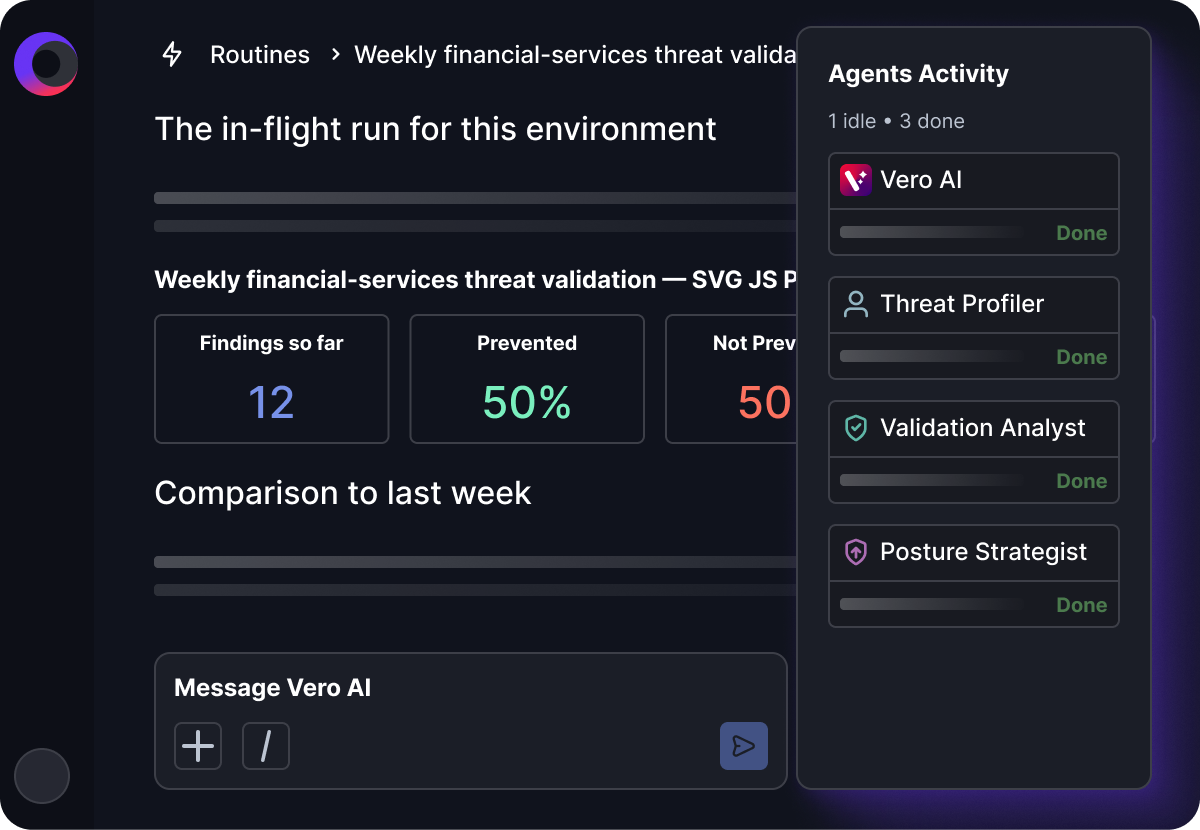
Today’s AI-powered attacks on web applications and APIs demand a new approach to prove, prioritize and adapt your WAF defenses at machine speed. Cymulate challenges your WAF (web application firewall) with a comprehensive set of web attacks to go beyond validation and deliver agentic cyber defense engineering.
Powered by Vero AI, Cymulate proves web application control effectiveness through production-safe attack simulation, prioritizes gaps with real-world impact and tells you exactly how to close them with WAF-specific remediation guidance.
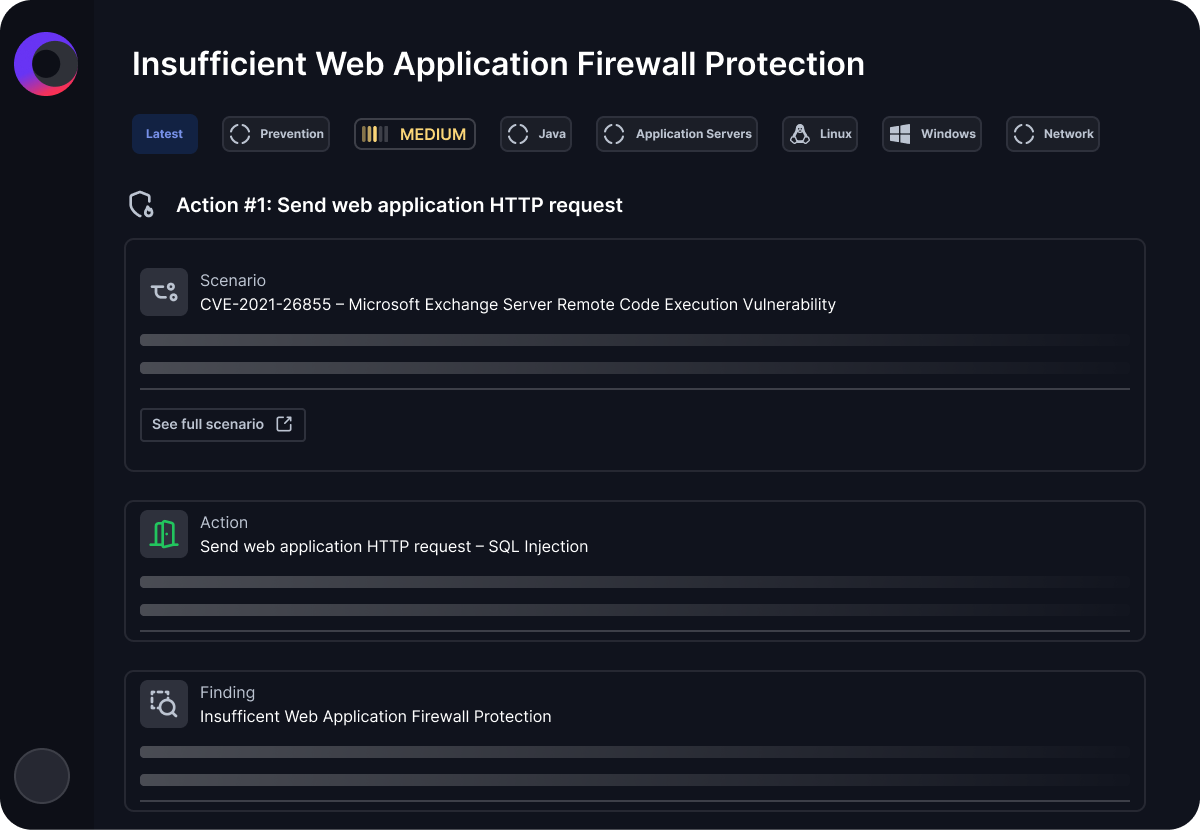
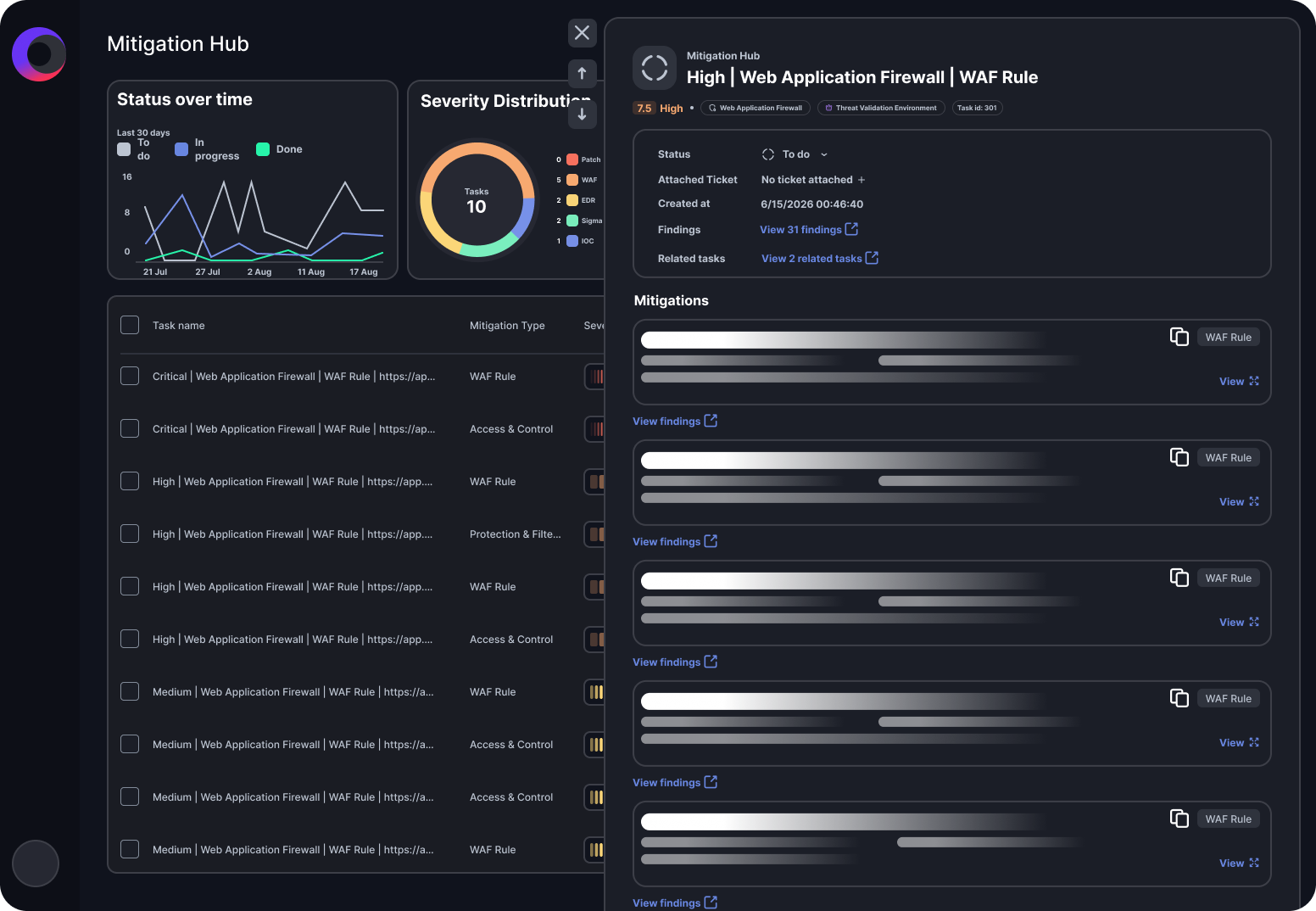
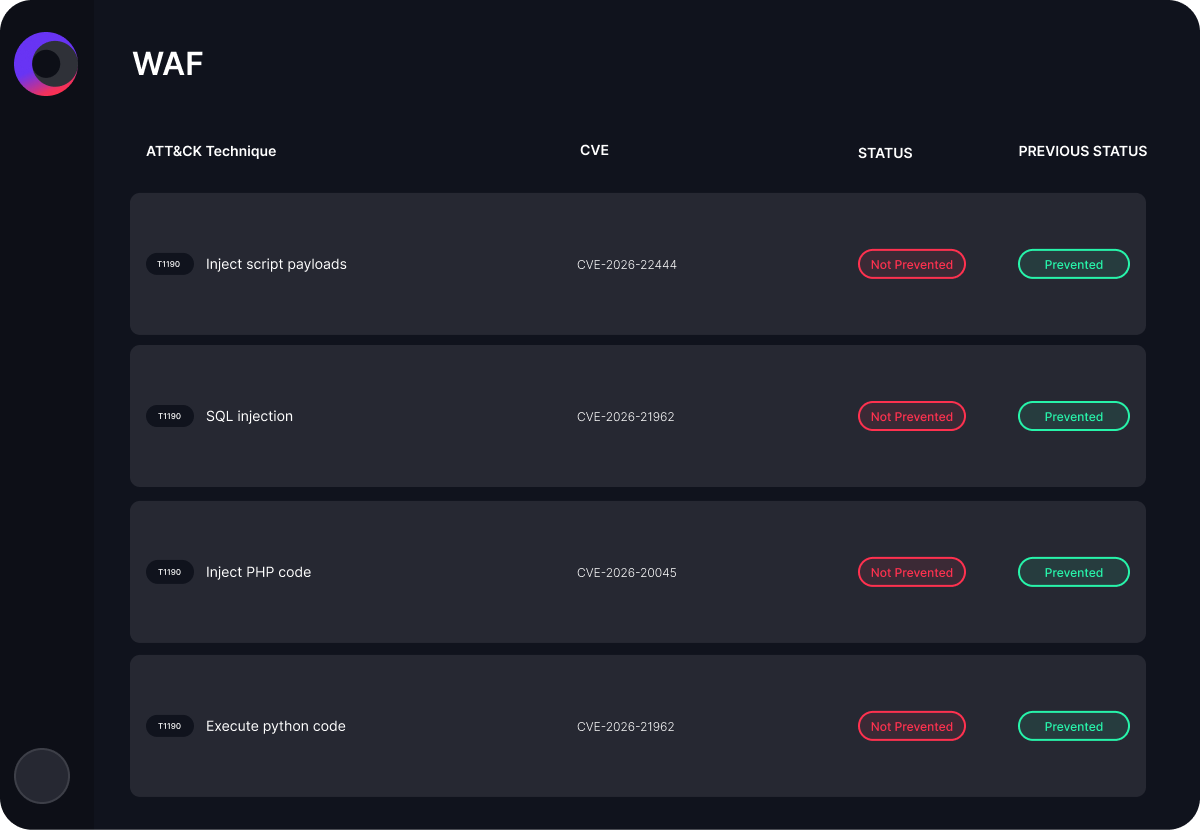
When Cymulate identifies a missed detection, a misconfigured control or a gap in web application protection, it shows you the payload that got through and opens a mitigation hub task with a ready-to-use WAF rule written, translated into your WAF vendor's native format. Once you implement the rule, Cymulate reruns the original attack to automatically prove stronger web application protection.
Instead of one more list of findings, Cymulate closes the risk-to-fix gap and continuously proves, prioritizes and helps you adapt your WAF against the threats targeting your web applications.
WAF Validation and Optimization

Results & Outcomes

90%
Threat prevention
CYMULATE CUSTOMER AVERAGE

50%
Better threat detection
CYMULATE CUSTOMER AVERAGE
60%
Boost to team efficiency
IT SOLUTIONS CUSTOMER
Solution Benefits
Accelerate remediation
Reduce manual SecOps effort
Prove improved detection
Continuously optimize web application security
What Our Customers Say
Featured Resources
View More Resources
Control Validation and Optimization
Continuously validate and optimize security controls to improve prevention, detection and response effectiveness.

WAF Validation with OAuth 2.0 Support
Read how Cymulate can test modern web applications that use advanced authentication methods.

Security Validation Best Practices
Explore the principles and best practices of security validation.
Web Application Firewall FAQs
Cymulate validates Web Application Firewalls (WAFs) through controlled attack simulations aligned with OWASP standards and common web application exploit techniques.
Security teams simply provide the URLs or endpoints of the web applications they want to assess and Cymulate then runs simulated attacks directly against those endpoints, emulating real-world exploit methods such as SQL injection (SQLi), cross-site scripting (XSS), remote file inclusion (RFI), and command injection.
These safe, controlled simulations evaluate whether the WAF and application-layer defenses, like input validation, code sanitization, and authentication logic, effectively detect and block malicious activity.
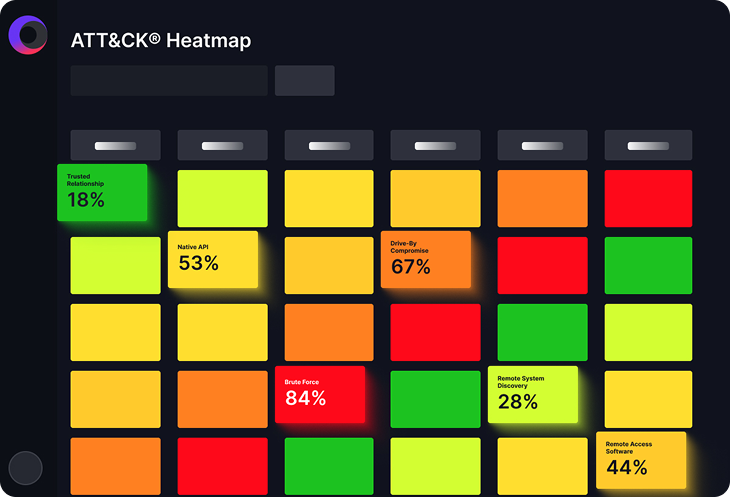
After the assessment, Cymulate delivers detailed results showing:
- Which exploit attempts were prevented or not prevented
- How the application and WAF responded to malicious requests
- The overall effectiveness of web-layer threat mitigation
Cymulate also provides actionable mitigation guidance, including recommended WAF rules expressed as regular expressions and translated into vendor-specific formats.
Cymulate validates both public-facing websites and authenticated web applications protected by modern access controls. It supports OAuth 2.0 and Single Sign-On (SSO) authentication, enabling assessments of sites secured by identity providers such as Okta, Azure AD, Ping Identity, Google Workspace, and Auth0.
This allows realistic validation of WAF protections and application-layer defenses across both public and authenticated areas of enterprise web applications.
Web application firewalls act as a front-line defense mechanism to protect an organization’s web applications from cyber attacks. Validating that the WAF is operating as intended is important to protect the data contained within the application and to stop denial of service attacks aimed at disrupting business operations. Threat actors are constantly evolving their tactics and techniques to exploit web applications and bypass WAF security controls, so it is important to validate the WAF on a frequent basis by simulating the latest attack techniques.
Web applications are vulnerable to certain types of cyber attacks. The OWASP foundation maintains a list of the top 10 web application security risks based on the latest threat activity. WAF validation should test if the firewall is capable of blocking attack types like SQL/NoSQL injection, command injection, XML injection, file inclusion, cross-site scripting (XSS), server-side request forgery (SSRF), path (directory) traversal and other WAF bypass techniques.
Yes. Cymulate delivers a comprehensive web application firewall assessment using breach and attack simulations of different types of cyber attacks. The assessment uses over 7,000 different malicious payloads across multiple attack types and methods to fully validate the effectiveness of the web application firewall. For each payload that penetrates the firewall, we provide risk levels and mitigation guidance to help focus your security team and optimize your firewall configuration.
Cymulate recommends that you use automated security validation to test your web application firewalls and policies weekly given the constant evolution of threat tactics and techniques being used to exploit web applications.