

Breach and Attack Simulation (BAS)
Test and optimize your cyber security defenses using real-world attack simulations.
Attack simulation that proves and improves cyber defenses.
Cymulate Exposure Validation applies industry-leading breach and attack simulation (BAS) to challenge your defenses with the latest real-world threats. AI-powered automated control updates help you close gaps and strengthen resilience before an attack occurs.
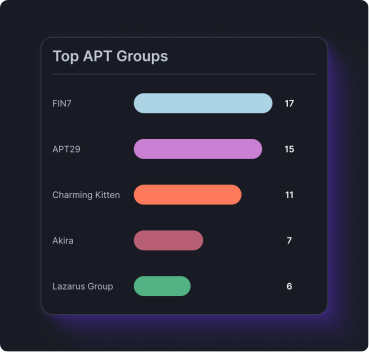
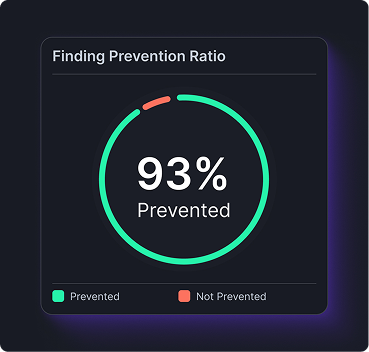
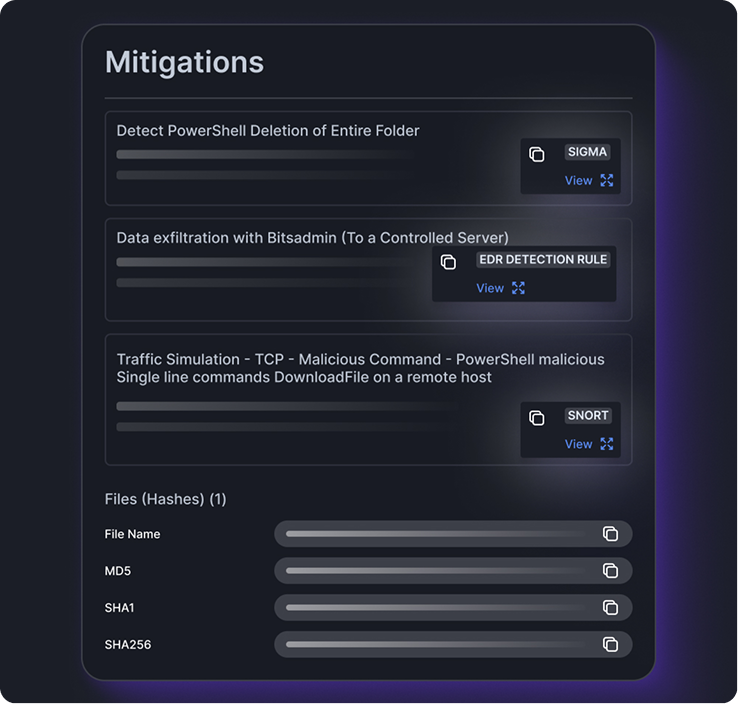
Breach and Attack Simulation Benefits
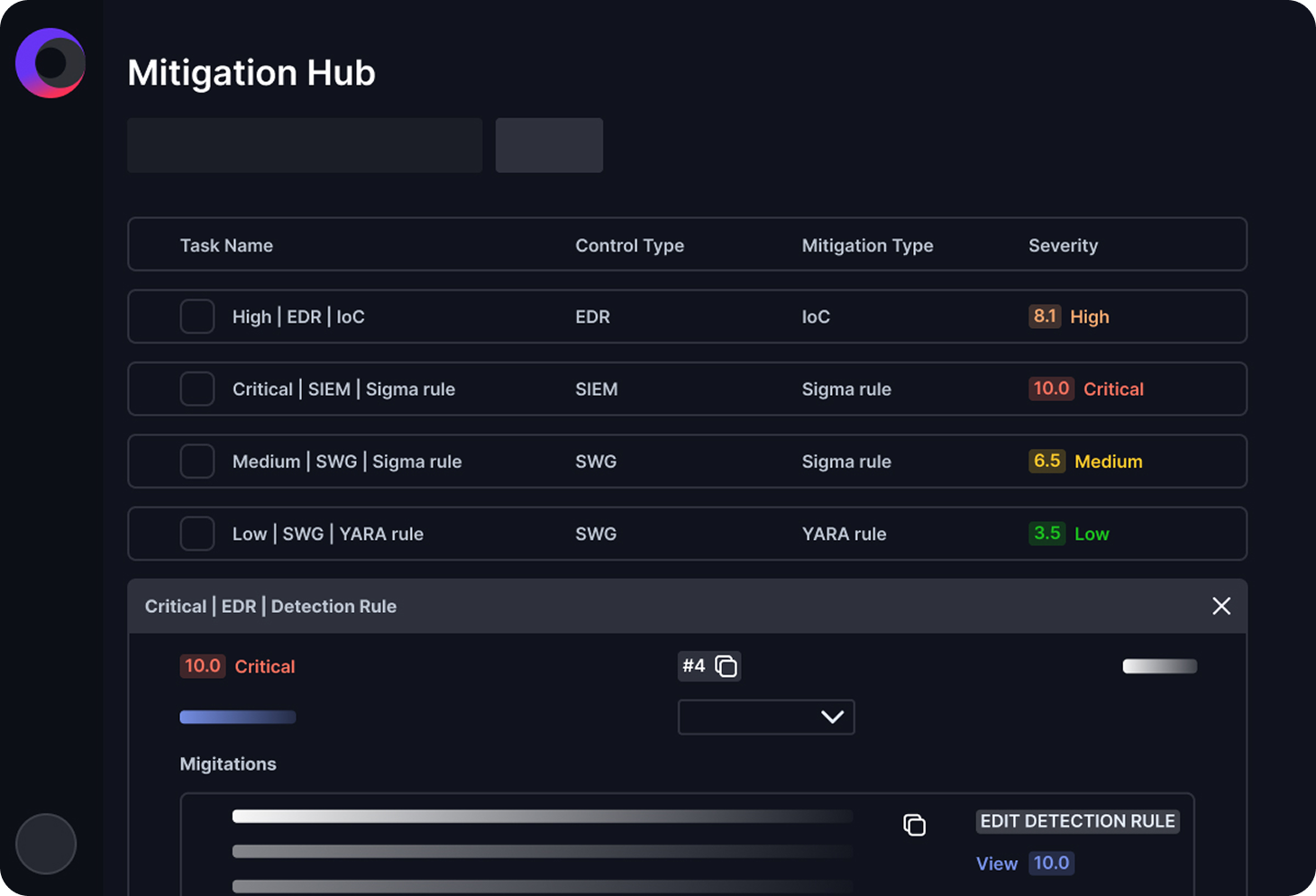
Cymulate includes AI-powered breach and attack simulation to tailor testing to your environment and automate real-world attack scenarios. Cymulate breach and attack simulation validates security controls against active threats and runs live-data exercises to test your security operations response. Mitigation Hub turns validated exposures into prioritized, actionable mitigation tasks that security teams can execute and track.
Discover security gaps
Harden security defenses
Reduce exposure risk
Identify and reduce drift
Beyond BAS.
Agentic Cyber Defense Engineering.
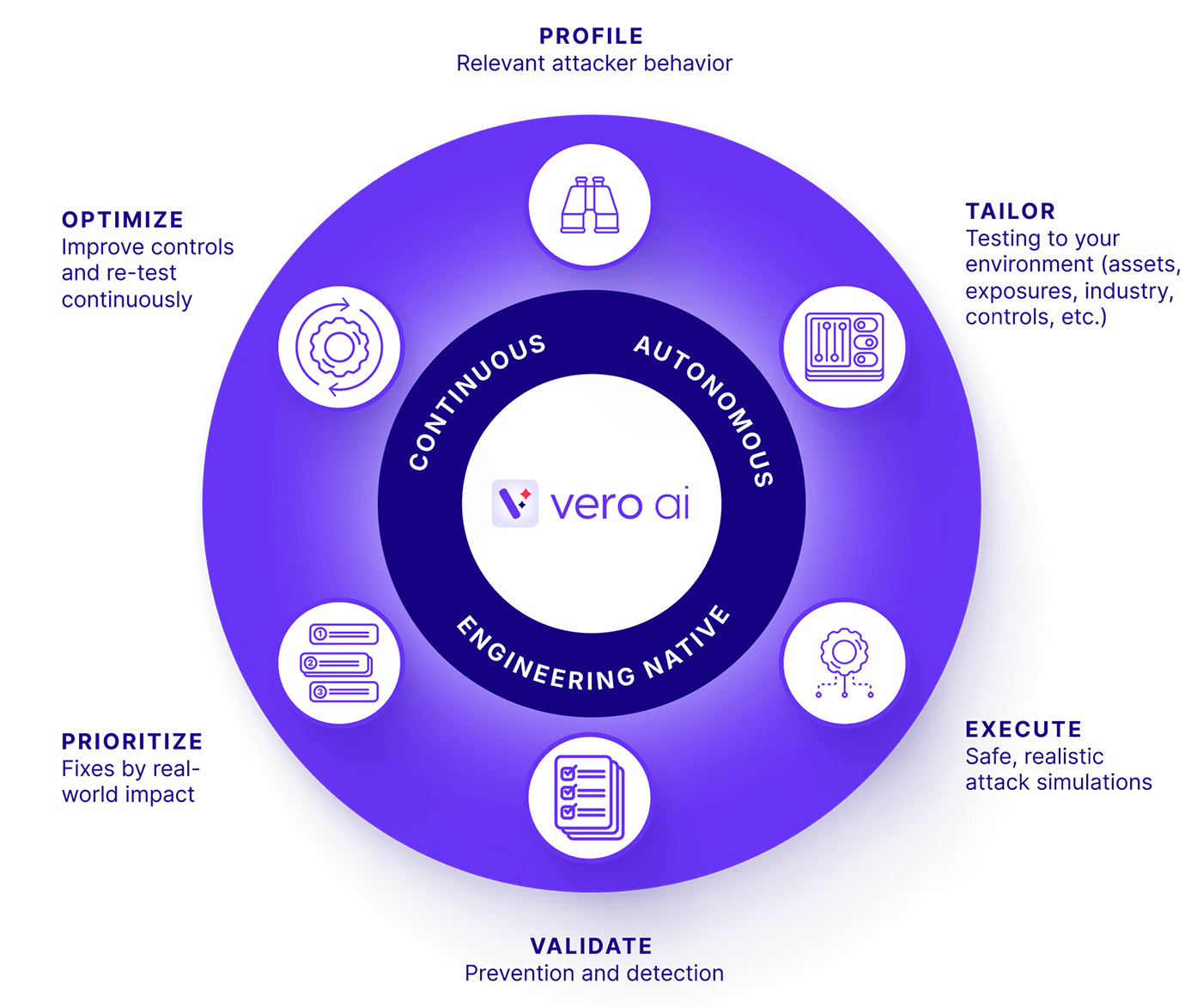
Cymulate evolves breach and attack simulation into continuous, adaptive validation for agentic cyber defense engineering.
With Vero AI, Cymulate understands emerging threats, tailors validation to your environment and translates findings into prioritized actions and automated security control updates.


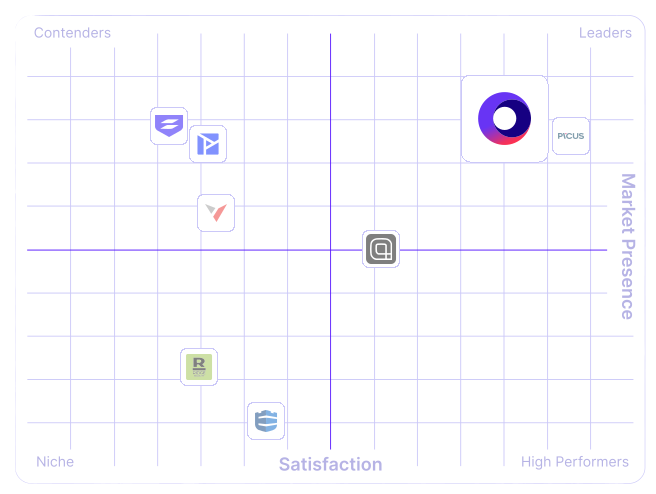
Automate Attack Simulations

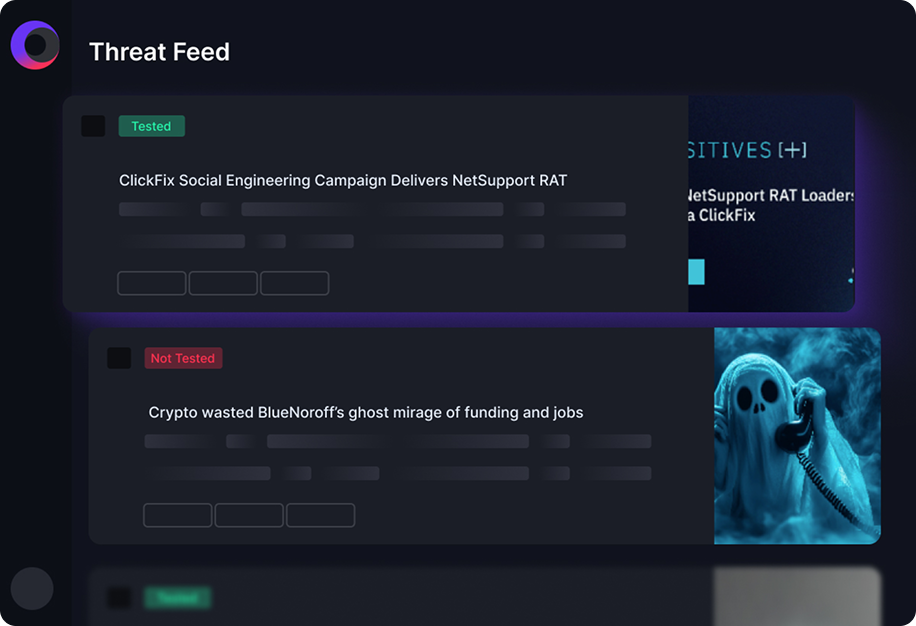
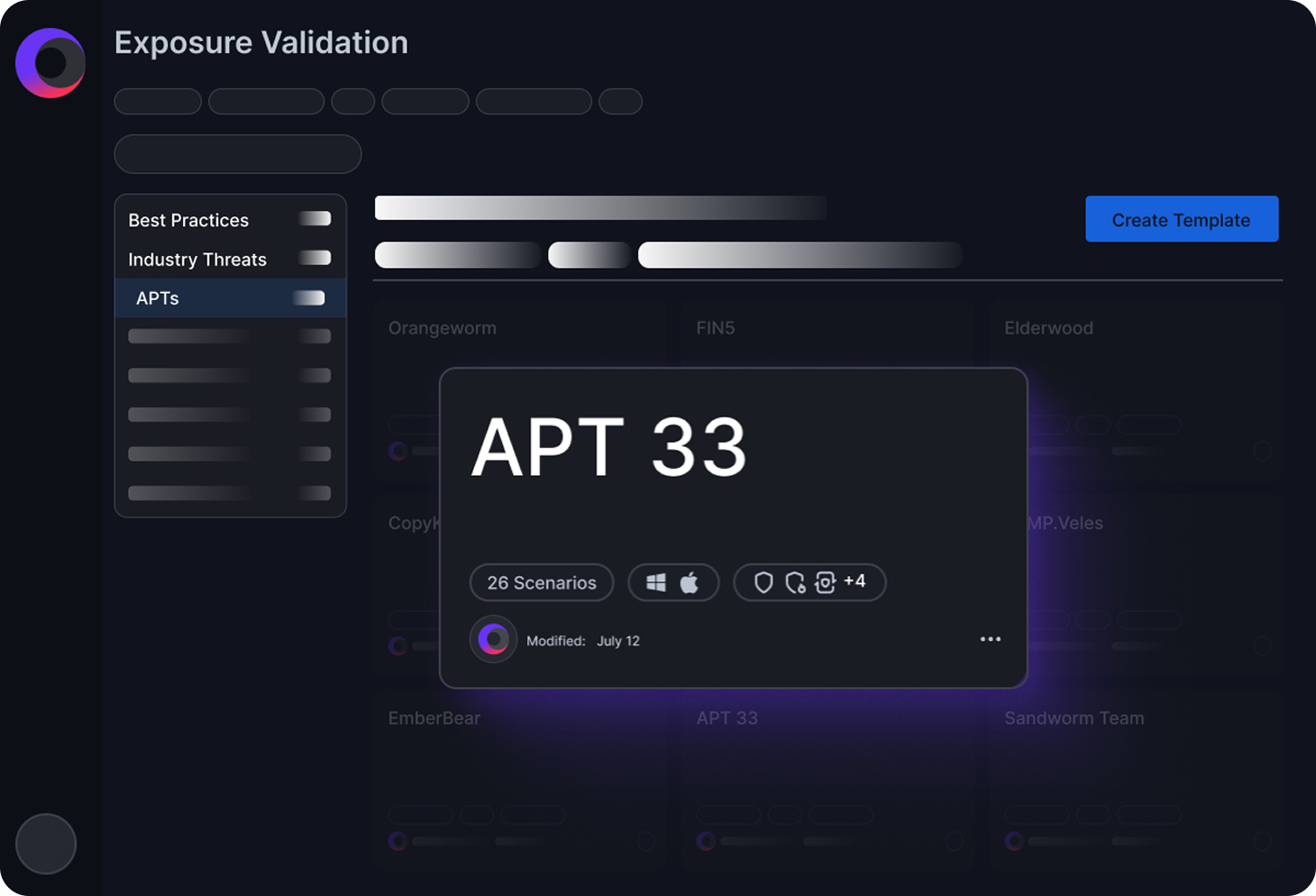
Security Control Validation
and Optimization
Powered by breach and attack simulation (BAS), Cymulate Exposure Validation tests your security controls with real-world attack simulations to validate and improve threat resilience. Cymulate uncovers weaknesses and provides actionable and automated remediation that includes custom detection rules, automated control updates and policy tuning guidance.


Featured Resources
View More Resources
Cymulate Exposure Validation
Learn more about automated attack simulations to test and validate your cyber defenses.
Security Validation Essentials
Understand the key essential elements of automated security validation with our e-book.

Civil Engineering Organization Goes Beyond Security Control Validation
See how a global engineering firm expanded from control validation to continuous threat validation and faster remediation.
Breach and Attack Simulation FAQs
Breach and Attack Simulation, or BAS, is a cybersecurity approach that safely simulates real-world attack techniques to test how well security controls prevent, detect and respond to threats.
BAS helps organizations move from assumptions to evidence. By continuously validating defenses against attacker behavior, security teams can identify gaps, prioritize improvements and strengthen resilience before incidents occur.
Vulnerability scanners identify known vulnerabilities and typically prioritize them using severity scores such as CVSS. While useful, those scores do not always show whether a vulnerability is exploitable in a specific environment or whether existing security controls can prevent or detect exploitation.
Cymulate Exposure Validation uses BAS to validate how real-world attack techniques perform against an organization’s actual security controls. This helps teams understand which exposures create real risk, which controls are working and which gaps should be remediated first.
Cymulate Exposure Validation helps security teams continuously prove how well their defenses work against real-world threats. It provides objective evidence of security control effectiveness and helps teams move from findings to prioritized action.
By validating threats, identifying control gaps and guiding remediation, Cymulate helps organizations reduce risk faster, optimize the security tools they already own and create a repeatable process for improving cyber resilience.
Cymulate Exposure Validation safely launches attack scenarios that emulate real-world attacker behavior. These scenarios test prevention, detection and response across the security stack without disrupting production environments.
The platform is cloud-based and continuously updated, helping organizations validate against emerging threats. Some assessments can be launched directly from the cloud, while others use a lightweight agent to act as a test point inside the environment.
Cymulate Exposure Validation goes beyond traditional BAS by combining safe, continuous attack simulation with AI-tailored testing, actionable remediation and automated mitigation workflows. Instead of only showing whether a control passed or failed a test, Cymulate helps security teams understand which gaps matter most, how to improve defenses and how to validate that fixes worked.
Cymulate uses AI to help tailor offensive testing to the organization’s environment, exposures, threats and security controls, making validation more relevant and efficient. It also supports closed-loop cyber defense engineering by turning validated findings into prioritized, deployable improvements, including detection rules, IoCs and recommended control updates.
Key differentiators include broad coverage across attack vectors, fast deployment, continuous updates against emerging threats, environment-aware validation, AI-powered workflows and automated mitigation that helps teams move from validation to measurable risk reduction faster.
Any organization that wants to understand whether its security controls are working as intended can benefit from BAS. This includes organizations of all sizes and industries, especially those with complex environments, evolving threats, or pressure to prove security readiness.
BAS is particularly valuable for security teams that need to validate prevention and detection effectiveness, improve SOC performance, optimize existing security investments, or support exposure management and compliance programs.
Yes. Cymulate Exposure Validation can be used to validate security controls across cloud and hybrid environments, including applications, cloud workloads, containers, Kubernetes and cloud infrastructure.
Organizations can use Cymulate to safely test cloud runtime controls, validate detections, assess application-layer defenses such as WAFs and confirm whether malicious behaviors are detected by tools such as cloud security platforms, SIEM, SOAR, EDR, IDS and IPS.
Cymulate Exposure Validation has specific automated security validation assessments for the following attack vectors:
- Secure Email Gateways (SEG)
- Secure Web Gateways (SWG)
- Web App Firewalls (WAF)
- Endpoint Security (AV / EDR)
- Data Loss Prevention (DLP)
- Cloud Security (CWPP, Cloud IDS)
- Container / Kubernetes Security (K8S)
- Network Security (IDS/IPS)
- SIEM/SOAR Detections
Cymulate also supports custom attack scenarios, allowing teams to validate both individual techniques and multi-stage attack paths.
Breach and Attack Simulation (BAS) helps organizations continuously validate their security posture by safely simulating real-world attack techniques across their environment. Instead of relying solely on point-in-time assessments, BAS provides ongoing visibility into how security controls perform against evolving threats.
Key benefits include:
- Continuous security validation rather than periodic testing
- Identification of security gaps and misconfigurations before attackers can exploit them
- Verification that security controls are detecting and preventing threats as expected
- Prioritization of remediation efforts based on validated risk and impact
- Measurement of security improvements over time
- Support for compliance and cyber resilience initiatives through repeatable testing and reporting
By continuously testing defenses against real-world attack scenarios, organizations can reduce uncertainty, improve security effectiveness and strengthen their overall cyber resilience. BAS enables security teams to move from assuming they are protected to continuously proving it.